
Building your own home theater is an exciting project with a simple goal: to enjoy your movies and music in the best possible conditions. But be warned, beyond purchasing expensive equipment and state-of-the-art speakers, the room's acoustics quickly become crucial. Without acoustic treatment, a world-class sound experience can quickly turn into a jumble of crackling and echoes.
First of all, this is where carpets come into play, like unsung superheroes. They may not have the brilliance of your brand-new floorstanding speakers, but believe me, they work wonders for your sound environment.
The magical power of carpets
A rug isn't just there to decorate the floor; it has a real musical responsibility. A thick, plush rug absorbs excess echo and reflections that usually muddy the sound. If you compare the acoustics of a room to a live band, the rug is like a skilled sound engineer, dampening background noise. Once the acoustics are dialed in, the music resonates in your living room like it does in a real concert hall—with the added comfort of pajamas and no intermission queue.
When choosing your rugs, don't neglect size. There's no point in throwing a small doormat in the middle of the room and hoping for a miracle. The larger the rug, the more extensive its sound-absorbing effect: it more effectively absorbs unwanted vibrations and high frequencies. While a thin silk rug might look elegant, for a home theater, a thick wool rug is the undisputed champion.
Practical tips to optimize your space
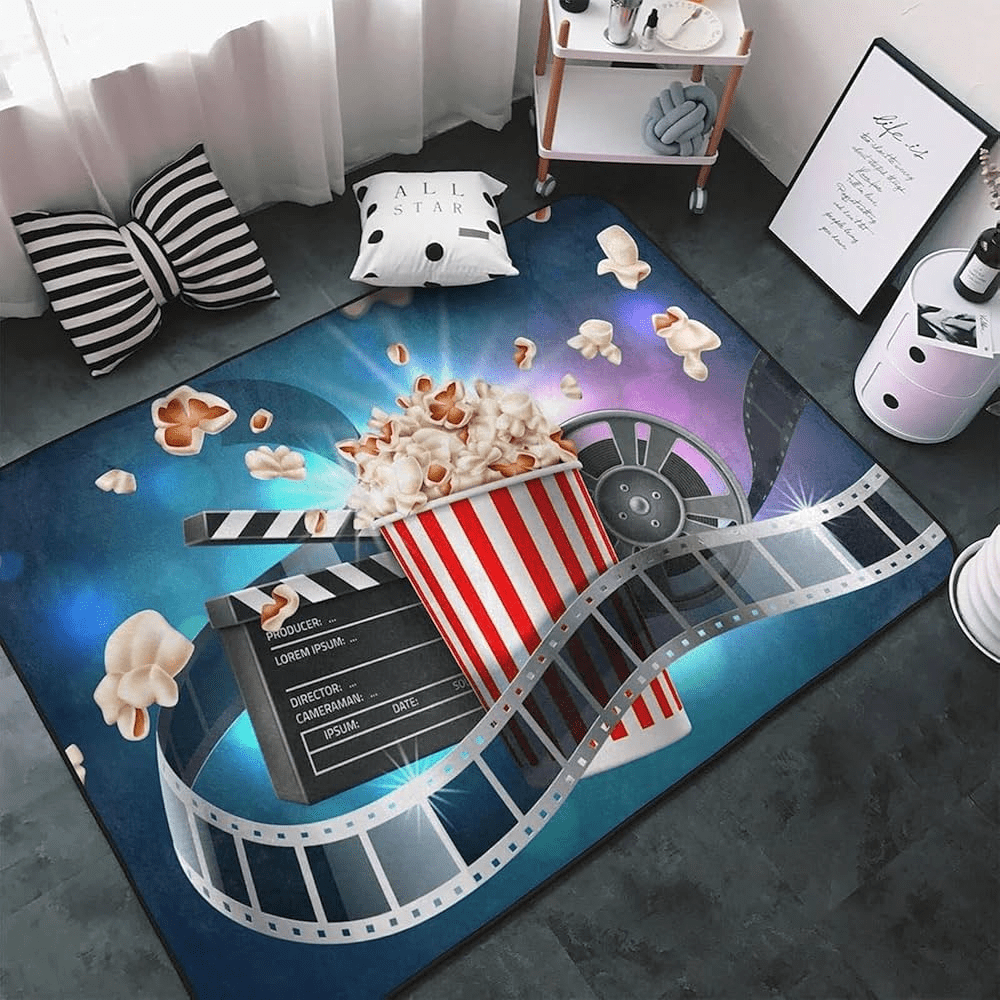
Imagine a typical living room with a large, bare, hard floor. In such a space, sound bounces directly from floor to ceiling and from corner to corner, turning your movie night into a sonic mess. Rugs can tame all of that. The key is thickness: forget paper-thin synthetic rugs; they have virtually no impact on sound waves.
The strategic placement is on the floor area between the speakers and your listening position (your sofa). This is precisely where the sound bounces off the floor to reach your ears first, creating distortion if it doesn't encounter any sound-absorbing obstacles.
Intelligent and hassle-free acoustics
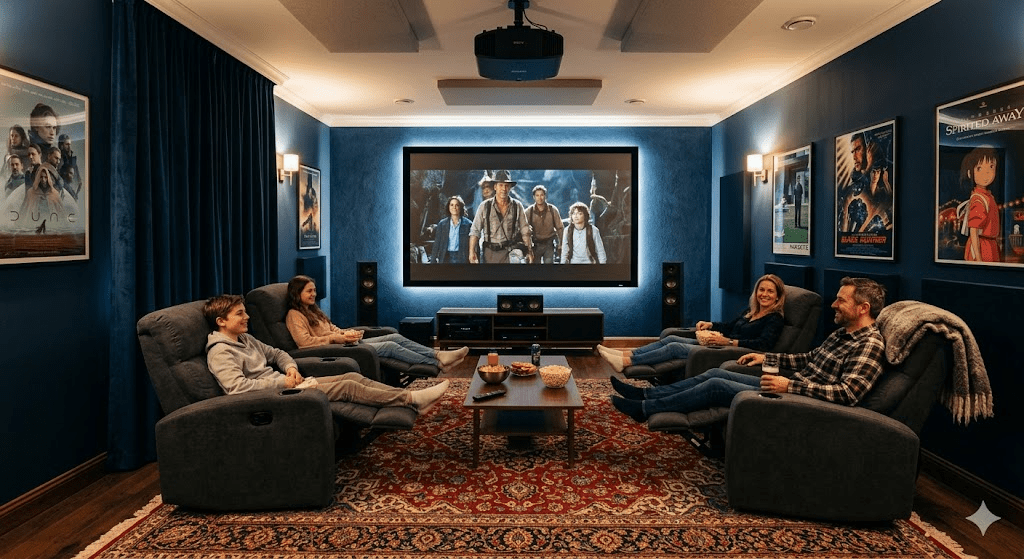
When considering home theater acoustics, you don't necessarily need to immediately delve into complex engineering jargon about decibels and frequency equalization. Rugs offer a simple and practical way to take control of the sound. Furthermore, moving a rug around to test different configurations is far more enjoyable than screwing heavy acoustic panels to the walls.
We sometimes tend to overreact as soon as acoustics become an issue: we criticize the speakers, order expensive diffusers online, when perhaps a warm, thick rug on the floor was the missing piece of the puzzle. Rugs work silently to improve the sound environment without any electrical wiring. As a bonus, they generally pass the "decorating expert" test much better than huge foam panels—no need to explain to your partner why the living room suddenly resembles a professional recording studio.
In short, the next time you dream of the perfect setup, give your rugs a moment's thought. They are the unsung heroes of high fidelity. Acoustics is a demanding discipline, but one thing is certain: a well-placed rug always helps. Don't underestimate this subtle power: in a home theater, sound should resonate with you, not bounce off bare walls until your ears hurt.
And who knows? In a few years, you might want to move into your car, where a giant screen descending from the roof will transform your vehicle into a mobile home theater. According to some sources, this is a project already being seriously considered!