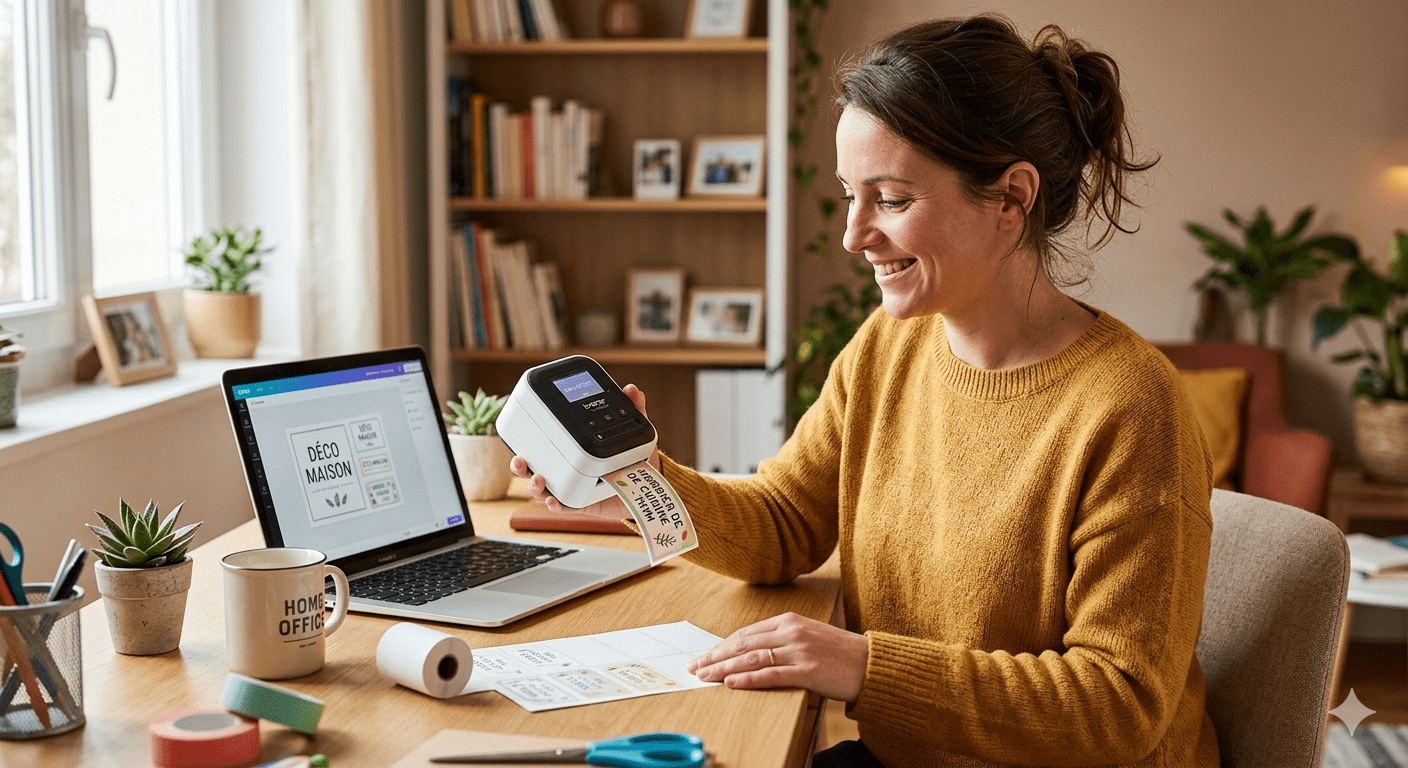
Say goodbye to the nightmare of overpriced ink cartridges that dry out when you need them most. Whether you're a highly active seller on secondhand platforms, a stickler for meticulous organization, or a creative looking for new media, the thermal printer is the silent revolution that will transform your office.
Faster, more compact, and above all incredibly economical, this inkless technology is no longer just for printing receipts: it's becoming the indispensable right-hand man of your home logistics. Discover how this smart investment can save you precious time while simplifying your daily life.
Why is the thermal printer becoming a must-have for individuals?
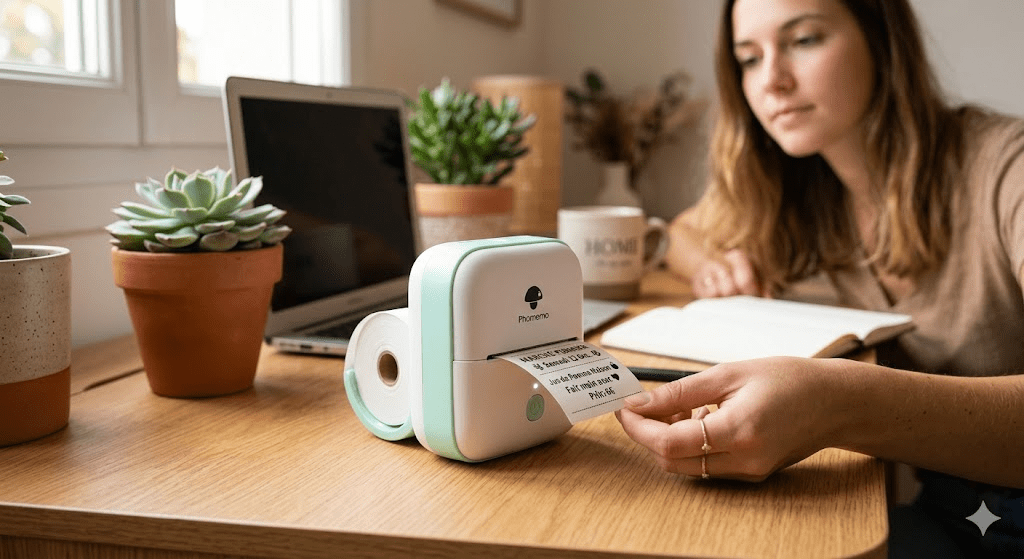
One of the major advantages of this technology lies in its complete absence of ink cartridges. By using heat-sensitive paper that reacts to heat, the thermal printer eliminates one of the most frustrating expenses of home computing.
To find the best value for money on this type of product, Cdiscount offers a complete selection ofthermal printers for individuals at competitive prices.
This choice not only allows for substantial long-term savings, but also for increased reliability, as the risks of clogged nozzles or dried-out ink after a period of inactivity simply do not exist.
The different formats adapted for home use
There are two main types of thermal printers for the general public. On the one hand, there are portable label printers, often connected via Bluetooth to your smartphone. These are ideal for scrapbooking or home organization. On the other hand, there are A6 (10×15 cm) printers, increasingly popular with individuals who sell clothing or other items online.
These devices allow you to print professional-quality self-adhesive shipping labels in seconds, thus avoiding the cutting and pasting of classic A4 sheets.
A sustainable and economical technology
Beyond the practical aspect, the environmental and economic arguments carry significant weight. A thermal printer contains fewer moving parts than a traditional inkjet printer, thus reducing the risk of mechanical breakdowns. Furthermore, recycling empty cartridges is a problem you will no longer have to deal with. The only consumable required is the paper itself, available in rolls or fan-fold, the unit cost of which is negligible compared to standard inkjet printing.
How to choose and maintain your equipment properly?
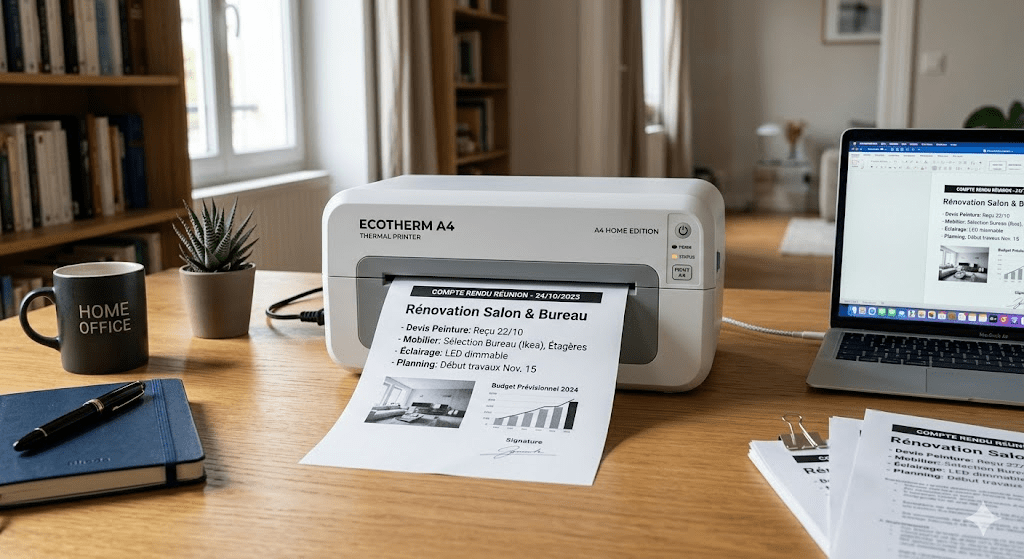
Given the abundance of models on the market, it's essential to define your priorities before buying. Not all thermal printers are created equal, particularly in terms of print resolution, measured in DPI (Dots Per Inch). For simple text or barcodes, a resolution of 203 DPI is more than sufficient.
On the other hand, if you want to print detailed logos or small illustrations, it may be wise to opt for models offering 300 DPI for greater precision.
Selection criteria: connectivity and compatibility
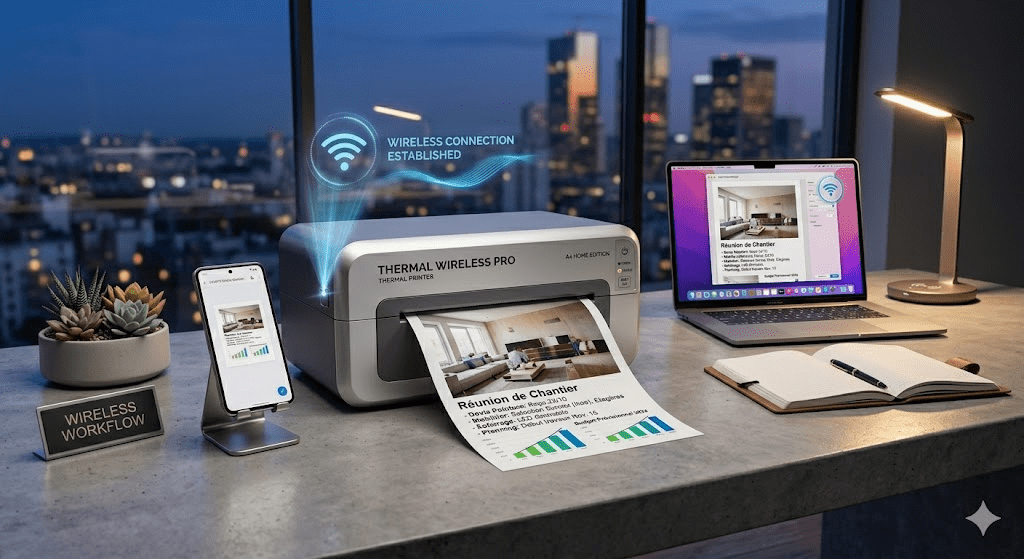
The choice of interface is crucial. If you plan to use your printer from a fixed desk, a standard USB connection ensures stability. However, the current trend is toward wireless. Numerous dedicated apps allow you to design your labels directly from your phone. Also, ensure compatibility with operating systems (Windows, macOS, iOS, or Android) and, if you ship items, verify that the device is natively recognized by the major shipping platforms.
Care instructions for maximum longevity
Although these machines are robust, minimal maintenance ensures consistent print quality. The most sensitive component is the thermal printhead. Over time, adhesive residue from labels or paper dust can accumulate there, creating white lines or blurry areas.
- Regular cleaning: Use a cotton swab lightly moistened with isopropyl alcohol to gently rub the print head (the black bar inside).
- Paper storage: Thermal paper is sensitive to heat and direct sunlight. To prevent your labels from yellowing or fading prematurely, store your rolls in a cool, dry place.
- Quality of media: Opt for good quality labels to prevent the adhesive from overflowing and clogging the mechanism.
Creative use: beyond logistics
It's often forgotten that thermal printers can also be creative tools. Many users use them to create personalized bullet journals, print shopping lists to stick on the fridge, or even create retro-style black and white mini-photos. Their speed (often less than 2 seconds per label) makes them a fun companion for the whole family.
By integrating a thermal printer into your daily routine, you simplify your organizational processes while controlling your budget.
It's an investment that quickly pays for itself, especially if you're active in the circular economy or if you like to keep everything in your home organized. To learn more about computer peripherals, feel free to consult our other guides on optimized office equipment.