AI Video Editing in 2026: Why Workflow Dethroned the Camera

The demands of video editing have changed dramatically in recent years. Not so long ago, the central question for many users was relatively simple: Is my system powerful enough to smoothly edit footage and export it cleanly at the end? Today, the question is considerably more complex. Modern content production is no longer simply linear editing, a few transitions, and a final render. It now encompasses much more: multiple formats, diverse platforms, accelerated production cycles, automated assistance, AI capabilities, and the ability to create multiple usable assets from a single idea in record time.

From a hardware perspective, this evolution is exciting. With each new generation of devices, CPU and GPU performance increases, as do SSD speeds, memory architecture efficiency, and media engine improvements. At the same time, the complexity of what users expect from software also grows. A modern video editor must not only be stable; it must handle hardware efficiently, deliver optimal visual quality, support diverse workflows, and ideally, reduce repetitive tasks to free up more time for creative decisions.

Video editing today is a system problem — not just a software issue

Anyone interested in current media production quickly realizes that the performance of editing software is only part of the overall equation. The crucial element is the interaction between hardware, software, and workflow. A powerful computer is of little use if the software generates unnecessary friction. Conversely, a well-designed application reaches its limits if hardware resources are insufficient or if modern acceleration options are not used intelligently.

This is where current developments become interesting. Today, the best results appear where three levels complement each other:

  • High-performance equipment
  • Perfectly optimized software
  • Intelligent production logic

This is especially true for users who do not just occasionally edit holiday videos, but who regularly produce content — whether for YouTube, social media, marketing, product communication, tutorials or editorial formats.

Why the logic of classic assembly is no longer sufficient
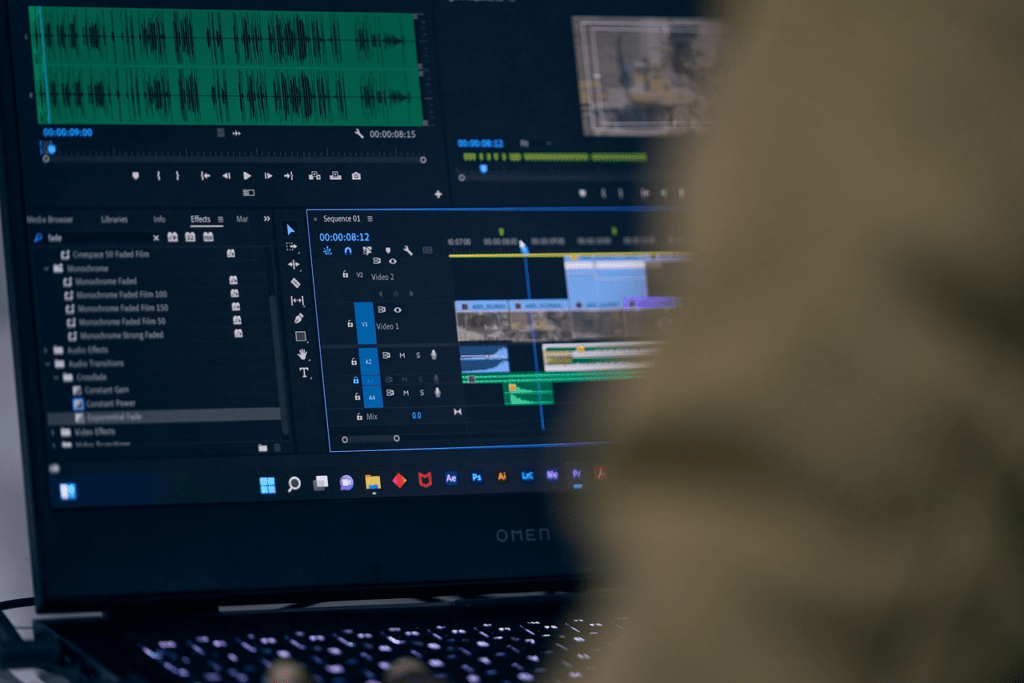
Previously, video editing could be largely understood as a linear process: import the footage, create the rough cut, place the transitions, add the titles, and export. Of course, it was never entirely straightforward, but the workflow was comparatively clear. Today, the reality is different.

A single project can now require multiple variations:

  • Horizontal version for classic platforms
  • Vertical variant for Shorts, Reels or TikTok
  • Short version for social media snippets
  • Version with subtitles
  • Version adapted for other target groups
  • optimized variants Graphically or textually

This increases not only the creative effort but also the technical burden. Format adaptation, preview performance, media management, export efficiency, and the speed of iterations become more crucial than ever before. Modern video editing is therefore no longer an isolated final step but an integral part of a continuous content system.

Here is the continuation of the translation, maintaining fidelity to the original text and the requested structure:

The role of modern hardware: more than just raw computing power

From a hardware-oriented perspective, it's particularly relevant to note that requirements are no longer limited to simple benchmarks. Of course, raw power remains important. A fast CPU, a high-performance GPU, sufficient RAM, and responsive storage still make a difference. However, in 2026, rendering times alone will no longer suffice.

The crucial question now is how a system reacts to real-world production situations:

  • How smooth is the preview with multiple effects applied?
  • How quickly can different formats be generated?
  • To what extent does the software benefit from GPU acceleration?
  • To what extent does the interface remain manageable on large-scale projects?
  • How can AI functions be effectively integrated without slowing down the workflow?

This is precisely why the dialogue between hardware and software is more exciting than ever. Users no longer buy performance solely for "more FPS" or faster games, but increasingly for creative productivity. Video editing is one of the most concrete use cases.

AI is transforming expectations for video tools

The market is evolving particularly rapidly thanks to AI-assisted functions. These are no longer just spectacular demos or purely experimental features. In practice, users are primarily interested in functions that genuinely save time and shorten concrete work steps.

This includes, in particular:

  • Assistance during the start-up of new projects.
  • Automation of recurring assembly steps.
  • Help with the text, subtitles, or structure.
  • More efficient creation of multiple versions of the same content.
  • Better starting points for visual sketches.
  • Accelerated processing from raw material to publishable video.

In this context, terms like "AI video generator" are becoming increasingly relevant. This isn't simply a matter of embracing buzzwords, but rather a practical need. Many users today no longer want to start from scratch. They're looking for tools that help them move more quickly from idea to the first usable result.

Why a modern video editor is evaluated differently today
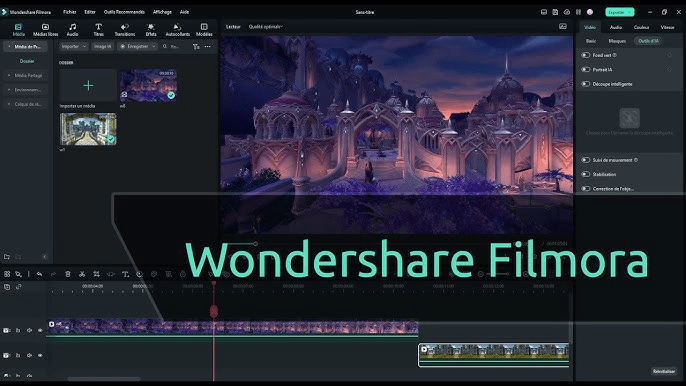
The criteria for evaluating video editing software have evolved accordingly. Previously, the question was often whether a program offered "enough features." Today, the question is more nuanced: what is the tool's actual level of productivity? How quickly does it transform raw footage into a final product? How well does it adapt to the user's requirements? And how intelligently does it combine traditional editing with modern automation features?

Software such as Filmora or Wondershare Filmora is particularly interesting because it targets this rapidly growing middle segment.

These are users who want more than minimalist applications, without having to delve into ultra-complex professional suites. This includes creators, streamers, small agencies, in-house marketing teams, educators, tech enthusiasts, or ambitious individual users.

For this target audience, the important thing isn't whether a software program covers every conceivable specialized function. What matters is whether it truly speeds up daily tasks, remains accessible, and still offers enough flexibility for more demanding projects.

Tech-savvy users prioritize practicality, not just feature lists

Hardware enthusiasts are generally susceptible to exaggerated claims. Purely marketing language rarely works with them. Those interested in CPUs, GPUs, cooling, memory configurations, or platform performance want substance. This is precisely why video editing should not be approached solely as a creative subject, but as a concrete workload.

Indeed, video editing is one of the areas where the advantages of hardware are truly felt on a daily basis:

  • Shorter loading times for projects.
  • Improved responsiveness on the timeline.
  • Smoother preview despite the accumulation of effects.
  • Faster exports.
  • work more enjoyable High-resolution equipment makes
  • No more reserves for parallel processes.

However, high-performance hardware alone does not guarantee a good user experience. To work productively, you need software capable of intelligently utilizing those resources. This is where the importance of modern and accessible solutions becomes clear.

Between ease of use and serious use

A central segment of the market is often underestimated: users who regularly produce videos without necessarily doing post-production full-time. This group is now enormous. It includes:

  • YouTube and social media creators.
  • High-tech product testers.
  • Streamers.
  • Product teams.
  • E-commerce Managers.
  • Small press publishers.
  • Companies with internal content needs.

They all have one thing in common: they need results, not software complexity for the sake of it. This doesn't mean they want superficial software. On the contrary, many have specific requirements but reject unnecessary learning curves. This is where Wondershare Filmora. The tool occupies a crucial niche for today's production reality: it offers an accessible interface, creative features, and increasingly sophisticated AI-powered assistance, without succumbing to pure minimalism.

Why GPU acceleration and intelligent processing are gaining importance

From a hardware perspective, video editing has shifted from a CPU-centric workload to hybrid acceleration models. GPU support, dedicated encoding and decoding units, optimized media pipelines, and improved memory bandwidth are no longer secondary considerations; they increasingly define the workflow experience on a project.

It's not just about exporting. Many users underestimate the importance of smooth interaction during the creation phase. A fast timeline response, clean scrolling (scrubbing), low latency when applying effects, and a stable preview increase actual productivity far more than a final render that saves a few seconds.

The arrival of AI functions makes this even more interesting, as they generate new requirements:

  • Further analysis of the rushes.
  • Automation of text and structure.
  • Generative components.
  • Increased workload from the earliest phases of the project.
  • Multiplication of parallel process chains.

This is why modern video editing is one of the areas where better hardware directly translates into a better workflow — provided the software is designed accordingly.

AI video generator: why the term goes beyond simple marketing

The term "AI video generator" is now used in a wide variety of contexts. Not all software programs understand it in the same way. However, its popularity shows where expectations are evolving. Users want tools that assist them from the very beginning of the editing process.

  • A faster project start-up.
  • Help with structuring ideas.
  • Initial visual sketches to avoid the blank page.
  • Greater output with less repetitive effort.
  • An efficient transformation of concepts into editable raw versions.

AI does not replace total creativity, but it massively reduces the path between "zero" and "the exploitable starting point".

From gaming PCs to creation systems

For hardware enthusiasts, another relevant development is the increasing transformation of the classic gaming PC into a creative system. Many configurations now need to be powerful not only for gaming but also for streaming, recording, video production, and content export. Priorities are therefore shifting. A system optimized solely for gaming isn't necessarily ideal for creative workloads. Regular video editing benefits from:

  • A balanced CPU/GPU configuration.
  • Enough RAM for large projects.
  • A fast SSD structure for media and cache.
  • Efficient cooling for prolonged charging phases.

Why software needs to differentiate itself more in the creative sector

One might think that with increased hardware power, software becomes less important. The opposite is true: the more power is available, the more noticeable it becomes which applications know how to use it. The market is now differentiated by the quality of actual, day-to-day production

  • Speed ​​of entry into the project.
  • friction working
  • Ease of transforming ideas into real assets.
  • Logical integration between classic assembly and AI.

Modern video editing: more variations, more speed, more recycling

A project today rarely ends with a single final file. On the contrary, several versions are often created:

  • A main video.
  • Short clips (Shorts).
  • Social media versions.
  • Preview excerpts.
  • Variants adapted by platform or target audience.

The video editor is therefore increasingly judged on its ability to transform a single project into multiple assets.

Conclusion: it's not the most powerful hardware that wins, but the best workflow

Anyone creating videos today shouldn't just focus on camera quality or raw processing power. The key lies in the synergy between hardware, software, and production logic. Modern systems must enable a wide range of formats, make AI usable, and accelerate creative processes.

This is why solutions like Filmora, modern approaches to video editing, and AI video generator concepts are becoming essential. They represent a market where it's no longer just about cutting sequences, but about producing efficiently. For hardware enthusiasts, this is concrete proof that performance makes media work faster, more enjoyable, and more productive.


How to turn your laptop into a sustainable source of income

In the digital age, the laptop is no longer just a tool for entertainment or word processing. It has become a true mobile office, capable of generating substantial income if you know how to leverage its potential. Whether you're looking for supplemental income or a complete career change to digital nomadism, the opportunities have never been more accessible.

This article explores the most effective strategies for monetizing your IT equipment, from freelance jobs to specialized entertainment solutions.

1. Mostbet: The alliance of entertainment and strategy

For many users, laptops are also a gateway to the world of online gaming and sports betting. This activity, which combines statistical analysis and entertainment, attracts a growing audience looking to monetize their sports knowledge.

To optimize this experience, the use of powerful tools is essential.

By downloading the Mostbet, users benefit from an optimized interface that allows them to follow real-time odds, view match histories, and place bets securely.

The advantage of using a dedicated application lies in the fluidity and speed of execution, two crucial factors when it comes to live betting.

Whether you are passionate about football, tennis or motorsports, having a reliable platform on your computer or mobile device allows you to transform a simple passion into a potentially lucrative activity, provided you practice responsible capital management.


2. Freelancing: Monetize your technical expertise

32268634 – young man at home using a computer, freelance developer or designer working at home.

The freelance market is booming. Thanks to your laptop, you can collaborate with companies located on the other side of the world without ever leaving your sofa.

Web writing and SEO

If you have a knack for writing, content creation is one of the fastest ways to earn money. Businesses constantly need blog posts, product descriptions, and white papers to improve their Google rankings. By specializing in SEO (Search Engine Optimization), you can significantly increase your rates.

Video design and editing

With the rise of platforms like TikTok, YouTube, and Instagram, video editing has become a highly sought-after skill. A laptop with a good graphics card allows you to use professional software to transform raw footage into viral content. Similarly, graphic design (creating logos and brand guidelines) remains a valuable asset on the web.


3. E-commerce and Dropshipping: Commerce without inventory

E-commerce has changed dramatically. You no longer need a warehouse to sell products. With your computer, you can create an online store using platforms like Shopify or WooCommerce.

Dropshipping a customer buys from your website, you order the product from a supplier who ships it directly to the customer. Your profit is the difference between the selling price and the purchase price. While the competition is fierce, a well-defined niche strategy can be extremely lucrative.


4. Online teaching and the sale of training courses

If you have mastered a subject (music, cooking, mathematics, marketing), your PC is the ideal tool to transmit your knowledge.

Private lessons: Platforms like Superprof or Preply allow you to give lessons via videoconference.

Creating courses: You can record your screen and voice to create a complete course and sell it on sites like Udemy. Once the course is online, it generates passive income for months, even years.


5. Micro-tasks and user testing

If you're just starting out and don't yet have specific skills, micro-tasks are an excellent entry point. Sites like Amazon Mechanical Turk or user testing platforms pay you to perform small tasks: testing the usability of a new website, transcribing short audio files, or categorizing images.

Although the pay per task is low, repetition and diligence allow you to generate a significant additional income to pay your bills or finance your future projects.

Acoustics through carpeting: the secret to a successful home cinema

Building your own home theater is an exciting project with a simple goal: to enjoy your movies and music in the best possible conditions. But be warned, beyond purchasing expensive equipment and state-of-the-art speakers, the room's acoustics quickly become crucial. Without acoustic treatment, a world-class sound experience can quickly turn into a jumble of crackling and echoes.

First of all, this is where carpets come into play, like unsung superheroes. They may not have the brilliance of your brand-new floorstanding speakers, but believe me, they work wonders for your sound environment.

The magical power of carpets

A rug isn't just there to decorate the floor; it has a real musical responsibility. A thick, plush rug absorbs excess echo and reflections that usually muddy the sound. If you compare the acoustics of a room to a live band, the rug is like a skilled sound engineer, dampening background noise. Once the acoustics are dialed in, the music resonates in your living room like it does in a real concert hall—with the added comfort of pajamas and no intermission queue.

When choosing your rugs, don't neglect size. There's no point in throwing a small doormat in the middle of the room and hoping for a miracle. The larger the rug, the more extensive its sound-absorbing effect: it more effectively absorbs unwanted vibrations and high frequencies. While a thin silk rug might look elegant, for a home theater, a thick wool rug is the undisputed champion.

Practical tips to optimize your space

Imagine a typical living room with a large, bare, hard floor. In such a space, sound bounces directly from floor to ceiling and from corner to corner, turning your movie night into a sonic mess. Rugs can tame all of that. The key is thickness: forget paper-thin synthetic rugs; they have virtually no impact on sound waves.

The strategic placement is on the floor area between the speakers and your listening position (your sofa). This is precisely where the sound bounces off the floor to reach your ears first, creating distortion if it doesn't encounter any sound-absorbing obstacles.

Intelligent and hassle-free acoustics

When considering home theater acoustics, you don't necessarily need to immediately delve into complex engineering jargon about decibels and frequency equalization. Rugs offer a simple and practical way to take control of the sound. Furthermore, moving a rug around to test different configurations is far more enjoyable than screwing heavy acoustic panels to the walls.

We sometimes tend to overreact as soon as acoustics become an issue: we criticize the speakers, order expensive diffusers online, when perhaps a warm, thick rug on the floor was the missing piece of the puzzle. Rugs work silently to improve the sound environment without any electrical wiring. As a bonus, they generally pass the "decorating expert" test much better than huge foam panels—no need to explain to your partner why the living room suddenly resembles a professional recording studio.


In short, the next time you dream of the perfect setup, give your rugs a moment's thought. They are the unsung heroes of high fidelity. Acoustics is a demanding discipline, but one thing is certain: a well-placed rug always helps. Don't underestimate this subtle power: in a home theater, sound should resonate with you, not bounce off bare walls until your ears hurt.

And who knows? In a few years, you might want to move into your car, where a giant screen descending from the roof will transform your vehicle into a mobile home theater. According to some sources, this is a project already being seriously considered!

Repairing modern car damage: much more than just a bodywork issue

Today, cars have become computers on wheels rather than simple mechanical means of transport. When a vehicle is involved in an impact, the damage often goes beyond simply deforming a bumper or hood.

A modern wrecked car belongs to a completely different world than our old petrol or diesel clunkers. These days, meticulous planning is essential to prevent a repair project from turning into a minor electronic panic.

What needs to be taken into account when high technology meets accident?

Fractured microchips and modules

When a car is a smart, mobile device, replacing parts can sometimes feel like assembling a complex puzzle. Simply putting the mechanical components back in place isn't enough; you might then be surprised to find that electrical comfort features, like seat adjustments or parking assistance, no longer work. Extreme care must be taken with the electrical systems of wrecked vehicles: modern multiplexed systems don't tolerate crude repairs or incorrect wiring.

The car's "brain" is now distributed across several control modules. It's not just a matter of cut wires; new cars record error codes that appear as warning lights on the dashboard. The car "communicates" to signal that a specific system requires attention before the journey can safely resume. Reading the error codes is therefore the first step: it's the car's language, indicating precisely where the electronic problem lies.

Hard-hitting headlines

The news of the past year has revealed a harsh truth: repairing an electric car after a collision is about as easy on the wallet as getting a face full of sandblasting. It has been reported that insurance companies sometimes give up and declare electric vehicles a "total loss" far more readily than old wrecks. The reason? The infamous battery. If this "heart" of the car, which is also the most expensive component, suffers even the slightest scratch, the entire battery pack (worth tens of thousands of euros) is doomed to need replacing, because manufacturers don't allow targeted repairs.

The press also laments the shortage of specialized technicians; finding a true "electronics wizard" is like looking for a needle in a haystack, which lengthens repair times unbearably.

Fortunately, the training of electric vehicle repairers is being strengthened.

Some media outlets even go so far as to claim that the buyer of a wrecked electric car is either a bold visionary or a reckless gambler.

Security systems and the importance of calibration

During the repair phase, it's crucial to understand that the software is just as important as the hardware. If, for example, the airbags have deployed, simply installing a new airbag isn't enough: the control units must also be reset or replaced, and the system synchronized. Seatbelt pretensioners and other safety devices are part of a complex system whose repair requires professional expertise and the right diagnostic tools.

Many are surprised to find that the damage isn't always visible on the surface. Even if the bumper appears undamaged, the radar and sensors hidden behind it may have shifted. If these ADAS (Advanced Driver Assistance Systems), such as lane departure warning or emergency braking, aren't recalibrated after repairs, the car can behave unpredictably. This isn't a "ritual," but a precise technical process to ensure the cameras and radar are correctly perceiving the outside world.

Tuning the orchestra: programming and final inspection

Disconnecting the battery or replacing parts often requires the systems to relearn their functions. A modern car is like an orchestra where every instrument must play in perfect harmony. If a new part isn't "introduced" to the central computer through programming, it may not work at all. In electric and hybrid cars, the communication between the battery and the engine management system is particularly critical.

The goal is for the car, after repairs, to be at least as intelligent and safe as it was before the accident. This involves thoroughly testing all critical systems. DIY tutorials on forums can help with changing a lightbulb, but for complex computer systems, it's best to rely on a professional who has access to official manufacturer updates and instructions.

Technology presents a challenge for mechanics, but it also ensures safety. When a damaged vehicle is repaired according to best practices, the result is a car you can trust. Remember, then, that repairs go far beyond the surface: the car's "brain" and its nervous system (the wiring harness) also need attention.

5 surprising products that leverage the advantages of artificial intelligence

Artificial intelligence is now a highly effective tool in everyday life, whether in education, healthcare, or entertainment. Thanks to technological advancements and corporate involvement, many products now incorporate AI-based features that optimize their performance.

This proves that AI isn't limited to advancing chatbots,  generative platforms, and e-commerce. With proper implementation, AI can improve people's lives by automating tasks that would otherwise be very time-consuming. AI can be effective in gardening, healthcare management, and even the automotive industry; so let's explore some interesting use cases for AI in today's world.

AI in smart lawnmowers

Mowing the lawn is essential from the beginning of spring, and homeowners should do so regularly to ensure their garden remains in good condition. But since using traditional lawnmowers is time-consuming, many people have turned to a more modern solution. Smart lawnmowers offer numerous advantages, but their main strength is that they operate autonomously, requiring only the user to program them via a mobile app.

Some modern products, such as the LiDAR robotic lawnmower, incorporate artificial intelligence that allows the robot to identify and avoid obstacles, whether they be household objects, small animals, or children. AI algorithms and advanced vision technologies also enable the robot to accurately map the garden area and optimize its energy consumption and route.

Smart robotic lawnmowers are easy to set up and maintain thanks to app settings. They also feature easy-to-clean components, making them charging station . Equipped with advanced safety sensors, intelligent boundary settings, and low-risk cutting systems, these AI-powered products are perfect for all gardening enthusiasts.

AI in software platforms

Software solutions must adapt to the competition in the field of AI by integrating this technology into their systems. This is the case for companies like Nvidia, whose latest project, Cosmos, includes a wide range of AI tools designed to bridge the gap between data processing and reporting. The system processes training data used in robots and vehicles, and the project's goal is to help robots better understand the real world in order to improve their performance.

This new technology has earned Nvidia a partnership with automaker Toyota, which could lead to the design of future car models equipped with autonomous driving software that guarantees precise operation. This technology has the potential to boost agentic AI, a field in which large language models can perform tasks outside of their systems.

The company hopes to revolutionize the automotive industry with its AI product line, while also enabling robots to collect high-quality data from real-world tests and situations. This is why Nvidia is leveraging its Omniverse physics simulation platform to transform simulations into highly realistic video images for robot training.

AI in smart glasses

What was once just a concept from science fiction films has now become a reality thanks to smart glasses. These products use artificial intelligence to display data directly in the field of vision, such as messages, text translations, or the time. The technology is integrated into a sophisticated optical module that projects the information onto the lenses, but it doesn't originate from the product itself. Therefore, they remain functional even without lenses, as the system is built into the frame.

The exciting features of these glasses could forever revolutionize communication, travel, and engagement. AI-powered real-time translation supports over 40 languages, making international travel less challenging due to language barriers. Users can also benefit from these glasses while driving, as they can display navigation instructions, potentially reducing the number of accidents.

Smart glasses could gain popularity in the future, especially as more and more people grow tired of relying on their smartphones and turn to wearable devices for simple tasks. Bending over a smartphone might soon be a thing of the past, and neck pain and stiff wrists will be a thing of the past.

AI in railway systems

The applications of artificial intelligence in the rail sector may seem surprising, but they are very real and essential for improving the industry. AI-based signaling systems are replacing traditional systems and enabling safe and efficient train control. And while their international implementation may take some time, advanced AI capabilities are already transforming the rail sector through:

  • Predictive maintenance: the AI ​​tool can monitor signs of train deterioration based on vibration or temperature data;
  • Traffic optimization: AI can adjust routes in real time to reduce the risk of accidents between trains;
  • Energy optimization: advanced algorithms can adjust speed to save energy and anticipate peak demand to improve resource allocation;

Unfortunately, the implementation of AI on a global scale would be hampered by already obsolete infrastructures, which would need to be replaced by state-of-the-art systems compatible with these algorithms.

AI in weather data infrastructures

A more complex application of artificial intelligence uses machine learning algorithms capable of predicting the intensity of atmospheric rivers. The idea comes from scientists at the Center for Western Weather and Water Extremes (CW3E) who have successfully combined artificial intelligence with the Integrated Water Vapor Transport (IVT) model.

This tool would be invaluable to water managers, who could rely on highly accurate, machine-learning-based forecasts to determine the precise amount of water to release from reservoirs. The system is also capable of predicting the optimal timing for this release based on weather forecasts or reservoir levels, thereby reducing the risk of flooding.

Even more impressively, the AI ​​system will directly help save up to 25% more water, a solution being tested throughout the state of California that could become the global standard.

In your opinion, how far can AI evolve?

Artificial intelligence has become ubiquitous in our daily lives, making life easier in this dynamic and constantly evolving environment, marked by technological advancements. But beyond chatbots and recommendations, AI has the potential to go much further, from tending our gardens with intelligent robots to determining the precise amount of water needed in ponds. Machine learning is proving useful in software platforms and railway systems, paving the way for a new technological era designed for the real world.

C411: The new king of torrents that replaces YggTorrent

The French-speaking Peer-to-Peer (P2P) world is currently experiencing an earthquake of unprecedented magnitude. For astute observers, this is not a surprise, but the culmination of a long-foretold story. While the giant YggTorrent seems definitively finished, a new player is emerging from the shadows to take up the mantle: c411.

This is not just another website. It's a rebirth. By adopting the codes, ethics, and firepower of the old T411, c411 is already establishing itself as the new sanctuary of sharing.

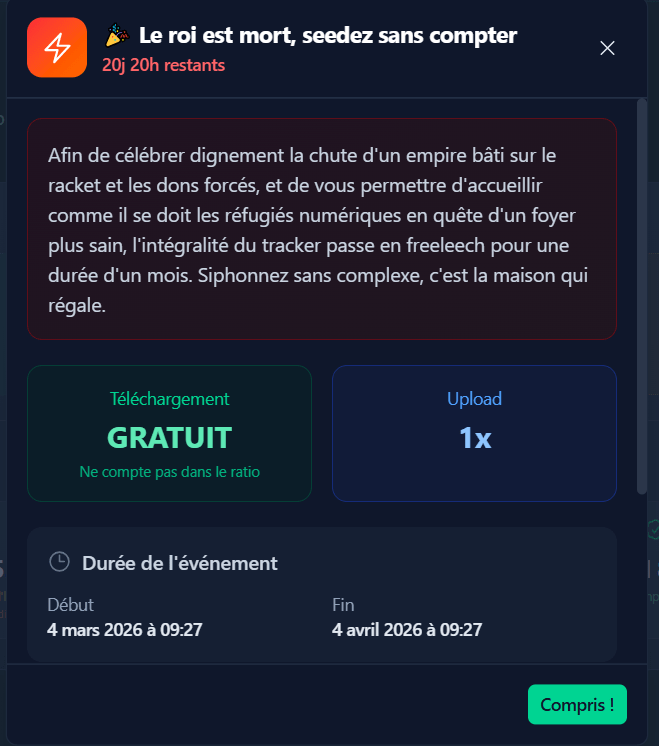
"The fall of an empire built on extortion"—the team at https://c411.org/ has just opened the floodgates. Until April 4, 2026, the entire tracker is running on FREELEECH. In practical terms? You can download whatever you want without it affecting your ratio, while your uploads still count. It's an unprecedented welcome offer for YggTorrent's "digital refugees." The message is clear: they're offering a treat, and they intend to prove that sharing can be healthy, free, and massive.

The Inevitable Fall of YggTorrent: Why the Colossus Had Feet of Clay

To understand the enthusiasm surrounding https://c411.org/, one must first analyze the decline of its predecessor. YggTorrent provided immense services, but its very structure doomed it in the long run.

First, excessive centralization and opaque governance created unbearable internal tensions. Second, constant harassment from authorities drove the site into a frantic race to change domains (.re, .li, .se, .site…), losing thousands of less tech-savvy users along the way. But the final blow came from the infrastructure: between corrupted databases and massive DDoS attacks, YggTorrent became a minefield. Instability became the norm, service the exception. It was inevitable: a system under constant pressure always ends up breaking.

Here is the last message from Yggtorrent on March 12, 2026

C411 : The Return to the Golden Age of Warez

It is in this chaos that https://c411.org/. For those who experienced the golden age of T411 before its closure, the emotion is palpable. It retains that polished interface, the clarity of presentation, and, above all, the rigorous moderation that had been lacking elsewhere in recent years.

C411 doesn't just replace YggTorrent; it surpasses it. The site was built on a next-generation architecture, capable of handling massive traffic loads without breaking a sweat. Where Ygg struggled, C411 soars. User experience was placed at the heart of the project: search is intuitive, categories are intelligently segmented, and download speeds are, according to our tests, optimal.

An unprecedented statistical explosion

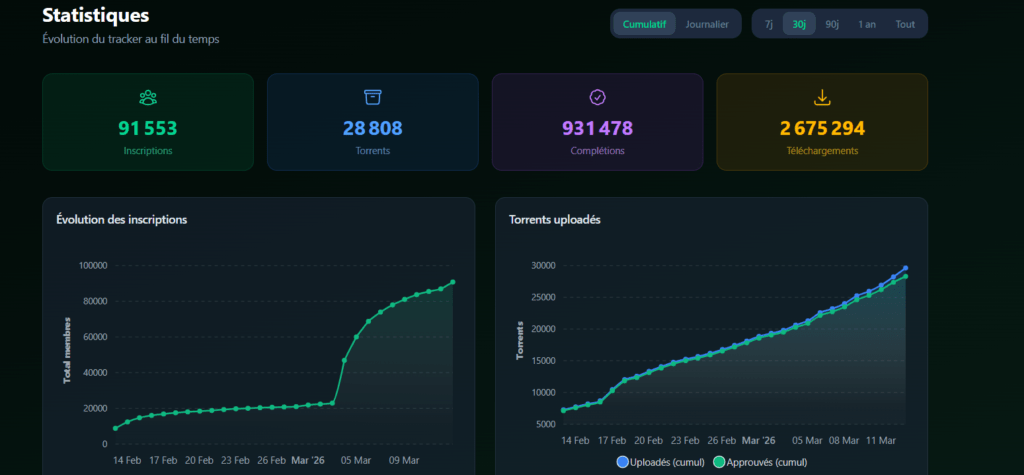
The numbers don't lie. The latest internal data from c411 confirms a massive exodus of users to this new promised land. In the first two weeks of March 2026 alone, the number of registrations literally exploded, jumping from 20,000 to over 91,500 registered members.

This vertical growth reflects a renewed sense of confidence. But a community without content is nothing. Here again, https://c411.org/ impresses: with over 28,800 torrents available and a download count exceeding 2.6 million, the site displays a vitality that its competitors normally take years to achieve. Even more impressive is the rigorous file validation process, with the "Approved Torrents" curve almost perfectly mirroring the upload curve, proof of hyperactive and effective moderation.

Detailed operation: How C411 reinvents sharing

c411 operates using the BitTorrent protocol, but with sophisticated community optimization. Here's what makes it such a powerful tool:

  1. The High-Performance Private Tracker: Unlike public torrent sites, https://c411.org/ manages its own advertisers. This means that the connections between seeders (those who share) and leechers (those who download) are direct, secure, and extremely fast.
  2. The Balanced Ratio System: To ensure file survival, the site uses a ratio system (give to receive). However, unlike the punitive systems of the past, C411 actively encourages sharing through "Freeleech" bonuses and rewards for contributors, making the experience rewarding rather than restrictive.

  3. Surgical Indexing: Every file posted to c411 undergoes a quality filter. No more misnamed files or unnecessary duplicates. It boasts an organization worthy of a top-tier digital library.
  4. Enhanced security: The site uses advanced encryption certificates and does not keep intrusive logs, thus offering a haven of peace for those who wish to browse away from prying eyes.

A message of reassurance for the community

I'm speaking here to those disappointed by YggTorrent, to those who fear losing their precious data or ending up on a short-lived site. https://c411.org/ was designed to last. The team behind this project isn't made up of novices, but veterans who analyzed every flaw in the previous system to avoid repeating them.

Joining c411means choosing stability. It means rediscovering the pleasure of a vast catalog, ranging from independent films to professional software, including a remarkably rich selection of ebooks. You're not just switching sites; you're upgrading.

FAQ: Everything you need to know about the C411

Do I need to create an account to access the content? Yes, like any quality private tracker, registration on https://c411.org/ is necessary to maintain the integrity of the ratio and the security of the community.

Is the site free? Absolutely. The spirit of c411 is one of selfless sharing. The site thrives on its community, not on hidden access fees.

What if my internet service provider blocks the site? As with any site of this nature, it is advisable to use third-party DNS (such as those from Cloudflare or Google) or, even better, a quality VPN to access https://c411.org/ with complete peace of mind.

Can I import my ratio from another site? C411 is starting from scratch to guarantee complete fairness. This is the perfect opportunity to begin afresh in a healthy and high-performing environment.

Why choose C411 over a public site? Quality and security. On https://c411.org/, files are verified, virus-free, and download speeds are guaranteed by dedicated servers (seedboxes) that are very active within the community.

Conclusion

King YggTorrent has fallen. But culture never dies. It moves. Today, it has found its new address: https://c411.org/. As a worthy successor to T411, this site doesn't just carry on the legacy; it ushers in a new era of digital freedom.

Get to grips with the platform now. The transition is here, and it's called C411.org.

Home cinema: creating a real cinema at home

Having a home cinema is a dream for many film and TV series enthusiasts. Imagine: a giant screen, immersive sound, comfortable seats, and an atmosphere worthy of a real movie theater… without leaving your home.

Good news: it's now possible to transform a room in your house into a private cinema. With a little preparation and the right equipment, you can recreate a spectacular experience right at home.

Here's everything you need to know to design a home cinema room and enjoy a space entirely dedicated to your movie nights.

Why create a home cinema room?

Installing a home cinema room has many advantages.

First, it allows you to enjoy exceptional picture and sound quality without being dependent on the schedules or crowds of public cinemas. You choose your film, your time, and you enjoy optimal comfort.

It's also an excellent way to create a unique relaxation space for the whole family. Whether it's for watching a blockbuster, a series, a game, or playing video games, a dedicated room transforms every moment into a truly immersive experience.

Finally, this type of layout often brings real added value to your home, especially for home cinema enthusiasts and high-end properties.

Choosing the right room for your home theater

The first step is to select the ideal location in your home.

Several options are possible:

  • an unused room
  • a basement
  • converted attics
  • a transformed room
  • an extension of the house

Ideally, you should have a room of at least 15 to 25 m², in order to have enough space for the screen and speakers.

Rectangular rooms are often preferable, as they facilitate sound management and limit echoes.

It is also recommended to choose a space away from the passageways of the house in order to fully enjoy the film without disturbances.

The importance of acoustics in a home theater

In a home cinema, acoustics play a crucial role. In fact, a large part of the sound quality depends on the acoustic treatment of the room.

To achieve immersive and balanced sound, several solutions can be implemented:

  • sound-absorbing acoustic panels on the walls
  • bass traps in the corners
  • Thick curtains or carpeting to limit the reverberation
  • soundproofing of walls and doors

These elements allow you to control the propagation of sound and avoid disturbances in the rest of the house.

The essential equipment for a home cinema

A true home cinema relies on several key pieces of equipment.

The video projector and the screen

A video projector is often preferred for obtaining a spectacular image. Combined with a suitable projection screen, it allows for image widths of several meters.

Some screens are even acoustically transparent, allowing speakers to be placed behind the screen for maximum immersion.

The surround sound system

Sound is just as important as image.

audio system 5.1 or 7.1 with a home cinema amplifier allows you to create an immersive sound environment.

With modern technologies like Dolby Atmos, sound effects can even come from the ceiling to enhance immersion.

The seats and furniture

Comfort is essential to fully enjoy a film.

You can install:

  • reclining cinema seats
  • a large and comfortable sofa
  • Seating on a platform for several rows

Some home cinema seats even offer vibrations synchronized with the action of the film for an even more immersive experience.

Create the atmosphere of a real movie theater

Atmosphere plays a vital role in a home theater.

Here are some ideas to recreate the atmosphere of a real room:

  • Indirect LED lighting
  • light dimmers
  • Fiber optic starry ceiling
  • dark walls or acoustic fabrics
  • movie posters or cinema decorations

Home automation lighting even allows the lights to be automatically dimmed when the film starts, just like in a professional cinema.

How much does a home cinema room cost?

The budget depends primarily on the level of equipment and the size of the room.

Here are some estimates:

  • Video projector: €2000 to €5000
  • projection screen: €300 to €1500
  • audio system: €1000 to €5000
  • Home cinema armchairs: €300 to €1000 per seat
  • Lighting and home automation: €500 to €1200

It is possible to create a simple installation for a few thousand euros, or a high-end room worthy of professional cinemas.

A home cinema for unique moments

Creating a home cinema is much more than just a simple renovation project. It's an opportunity to design a space entirely dedicated to entertainment and sharing.

Whether you are a film buff, series enthusiast or video game aficionado, a dedicated room transforms every screening into an exceptional experience.

And once you're settled in your seats, with the lights dimmed and a giant screen in front of you, all you have to do is press "play" and enjoy the show.

CV 2.0: How to optimize your application in the Cloud era?

The days of the "CV_final_v7.pdf" file stored on a USB drive are over. In 2026, your CV is a dynamic ecosystem: a Notion link, a GitHub repository, an interactive portfolio, or a cloud document synchronized in real time.

For recruiters, your ability to manage your digital presence has become a skills test in itself. Here's how to transform your workflow and presentation to stand out from the crowd.

1. The structure of your CV: Speed ​​and Accessibility

In today's highly competitive market, recruiters spend less than two minutes on an initial reading. Your goal? Fluency.

  • Zero friction: A link to a shared drive that requests access permission is a dead link. Always test your access in private browsing mode.
  • Centralization: Use a single landing page (like a professional Linktree or personal website) that brings together your networks, portfolio, and certifications.
  • Proof by numbers: Replace vague descriptions with measurable results (e.g., "30% increase in traffic in 6 months").

2. A professional work environment for a stress-free application process

The quality of your application depends on the tool you use to create it. To effectively manage a cloud portfolio, secure your personal data, and juggle multiple projects, a robust system configuration is essential.

Many digital professionals choose to optimize their workstations with a key Windows 11 Pro. This version offers crucial features for serious candidates:

  • BitLocker: To encrypt your sensitive documents and protect your identity.
  • Remote Desktop: To access your files from anywhere, whether you are travelling or in a meeting.
  • Sandbox Windows : Ideal for testing new creative tools without risking the integrity of your main system.

Expert tip: A stable software infrastructure avoids last-minute bugs during a screen-sharing portfolio presentation.

3. Humanizing the digital world: The 2026 checklist

Even in the age of the cloud, empathy remains your greatest asset. Don't resemble an AI-generated model.

  • The "Persona" summary: Write a short introduction that explains how you solve problems, not just what you know how to do.
  • The 4-link rule: Don't overwhelm the recruiter. One link to your CV, one to your portfolio, one to LinkedIn, and one to a key project are enough.
  • The "Outside of Work" section: Mention your open-source contributions, volunteer work, or writings. This demonstrates your logical thinking and collaborative culture.

4. Tools and resources: Maximizing your professional budget

Building a high-performing digital environment doesn't have to break the bank. Just as you optimize your resume, learn how to optimize your software and service purchases.

For essential tools like operating systems or office suites, platforms like Eneba provide access to digital licenses at very competitive prices. Whether you're looking for a key Windows 11 Pro to secure your machine or gift cards for your professional subscriptions, these verified marketplaces offer instant activation and complete transparency regarding usage regions.

Investing wisely in your tools is the first sign of successful project management.


Conclusion: Clarity, Confidence, and Action

Your CV is no longer a static document; it's proof of your technological agility. By combining impactful content, enhanced software security, and perfectly configured cloud tools, you inspire confidence even before the first interview.

Overclocking Your Patience: Escaping the Trap of Instant Dopamine

Today, everything is at our fingertips: dinner arrives in three clicks, TV series stream seamlessly, and our desires are satisfied before we even articulate them. While this hyper-convenience is comfortable, it comes at a price: it atrophies our capacity to wait.

The "Everything, Right Now" Trap

This digital conditioning transforms our brain into an impulse machine. The result?

  • Compulsive buying as soon as an advertisement appears.
  • Doomscrolling (infinite scrolling) for a quick dose of dopamine.
  • Immediate frustration as soon as the slightest delay occurs.

Delayed Gratification: Your New Superpower

Learning to delay gratification is not a punishment, it's a liberation. It's about regaining control over your impulses to transform an automatic behavior into a thoughtful decision.

The goal: To no longer suffer from the urgency, but to savor the anticipation.

Moving from Theory to Practice

There's no need to impose rigid rules that crumble at the first sign of stress. The key lies in realistic micro-habits : inserting a 10-minute break before a purchase or disabling non-essential notifications. By cultivating this patience daily, you don't waste time: you gain freedom.

The "Firewall" of Impulse Buying

Don't fight your desire, shift it. If a DLC or a new title catches your eye:

  • Note: Add the item to a wish list (not to the cart).
  • The 24-hour test: Come back the next day. If the excitement has died down, you've just saved €70 without any effort.

Managing Your Budget Like a Mana Bar

To avoid dipping into your rent or grocery budget, physically separate your entertainment spending. Using a PlayStation 5 gift card is perfect for this: it sets a concrete limit. By topping up your account once a week or once a month, you create a natural pause between wanting something and actually buying it. You no longer feel the pressure of urgency; you learn to choose carefully.

Rapid Diagnosis Before Validation

Before giving in to temptation, ask yourself these 4 "check-up" questions:

  1. Do I really have time to play it this week?
  2. Will I use it more than twice?
  3. Is this compatible with my region?
  4. Am I buying out of passion or just out of boredom?

How to Play More Without Paying the Full Price?

Buying games at full price from official stores is no longer inevitable. Many gamers are turning to alternatives like Eneba, a marketplace that often offers much better value for money than the PlayStation Store.

  • How it works: Eneba offers game keys (unique codes) to activate on your account. Once payment is validated, the code is available instantly: all you have to do is paste it into the activation area of ​​your console.
  • Security and Flexibility: The site offers both specific titles and gift cards for PSN, Xbox, or Steam. It's the ideal tool for topping up your account without rushing into a specific purchase.
  • Transparency: With a system of verified merchants and clear information on regional restrictions, it is a reliable option to optimize your hardware and software budget.

Conclusion: Turn Waiting into Victory

Delayed gratification isn't a punishment; it's a high-level strategy. The idea is to earn your purchase in order to appreciate it more.

Link your purchases to concrete goals (finishing a book, sticking to your weekly schedule). By using a PlayStation 5 gift card, you'll quickly notice a change: you'll browse the stores intentionally, because your budget is already allocated and under control.

By taking advantage of offers on platforms like Eneba, you support this approach: you buy smart, you plan your sessions, and each new game becomes a real reward rather than a simple compulsive click.

SteelSeries Arctis Nova 7 Gen 2 Review: The mid-range wireless headset is nearly perfect

The SteelSeries Arctis Nova 7 Gen 2 wireless gaming headset represents a significant evolution in the world of audio peripherals for demanding gamers. This new generation boasts substantial technical improvements while retaining the iconic design that has made the Arctis range famous.

With its multi-platform connectivity and high-capacity battery, this headset promises an extended immersive experience for marathon gaming sessions. SteelSeries' innovations aim to optimize every aspect of the user experience, from acoustic comfort to spatial sound quality.

Technical specifications and innovations of the SteelSeries Arctis Nova 7 Gen 2

The SteelSeries Arctis Nova 7 Gen 2 headset features high-fidelity 40mm drivers specifically designed to deliver an expanded sound spectrum. These neodymium magnet drivers offer a frequency range of 20Hz to 22,000Hz, ensuring faithful reproduction of deep bass and crystal-clear treble. Onboard Sonar Audio technology radically transforms sound spatialization, allowing gamers to precisely pinpoint the source of ambient sounds in their favorite games.

The wireless architecture of this device is based on a 2.4 GHz USB-C dongle offering imperceptible latency and an effective range of 12 meters. This proprietary connectivity is distinguished by its remarkable stability, even in environments saturated with Bluetooth signals.

The extensive compatibility includes PlayStation 5, PlayStation 4, and Nintendo Switch consoles, as well as Windows PCs and mobile devices. The advertised battery life reaches 38 hours of continuous use, a record for this product category.

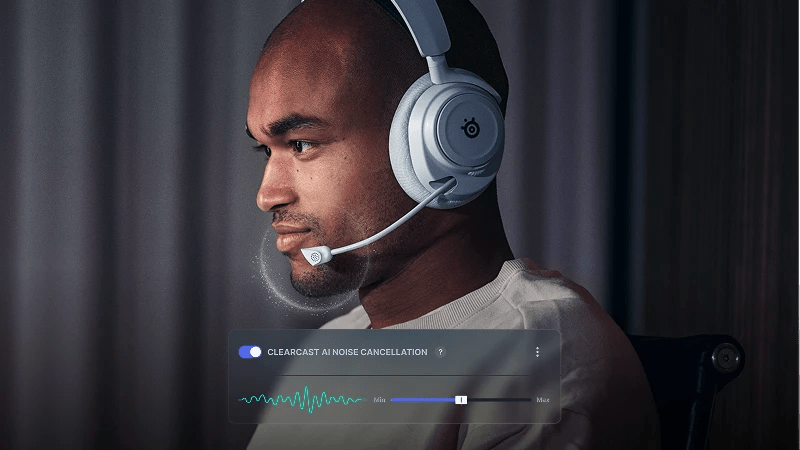
The retractable, bidirectional ClearCast Gen 2 microphone is another major improvement. This component uses active noise cancellation to effectively isolate the player's voice from surrounding noise. Voice communication performance surpasses that of many dedicated microphones, with an optimized frequency response between 100 Hz and 10,000 Hz. The built-in pop filter eliminates unwanted noise caused by plosive consonants.

Ergonomic comfort and refined design

The ergonomic design of the SteelSeries Arctis Nova 7 Gen 2 prioritizes comfort during extended sessions. The patented AirWeave elastic suspension system evenly distributes pressure across the head, eliminating the painful pressure points often found with traditional headbands. The memory foam earcups, covered in breathable leatherette, naturally conform to the shape of the ears while minimizing heat buildup.

The reinforced aluminum frame ensures lasting durability without compromising overall lightness, with the headset weighing in at just 285 grams. This metal construction effectively resists the twisting and mechanical stresses inherent in everyday handling. The earcups pivot 90 degrees, making them easy to store in the included hard carrying case. Discreetly integrated physical controls on the left earcup allow for intuitive volume and chat/game mixing without interrupting immersion.

The understated, professional aesthetic features a matte black color scheme accented with subtle details. Unlike gaming peripherals overloaded with aggressive RGB lighting, this model prioritizes timeless elegance. This design approach is perfectly suited to professional environments and users seeking versatility beyond pure gaming.

Immersive audio performance and advanced spatialization

The SteelSeries Arctis Nova 7 Gen 2's signature sound is characterized by a meticulous balance between analytical precision and musical warmth. The midrange boasts exceptional clarity, essential for distinguishing dialogue, announcements, and subtle sound effects, whether in video games or online casinos, where ambient music and interactive sounds constantly enhance the gaming experience. The bass offers controlled depth without being overpowering, ensuring crisp reproduction during action sequences and dynamic animations.

Sonar software significantly enhances headset performance with an advanced parametric equalizer and audio profiles tailored to different uses. This flexibility allows for precise adjustment of the sound output to suit personal preferences, while enjoying immersive spatialization.

In online gaming, this audio quality enhances the experience of following live events, with perfectly clear commentary and a realistic atmosphere, while also allowing for online casino play . Using high-quality headphones is therefore particularly beneficial for fully enjoying games and bets without disturbing the peace and quiet of those around you.

Final verdict and market positioning

The SteelSeries Arctis Nova 7 Gen 2 has established itself as a benchmark in the premium wireless gaming headset segment. Its price-performance ratio appeals to demanding gamers seeking superior audio performance without compromising comfort or battery life. The improvements brought by this second generation fully justify the investment for owners of the original version.

Key features include:

  • An exceptional 38-hour battery life that far surpasses the competition
  • Extensive cross-platform compatibility covering all current gaming ecosystems
  • Exemplary ergonomic comfort allows for fatigue-free marathon sessions
  • The spatial audio quality provided by advanced Sonar technology

Facing established competitors like the HyperX Cloud III Wireless or Corsair Virtuoso RGB Wireless XT, the SteelSeries headset maintains a technological edge. Its mature and regularly updated software ecosystem provides a decisive competitive advantage. Professional gamers and streamers will particularly appreciate the advanced customization options and proven reliability of the Danish brand.