The cooling system is crucial for the proper functioning of any electronic and electrical system. In the field of computing, if heat is not dissipated adequately, it will cause overheating of electronic components, particularly the CPU and GPU on the graphics card, and lead to PC or server failure. Currently, researchers are increasingly using the Reverse Jet Flow system to optimize PC cooling. What does it consist of? Is this system truly effective? We will analyze it.
The different computer cooling systems
Cooling an electronic chip, particularly the CPU and GPU, is generally achieved through an active air cooling system : using a heatsink coupled with one or more fans (a CPU cooler), or through a liquid cooling system. In some cases, other methods are used. These include oil cooling, liquid nitrogen cooling, dry ice cooling (using dry ice), phase change cooling, etc.
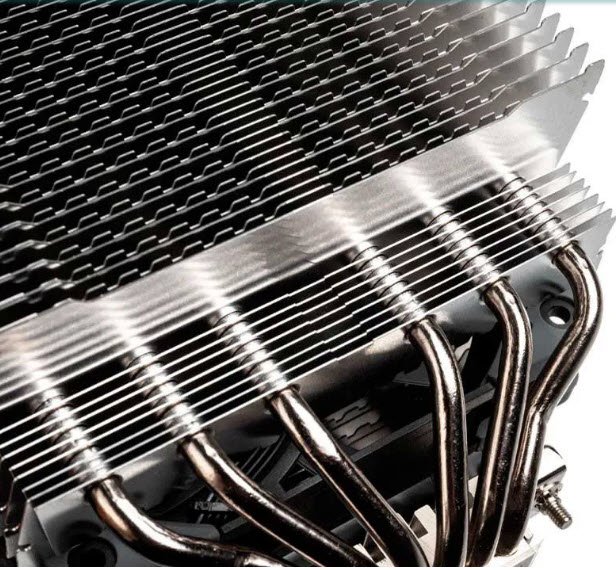
Reverse Jet Flow, what is it?
When we talk about Reverse Jet Flow , it refers to an active air cooling system. Fans are used in conjunction with a heatsink. This cooling system is also known as a CPU cooler (fan + heatsink). Reverse Jet Flow is a technique used for cooling CPUs and GPUs. Does this system offer a real advantage, or is it simply a marketing ploy to sell the accompanying product?
Reverse Jet Flow is a cooling system typically using two fans. The two fans are mounted on either side of the radiator. The second fan rotates in the opposite direction to the first, creating an efficient push-pull airflow. A conventional push-pull system with two fans rotating in the same direction creates a vortex in the middle, which generates noise and reduces the cooling system's efficiency. Reverse Jet Flow prevents this vortex from forming because the two fans rotate in opposite directions. As a result, air is more easily drawn in by the second fan. This system is so effective that it is used by experts to ventilate confined spaces or underground tunnels, even when the fans are far apart.
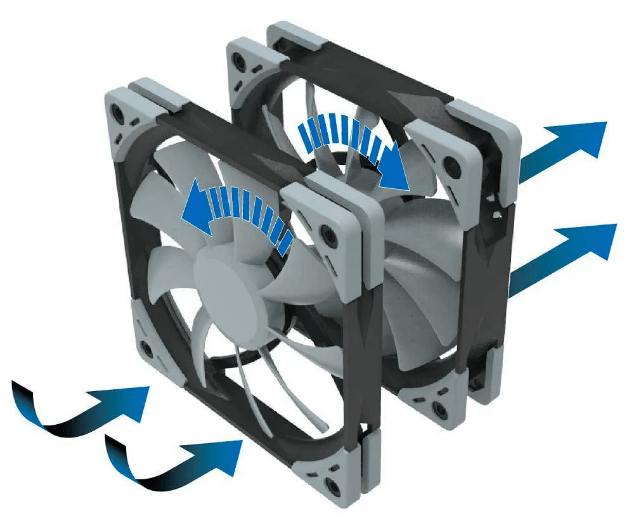
What about performance with a radiator in the middle?
It's obvious that air doesn't circulate the same way if there's a heat sink in the middle. Does the Reverse Jet Flow system still remain effective in this case? The air between the two fans passes through the laminar ducts of the radiator. Manufacturers take this parameter into account and optimize the airflow in the middle for a better cooling system. Therefore, to be effective, the entire system must be designed and engineered to ensure better heat dissipation. It's not advisable to create a Reverse Jet Flow cooling system without first optimizing the airflow around the radiator in the middle.