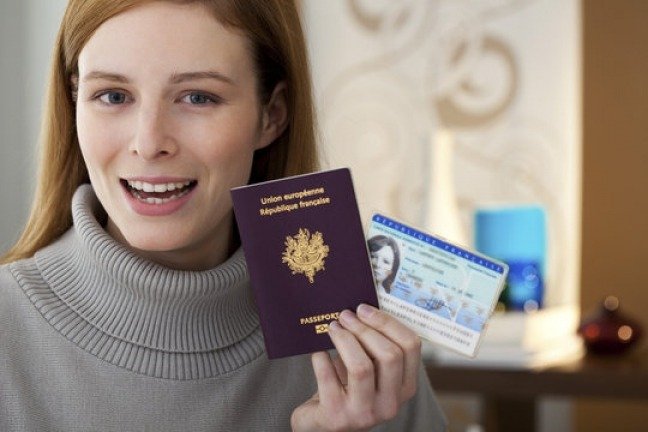
An identity card is an official document used to prove one's identity and nationality. It contains sensitive personal information, such as the holder's surname, first name, date and place of birth, sex, height, eye color, address, signature, and photograph. It also includes a national identification number ( NIR ) and an electronic chip that stores this data.
An identity card is often requested by organizations or individuals who need to verify the holder's identity, such as banks, government agencies, employers, landlords, telephone companies, or websites. In such cases, a photocopy of your identity card may be required to complete a file or process.
However, be aware that a photocopy of your identity card can be used maliciously by individuals seeking to steal your identity or commit fraud. For example, they could open a bank account, take out a loan, order products online, or carry out administrative procedures in your name without your consent.
To avoid these risks, it is recommended to cross out the photocopy of your identity card and indicate on it the reason for sending it, the recipient, and the date. For example: “This photocopy may only be used for my apartment rental application with the Dupont real estate agency on June 23, 2023.” This makes the photocopy unusable outside of this specific context and prevents it from being reused by another person or for any other purpose.
How do I cross out a photocopy of my identity card?
To cross out a photocopy of your identity card, simply follow these steps:
- Make a double-sided photocopy of your identity card, respecting the dimensions and legibility of the original document.
- Take a black or red pen and draw a diagonal line on the photocopy, being careful not to obscure the essential information (name, surname, photo, signature).
- Write in capital letters on the line the words “For use only” followed by the name of the recipient and the reason for sending.
- Add today's date to the bottom right of the photocopy.
- Sign the photocopy in the bottom left corner.
Here is an example of a crossed-out photocopy:

What are the advantages of crossing out a photocopy of your identity card?
Crossing out a photocopy of your identity card has several advantages:
- This helps to protect personal data and prevent identity theft or fraud.
- This allows the use of the photocopy to be limited to a single recipient and a single purpose.
- This allows us to comply with the principle of minimizing personal data, which consists of collecting only the data necessary and relevant for a given processing.
- This allows us to comply with legal obligations regarding the protection of personal data, including the General Data Protection Regulation (GDPR) and the French Data Protection Act.
What are the risks of not crossing out a photocopy of your identity card?

Failing to cross out a photocopy of your identity card can lead to significant risks:
- The risk of having your photocopy misappropriated by a third party who could use it for dishonest or illegal purposes.
- The risk of having his photocopy kept or transmitted to other people without his consent, which constitutes a violation of his rights over his personal data.
- The risk of having your photocopy used for processing that does not correspond to the initial reason for sending it, which constitutes a violation of the principle of purpose limitation of personal data.
- The risk of being exposed to administrative or criminal sanctions in the event of non-compliance with the rules on the protection of personal data.
Conclusion
An identity card is a personal document containing sensitive data. Therefore, caution is advised when providing a photocopy of your identity card to someone else. To protect yourself from identity theft or fraud, it is recommended to cross out the photocopy and write the reason for sending it, the recipient's name, and the date. This limits the use of the photocopy to a single context and ensures compliance with personal data protection regulations. Another method to secure a photocopy of your identity card is to use watermarking. Watermarking involves applying an invisible or visible mark to the photocopy, which allows its authenticity and origin to be verified. Watermarking can be done with specialized software or with a printer that has this feature. Watermarking makes it more difficult for malicious individuals to falsify or reuse the photocopy.