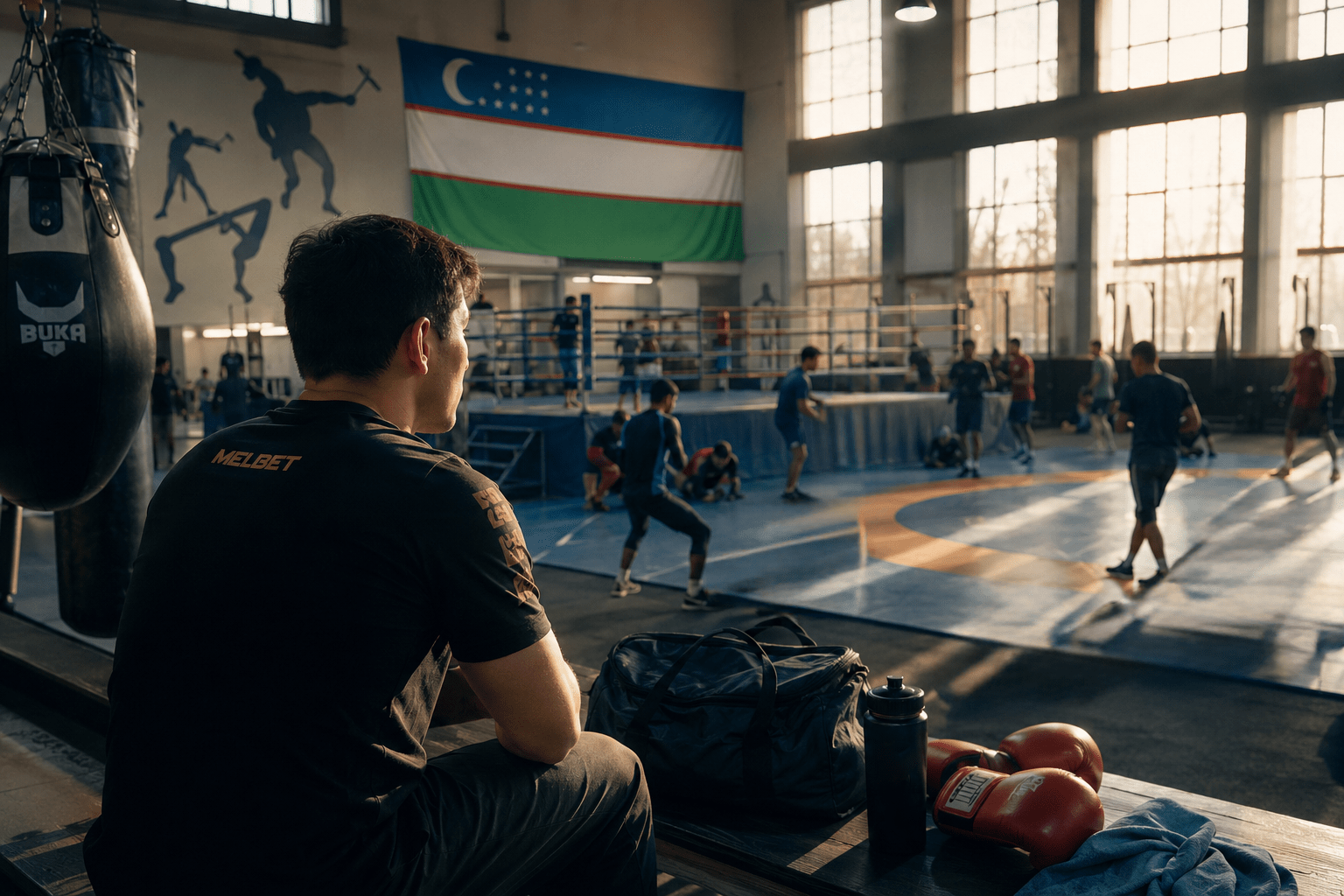
If, a few years ago, you had walked into a sports betting shop and tried to bet that Central Asia would fill ice rinks to their maximum capacity or win the Chess Olympiad hands down, the bookmaker would have laughed in your face.
Historically, the Uzbek sporting landscape was as predictable as a marked deck of cards handled by an old-school dealer. In one corner, football held an absolute monopoly; in the other, the heavy artillery of boxing and wrestling swept up all the national chips. However, these conservative formulas crumble faster than a poorly calculated accumulator bet.
The country is undergoing a real tectonic shift, transforming a once quiet regional market into a high-stakes arena for non-traditional disciplines.
Today's Uzbekistan behaves like an ambitious high roller who has decided to diversify their portfolio and sit at several volatile tables at once. State-backed infrastructure is developing faster than live betting odds during chaotic extra time, creating a perfect playground for underdogs. To stay ahead of the curve and react instantly to these changes, savvy bettors are using the melbet uz, which offers extensive markets on these newly created national favorites. The sporting landscape is being rewritten in real time, and activities that once resembled risky bets are now capturing the lion's share of public attention.
Chess Booms and Cold Ice Rinks: When Daring Bets Hit the Jackpot

The biggest surprise of recent seasons has undoubtedly been the intellectual warfare being waged on the 64 squares. Ever since a team of Uzbek teenage grandmasters began to dethrone the world's elite in international tournaments, chess has gone from a dusty pastime for retirees to a major national asset. Major matches draw audience figures that would make traditional football clubs envious. It's no longer just a game; it's a cold, calculated mathematical exercise where a single blunder destroys a massive amount of capital—a concept that resonates deeply with anyone who knows how to manage risk under pressure.
The second major anomaly on the radar is the expansion of ice sports. Common sense would suggest that a scorching Central Asian climate would favor water polo, yet Tashkent has gone all in on hockey. The construction of state-of-the-art arenas and the emergence of professional clubs have triggered a massive influx of spectators. Stands are packed with the fervor of a cup final, and youth academies are booked solid for months. For those following the fast-paced action on the go, the Melbet APK allows users to monitor odds fluctuations and secure live bets on these rapidly growing regional hockey leagues. This digital mobility ensures that sports fans can back their predictions from anywhere in the metropolitan area.
This massive diversification has not only affected team sports but has also transformed individual lifestyle disciplines that were once considered inaccessible elite pastimes. The list of sports ensuring a massive influx of new recreational players includes:
- Futsal: Small pitches offer lightning-fast dynamics, high-scoring action and a quick adrenaline rush.
- Archery: This academic discipline has received a serious financial boost thanks to school programs and modern shooting ranges.
- Golf: Evolving from a luxury gadget to a fully functional industry with world-class greens in the suburbs.
- Marathon running: Mass urban races have transformed casual jogging into a very fashionable and high-status social ritual.
These emerging trends clearly demonstrate that local audiences are tired of the old betting slip and want fresh action. Every major marathon or regional mini-football tournament now attracts serious commercial sponsors looking for a piece of the pie.
Shuffling the Cards: Why Old Favorites Must Share the Pot
Naturally, no one is consigning traditional football to the scrap heap just yet. The national team's historic push in major world qualifiers and the construction of a massive 55,000-seat stadium in New Tashkent demonstrate that the beautiful game still holds the key to the stadium gates. Tax incentives for clubs and a strategic shift toward private ownership are transforming the national league into a much cleaner and more lucrative commercial product. But the monopoly is officially dead; football now has to fight for media airtime against judo, weightlifting, and a relentless wave of futsal.
This fierce competition for attention actually improves the entire sports ecosystem. When a fan has to choose between supporting a tactical chess genius, watching a brutal hockey clash, or following a classic football derby, total audience engagement skyrockets. Event organizers are forced to maximize the value of their productions, improve stadium experiences, and recruit higher-quality foreign talent. Everyone in the market benefits, including analysts who suddenly find themselves with an incredibly rich and multidimensional selection of events to analyze.
To understand exactly how tokens are redistributed between established heavyweights and new market disruptors, look at the pillars of this structural overhaul:
- Infrastructure improvements: Construction of multi-purpose sports complexes capable of changing their configurations for different events from one day to the next.
- Media Modernization: Regional tournament broadcasts receive a brilliant, world-class production facelift.
- Capital Inflow: Transition from total dependence on state subsidies to attracting aggressive private venture capital funding.
- Access to the Base: Launching thousands of accessible plots of land in local neighborhoods to identify raw talent early.
This systematic approach ensures that the current boom is not a fleeting winning streak, but a calculated long-term strategy. The nation is successfully shedding its reputation for only being able to do one thing, by building a highly diversified and resilient sports market.
Overall, Uzbekistan is playing a masterful, high-stakes game on the Asian sports scene. The die is cast, the bets are on, and given the speed at which arenas are being built and international medal hauls are being racked up, the house is poised to win big. For those watching from the sidelines or professionally calculating the odds, the real show is just getting started.