With the evolution of information and communication technologies, an exponential amount of data circulates every day. We browse websites and applications daily, most of which want to collect some of our personal data for the operation or improvement of their service.
As a result, many users find it difficult to trust, especially with recurring data leaks that make headlines and frighten internet users.
However, there are apps that offer security and privacy through their service. Let's take a look!
1. Encrypted messaging applications: Signal in the lead.
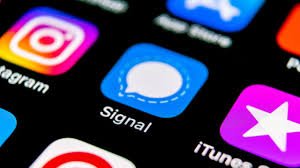
You probably don't want strangers reading your conversations. To avoid prying eyes, use the free messaging app Signal (for Android and iOS) on your phone. It uses a strong encryption protocol that encrypts all your messages, meaning that even if someone intercepts them, they won't be able to read them.
Like a standard messaging app, Signal supports voice and video calls, group chats, GIFs, and emojis. However, encryption remains active at all times, and if you really don't want a conversation to leave any trace, the app can even make your sent messages disappear from the recipient's phone, much like Snapchat.
2. VPN apps: OperaVPN.
To protect the rest of your information outside of email, you can use a virtual private network, or VPN, application. A VPN encrypts all the data your phone sends out into the world, making it more difficult for anyone—from your internet service provider to government agencies and hackers—to access your communications.
Free VPNs tend to be slower and less effective than paid VPNs. However, Opera VPN (for Android and iOS) is an exception. Simple to set up and use, this app not only encrypts your activity but also prevents ads from tracking you across the web and allows you to change your location to appear as if you're somewhere else in the world
Good to know: discover the best free firewalls for windows 10 !
3. Password management: LastPass

Passwords are the first line of defense for your online accounts. For maximum security, you should have a different one for each account, from your bank to your email. But in reality, who can remember all those individual passwords? Password managers can.
This type of application stores all your account information—as well as other sensitive data, such as your credit card details—under a single username and password, allowing you to protect your different logins without having to remember multiple ones. The administrator can even generate strong, random passwords for each account.
Good to know: Do you usually use Google Authenticator but have lost your login details? Check out our article " How to recover Google Authenticator on mobile ".

LastPass stores and protects your information for free. But if you upgrade to the premium version, you get a few extra options: allowing family members to share your account information, handling accounts protected by two-factor verification (which require an additional code besides the password), and logging into apps as well as online accounts.
4. Secure mobile banking application

Mobile banking services are booming today for many reasons, including their convenience. In fact, mobile banking services are more secure than traditional online banking. Accessing the mobile version of your bank's website or using the dedicated app is inherently safer than using a computer.
Why? Computers are prime targets for cybercriminals . Most PCs run on Microsoft's operating system, which is the most frequently attacked. They typically contain a large amount of data and are vulnerable to viruses created by cybercriminals. Over the past decade, these criminals have learned how to exploit online banking services through customers' computers. As a result, desktop computers have been hacked in every conceivable way, making them, and the data they contain and transmit, particularly vulnerable to fraud.

Mobile banking services, on the other hand, are more recent. Operating systems vary, viruses and other malware are not as widespread, and the handset technologies themselves are more diverse from one manufacturer to another. Computers are therefore the primary target, while mobile phones are less affected.
Mobile operator networks are also more difficult to hack than the wireless network at your home or local café. Mobile networks, such as 3G and 4G, have a much higher level of encryption and are not as vulnerable.