Cybersecurity is definitely not something to take lightly… This new year is off to a flying start! Indeed, on February 12, 2021, the databases of Google (Gmail), Netflix, and LinkedIn were the target of a massive attack, a real hacking incident the likes of which we haven't seen in a long time!
Hold on tight: 3 BILLION passwords have been stolen …
Just one day before this event, the "white hat" hacker Alex Birsan had infiltrated the programming language repositories of Microsoft, Apple, PayPal, and Tesla to inject malware and damage their systems. Obviously, he didn't cause a great deal of harm.
Good to know: A white hat hacker infiltrates computer systems to detect vulnerabilities and then reports them to the owners of these systems in order to strengthen the security of these companies.
Unfortunately for us, not all hackers are benevolent people like Alex Birsan… It is more than necessary to protect ourselves against these “internet pirates”.
Millions of people around the world are often victims of malicious hackers who use VPNs and make themselves untraceable.
The potential risks?
- A hacker can even go so far as to lock your computer
- Spy on your online activities
- Access your personal files
- Knowing your geographical location through your IP address
Everything we're discussing here applies equally to your computer, smartphone, or tablet. Let's get started..
The password manager
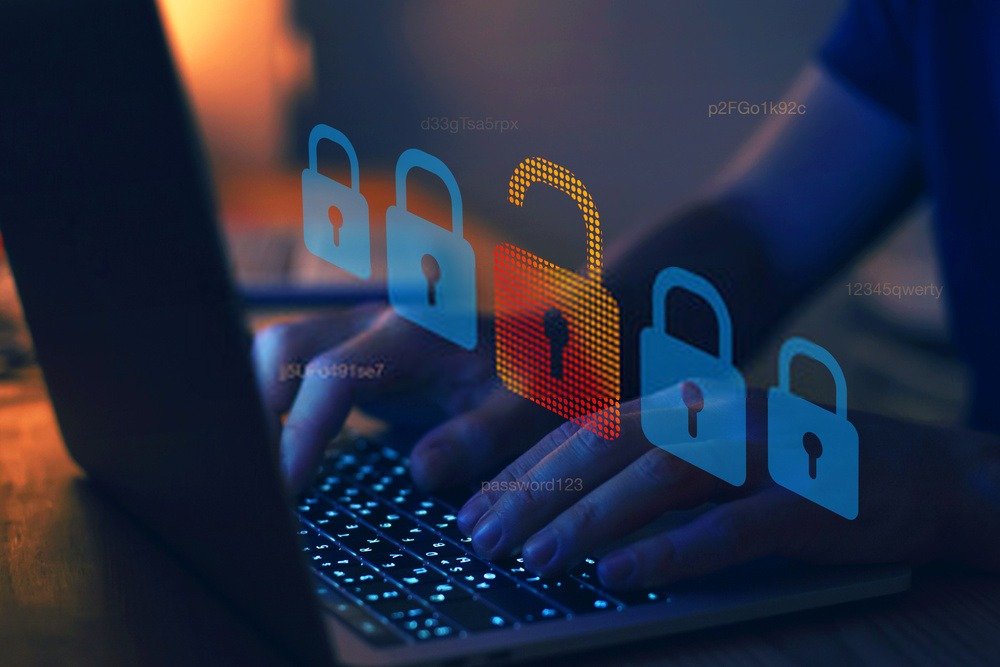
When you want to register on a website for any reason, the site is much more particular about the length of your password than before.
And not only in terms of its length, because you also often have to use capital letters, numbers and even those famous special characters like the slash (/), the asterisk (*) or the dash (-).
It's getting more and more complicated, and you'll probably end up spending several minutes trying to choose a password that meets all these excessive requirements.
Many people know about this but very few actually use it, and that's a serious mistake.
Here's what it is, and what it's used for:
A manager will create a password for you upon request, meeting all the requirements. Your password will often be several dozen characters long and virtually impossible to crack. Its main advantage is that it centralizes your password and keeps it encrypted along with all the passwords you use for different websites.
Good to know : If you use the Google Chrome browser, it offers a password manager. For greater security, we recommend using paid software!
That said, there are many other methods to protect yourself against any hacking attempt. Not through access to a website login, but from the network itself!
The VPN – virtual private network.
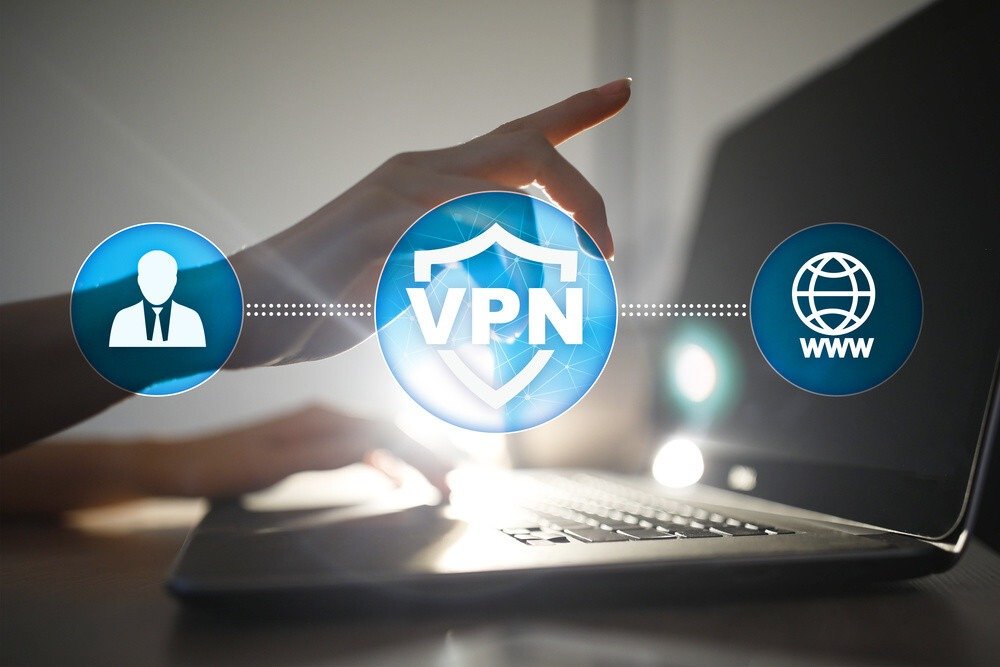
A VPN software has many uses, making it an extremely powerful tool that you absolutely must have in your toolkit.
Its primary purpose is to camouflage your IP address .
It's much more than just camouflage or concealment; a VPN completely hides your IP address. In short, you become totally untraceable . Hackers systematically use this type of software when launching a cyberattack.
For ease of reading, we will not go into detail about how it works.
In short, how does it work?
A VPN is a virtual private network that allows you to create a secure, encrypted connection to another network on the internet. By connecting any device to a VPN, the device acts as if it were on the same network as the VPN, allowing, for example, remote access to local network resources. In this way, all traffic—or a portion of it—is sent encrypted and secure through this new VPN communication tunnel.
Some additional advantages!
Download anonymously
A VPN allows you to surf the internet and download whatever you want anonymously , because your real IP address will never be made public; only the IP address of the VPN server you connect to will be visible.
To guarantee this anonymity, it is important to choose a quality VPN !
To bypass geographical blogging
Is a YouTube video you'd like to watch blocked in your country? Are you traveling and find that you can't watch the Netflix series you usually follow?
Good to know about Netflix : Did you know that the movies and series they offer vary by country? In France in 2021, you only had access to 4,019 programs on the Netflix platform. Yet, the total number of these movies, series, documentaries, and animated films worldwide reached 53,778. The math is simple: you only have access to 7.53% of what the platform offers. That's less than 1 in 10!
With a VPN, you can easily bypass this type of geo-blocking by simply connecting to a server in a country where it's not active. This will allow you, for example, to simulate a US IP address (or an IP address from another country) while traveling.
To Bypass Firewalls

The VPN service is also used to bypass firewalls , both locally and nationally.
A local firewall might be, for example, a university firewall that prevents you from connecting to Netflix, or a workplace firewall that blocks certain sites, such as YouTube. By connecting via a VPN, this problem disappears.
At the national level, the "Great Firewall of China" can be cited as an example, which can be bypassed using a VPN in China. There are also other countries whose governments attempt to impose online restrictions where a VPN can be useful. These include the United Arab Emirates, Iran, Turkey, and Russia.
Having a secure internet connection !
Public WLANs (public Wi-Fi) are more dangerous than you think! When using public Wi-Fi at an airport, hotel, or downstairs cafe, be aware that even inexperienced hackers can access sensitive data belonging to users of these Wi-Fi networks.
If, on the other hand, you use a VPN to connect to the Internet using public WiFi, your data is encrypted and no hacker will be able to access sensitive data such as your credit card number.
The antivirus

Antivirus software remains the most well-known defense weapon! An antivirus program is an essential computer program to prevent potential malicious attacks on your computer.
It also allows the blocking, detection and deletion of harmful files that you might inadvertently download onto your PC while browsing the web.
An antivirus program protects you from several types of computer viruses – malware:
- Trojans (Trojan horse)
- Spyware (spy software)
- Adware (advertising)
- Ransomware (access to your personal information)
- Rootkits (to take control of a connected device)
An antivirus program can also offer you a password manager, which, as we have seen, proves to be very useful.
Good to know Windows operating system , an antivirus program is already pre-installed. There are also some very good free antivirus programs available.
Unlike a VPN, an antivirus program won't allow you to browse the web completely freely without any restrictions. However, it will effectively protect your computer system against certain threats.
Combine Antivirus and VPN for greater protection!
For even greater security, it is strongly recommended that you use both a VPN and antivirus software . The two can be complementary and thus ensure optimal protection. As the saying goes, "you can never be too careful."
More than 5.6 million personal data records, such as passwords or even credit card numbers, are hacked every year. Individual users browsing from home are twice as likely to fall victim to a cybersecurity breach as businesses.
There are many different types of attacks. These include phishing (fake emails asking for your information, which appear legitimate so you provide it), and identity theft (the hacker impersonates you and carries out illegal activities, leading to charges of tax fraud or terrorist financing). The penalty is criminal when the perpetrators are identified (they almost never are, or perhaps only in 1 or 2% of cases).
Now that you know all this, take immediate action. On February 14, 2021, hackers stole nearly €100 million in a massive attack. Caution is always essential! Take a few minutes to protect yourself from a cyberattack. The best recommendation: install a VPN and antivirus software immediately.