AMD currently holds a 20.2% market share in the mobile processor . Data from Mercury Research for the third quarter confirms this. AMD is gaining increasing market share in the x86 microprocessor sector.
Why this sharp increase in market share?
AMD has successfully evolved its products and introduced new architectures. This is not the case for its eternal rival Intel, which lags behind technologically, particularly with regard to the new 10-nanometer manufacturing process.
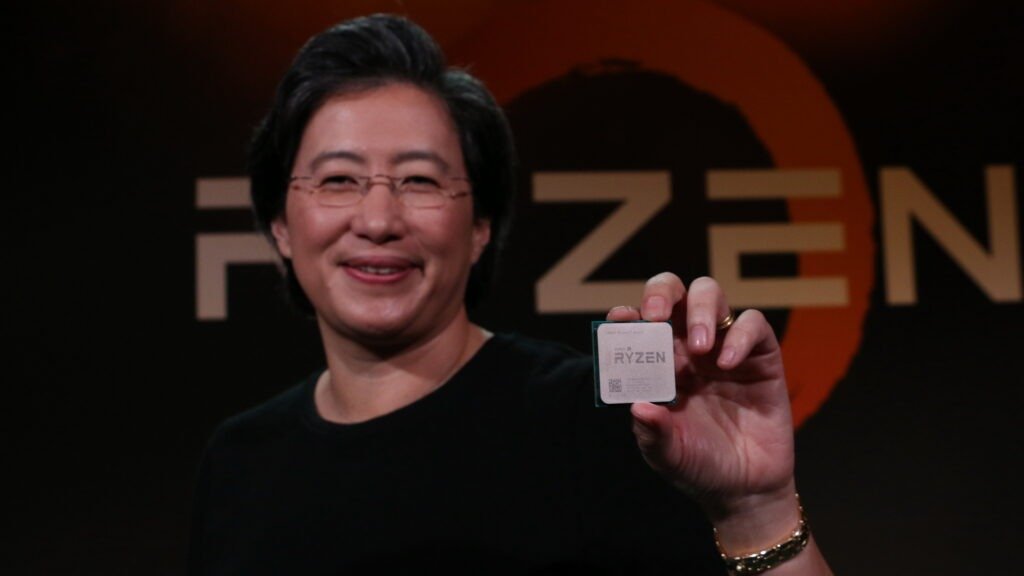
Lisa Su's team will release the Ryzen 5000 series processors based on the Zen 3 tomorrow, November 5, 2020. They will release the Ryzen 5 5600X, the Ryzen 7 5800X, the Ryzen 9 5900X, and the Ryzen 9 5950X. Intel, on the other hand, will only release the Rocket Lake in Q1 2021. This gives AMD a significant head start to capture an increasing market share this holiday season.
According to Mercury Research's analysis, AMD has reached a 22.4% market share in x86 processor sales (excluding IoT). This represents a 4.1% increase compared to Q2 and a 6.3% improvement compared to Q3 2019. For desktop PCs, AMD holds a 20.1% share, reflecting a 0.9% increase compared to Q2 of this year and a 2.1% improvement compared to Q3 of last year.
Which market segment is AMD increasingly targeting?
Looking closely at the statistics, AMD has primarily outperformed Intel in the high-end market. Indeed, AMD continues to innovate in this area, while Intel lags behind. This is confirmed by analyst Dean McCarron, who states that 60% of AMD's sales come from these high-end desktop computers: Matisse , Pinnacle Ridge , etc. The analyst adds that if only the entry-level market is considered, Intel will surpass AMD.
In the laptop sector, AMD currently holds 20.2% market share. This represents a 0.3% increase compared to Q2 2020 and a 5.5% increase compared to the same period last year. Intel, however, is mitigating the damage with its entry-level products such as Core i3, Pentium, and Celeron processors.
What about the server sector?
In the server sector, if we only consider EPYC and Xeon Scalable 12.1% market share . This is significantly higher than Intel's 10.4%. This is largely due to declining sales of Intel products to businesses and government institutions. However, Intel has slowed AMD's lead by heavily investing in the Atom SoC. Thus, on average, considering all server categories, AMD only holds 6.6% of the market share, representing a market share increase of just 0.8%.
In short, AMD is performing very well this year, especially for Q3 2020. Intel had better watch out and present its new generation processors as soon as possible.