

Who hasn't encountered the frustrating problem of ablack screen on Windows 10, with the mouse cursor visible but nothing else on the screen? Don't panic! We're here to help you solve this common problem and get you back up and running in no time.
Understanding the cause of the black screen

Before diving into possible solutions, it's important to understand why thisblack screen might occur. Several factors can cause this issue, such as:
- A faulty or outdated graphics card driver
- Connection problems with the screen
- A misconfigured fast start
- Problems related to Windows Explorer
Here's a video tutorial to fix a black screen with a visible cursor !
Solution 1: Restart Windows Explorer
Sometimes, simply Explorer Windows can resolve the black screen issue. To do this, follow these steps:
- Press Ctrl + Alt + Delete simultaneously and click on "Task Manager".
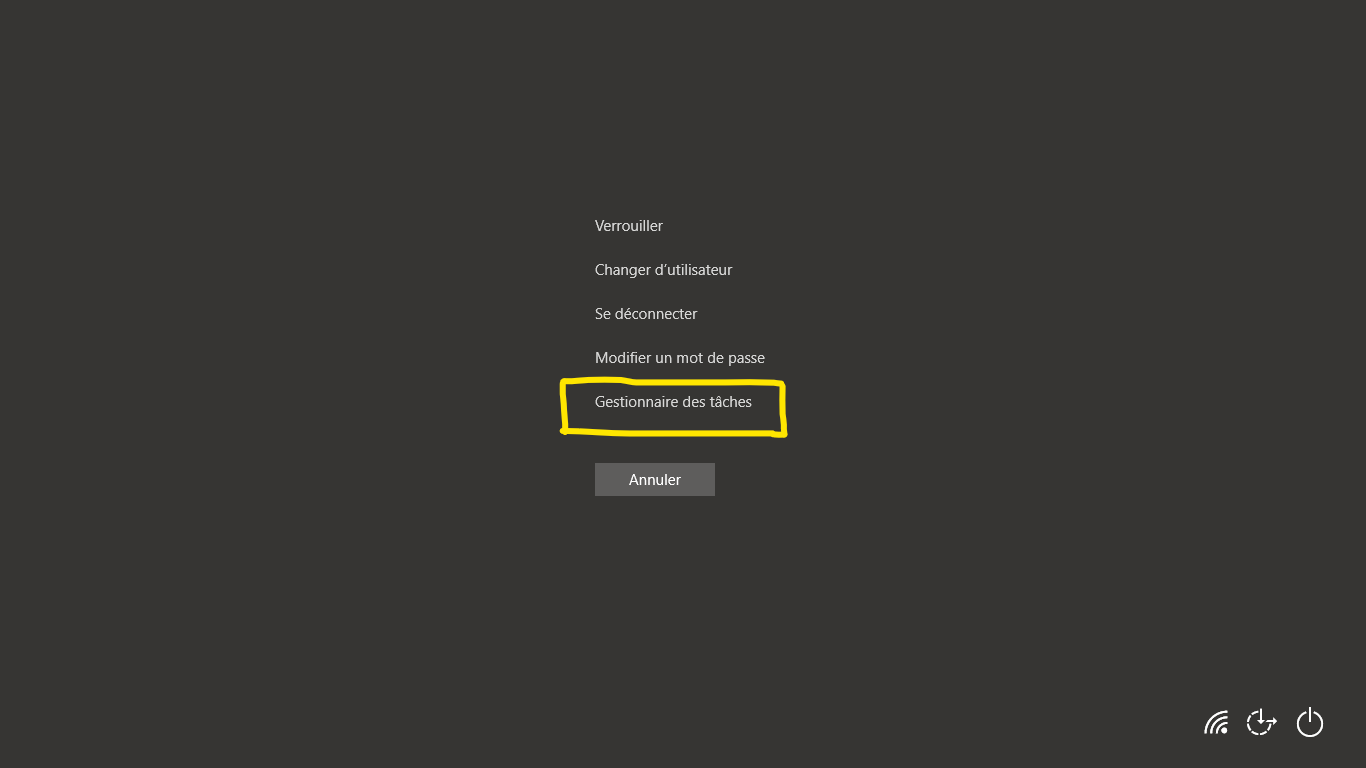
- In the list of processes, look for " Windows Explorer".
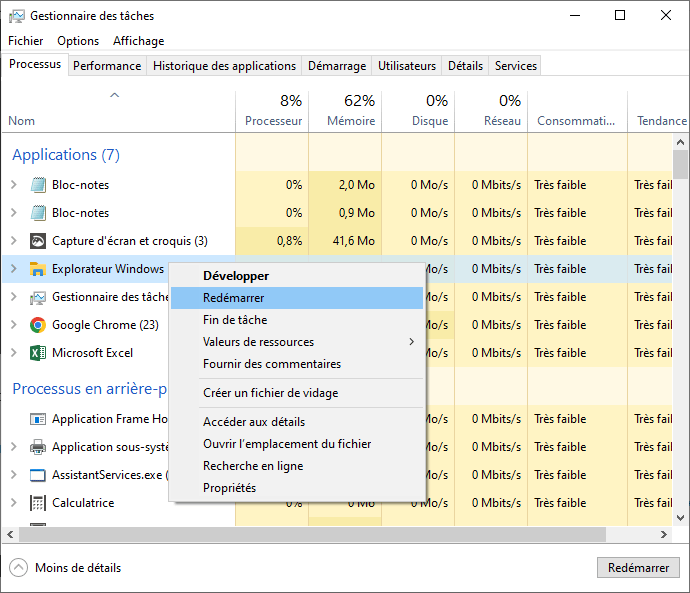
- Right-click on " Windows Explorer" and select "Restart".
After restarting Explorer, the black screen should disappear and you should regain normal access to your computer.
You might like this article: Alt + Tab key no longer working? 4 methods to fix the shortcut in Windows !
Solution 2: Update your graphics card drivers
An outdated or faulty graphics card driver can also cause a black screen. Here's how to update your drivers:
- Open the "Task Manager" as described previously.
- Click on "File" then "Run a new task".
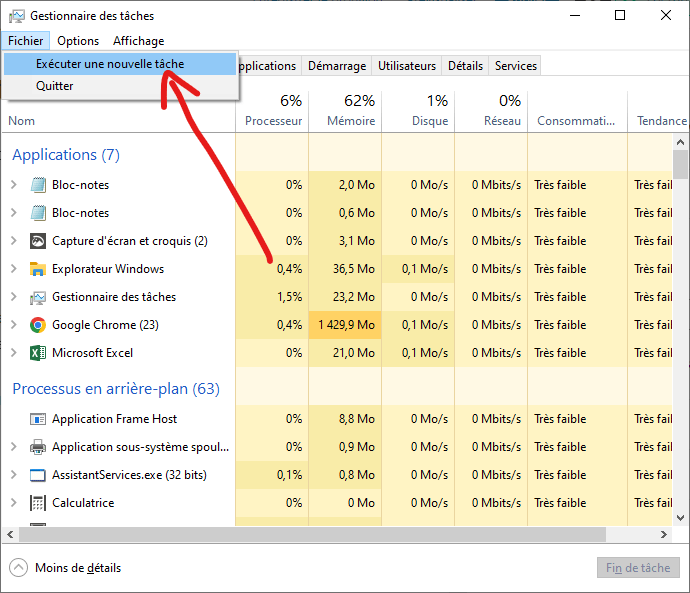
- Type "devmgmt.msc" in the text box and press Enter to open the "Device Manager".

- Search for and expand "Graphics cards", right-click on your graphics card, and then click "Update driver".
If an update is available, install it and restart your computer. This may resolve the black screen issue.
Solution 3: Disable fast startup
Fast Startup is a Windows 10 feature that can sometimes cause black screen issues. To disable this feature:
- Open the "Task Manager" and start a new task as previously described.
- Type "control.exe" in the text box and press Enter to open the "Control Panel".
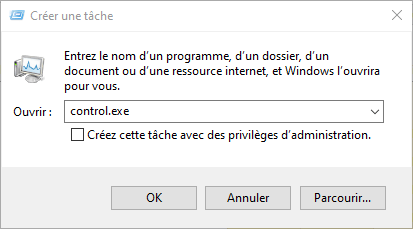
- Click on "System and security" then on " power supply options".
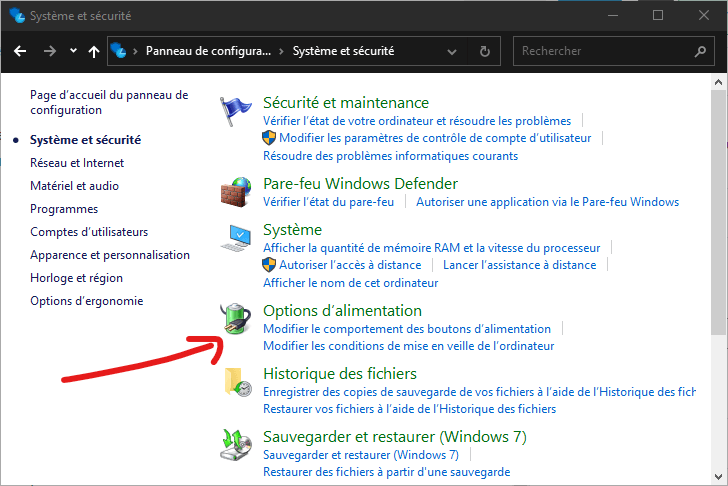
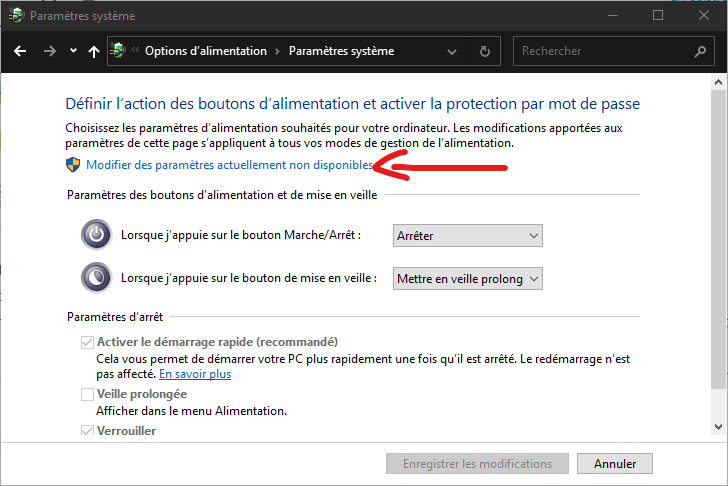
- Select "Choose the action of the power supply buttons" in the left pane.

- Click on "Edit settings currently unavailable" at the top of the window.
- Uncheck the "Enable fast startup" box in the "Shutdown settings" section and click "Save changes".
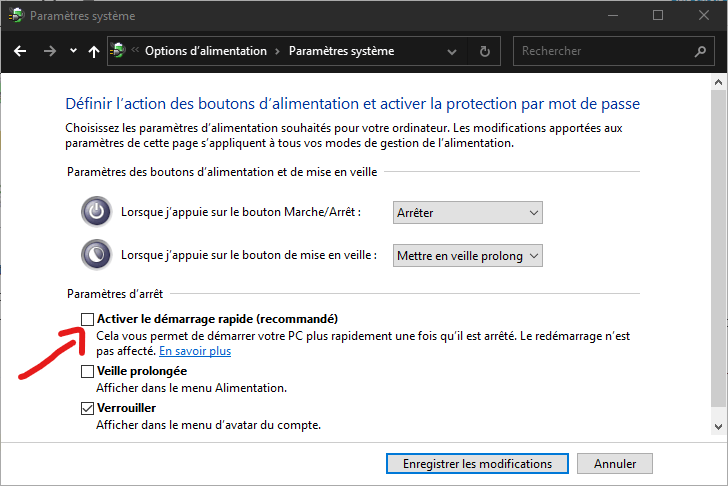
After disabling fast startup, restart your computer to see if the black screen problem is resolved.
Also read: error 0x80244022 Windows Update
Solution 4: Check the screen connections
Make sure all cables connecting your monitor to your computer are properly plugged in. If you're using an adapter to connect your monitor, also check that it's working correctly. If necessary, try connecting your monitor to another computer to see if it works.
Comparative table of solutions
| Solution | Description | Complexity |
|---|---|---|
| Restart Windows Explorer | Restart Windows Explorer via Task Manager to resolve the black screen issue. | Easy |
| Update your graphics card drivers | Update your graphics card drivers using Device Manager. | AVERAGE |
| Disable fast startup | Disable the Windows 10 fast startup feature in the power supply options. | Easy |
| Check the screen connections | Check the cables and adapters connecting your monitor to your computer. | Easy |
By following these solutions, you should be able to resolve the black screen issue on Windows 10 and regain access to your computer. Remember that prevention is always the best solution. Keep your drivers up to date and regularly back up your data to avoid future problems.


