
When you want to invest in a new laptop or desktop computer, but don't need high performance, but rather portable options for office work, you might consider Intel i3 processors. These PC processors are a good alternative and avoid having something too powerful like an i5 or Intel Core i7 processor.
However, did you know that there are several types of i3 processors?
Yes, contrary to what one might think, they are not all created equal. They differ in their generation, number of cores, and frequency, meaning that every year, or even several times a year, better Intel i3 processors arrive on the market in batches!
The question then becomes : how to choose the right CPU? That's what we'll explore in our 2021 comparison and buying guide for the best Intel i3 processors.

Things to know before making a purchase!
- There are several types of Intel i3 processors that differ in their generation, frequency, number of cores, RAM, and other factors that we will explain later in this article.
- If you're a hardware enthusiast and gaming is what you're after, we'd rather tell you right away: an Intel i3 processor won't allow you to achieve high performance in your games, unless you only play less demanding titles. Furthermore, the i3's power won't be balanced with your graphics card's clock speed (in MHz). There are, however, some exceptions.
- Currently, we're on the 10thcalled generation of Intel i3 processors, Comet Lake. This generation has just been released for new PCs. In any case, these processors represent Intel's mid-range offering, with the i5 and i7 at the high end, and the Pentium and Celeron at the low end. To compete with their high-end counterparts, the i3 processors are equipped with Hyper-Threading technology .
Comparison of the best Core i3 processors
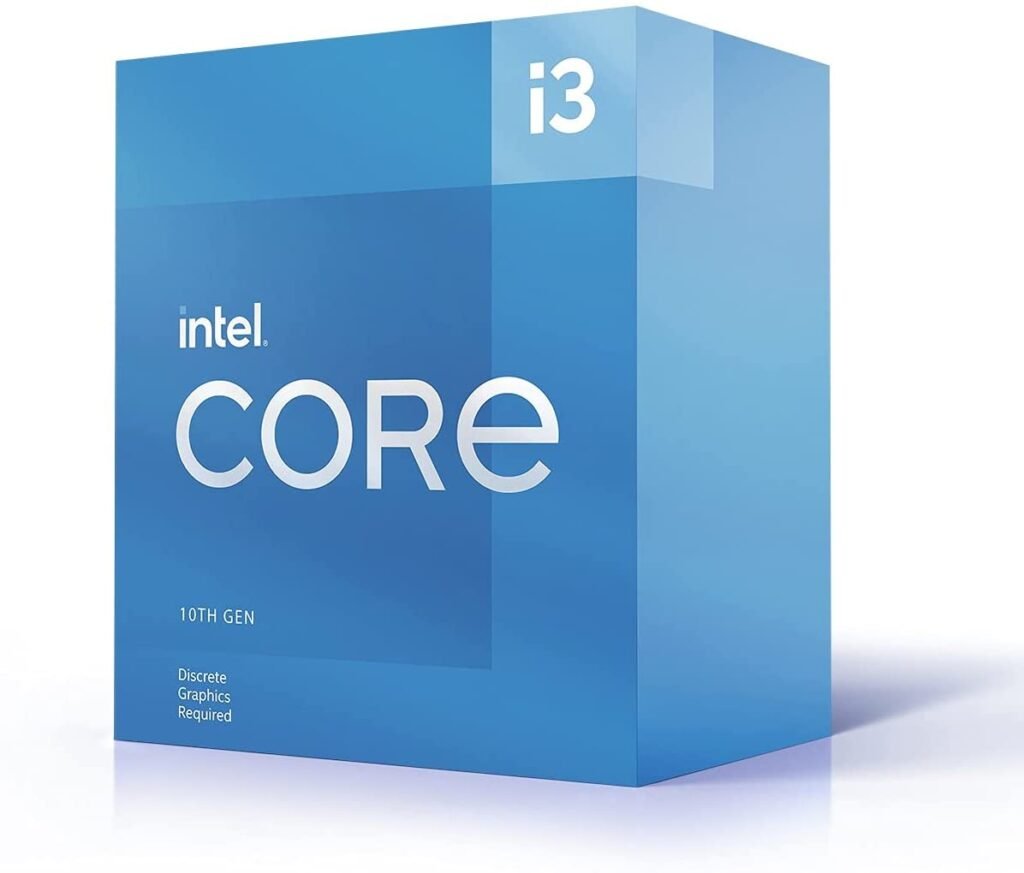
1. Intel Core i3-10105F: the latest generation i3
Features and Reviews
The Intel Core i3-10105F is the latest model in the 10th generation of this processor. Sold for €94.20, this CPU features an FCLGA 1200 socket and will allow you to handle office tasks, browse the internet, or play simple games smoothly. Its base clock speed is 3.7 GHz, and thanks to Turbo Boost 2.0 technology, the frequency can be increased up to 4.4 GHz.
With 4 cores and 8 threads, the processor can handle running multiple programs simultaneously without slowing down the system. For faster data exchange with RAM, this Intel Core i3 processor features 6 MB of cache memory. It supports up to 128 GB of dual-channel 2666 MHz DDR4 RAM.
On the graphics side, the Core i3-10105F uses an integrated Intel UHD Graphics 630 chipset with a base clock speed of 350 MHz. With a TDP (Thermal Design Power), this processor consumes 65W of power, generating little heat even under continuous use.
In terms of connectivity, you have several options for connecting your devices; the Intel Core i3 10105F supports PCI-Express 3.0, Wi-Fi 6, SATA-3, M.2, USB 3.1, Displayport and HDMI.

2. Intel Core i3-10100: Boost your productivity with this 10thgeneration processor

Features and Reviews
The 10th generation Intel Core processor is also based on a 14nm manufacturing process and features Hyper-Threading technology; these specifications also apply to the Core i5, i7, and i9 processors. Designed to deliver exceptional performance, this processor will handle your everyday tasks faster and will also deliver incredibly smooth gameplay.
With 4 cores and 8 threads, you'll avoid system crashes and enjoy smooth gameplay. The base clock speed is 3.6 GHz and can reach up to 4.3 GHz thanks to Turbo Boost 2.0 technology. This processor will demonstrate its power by handling various games, virtual reality, photo editing, and multimedia simultaneously. Thanks to improved heat dissipation, even when operating at maximum power, the TDP of this processor remains controlled at 65W.
Equipped with dual-channel DDR4-2666 RAM and a 6MB cache, this processor is versatile. For improved graphics performance, this Core i3-10100 processor lacks Intel Quick Sync technology, which would otherwise allow you to create Ultra HD videos at incredible speeds.
Compatible only with dedicated Comet Lake-S 400 chipsets, this 10th generation Intel Core i3 processor has several connectors, necessary to have a configuration that meets your needs: PCI-Express 3.0, Wi-Fi 6 support, SATA-3, M.2, USB 3.1, Displayport, HDMI.
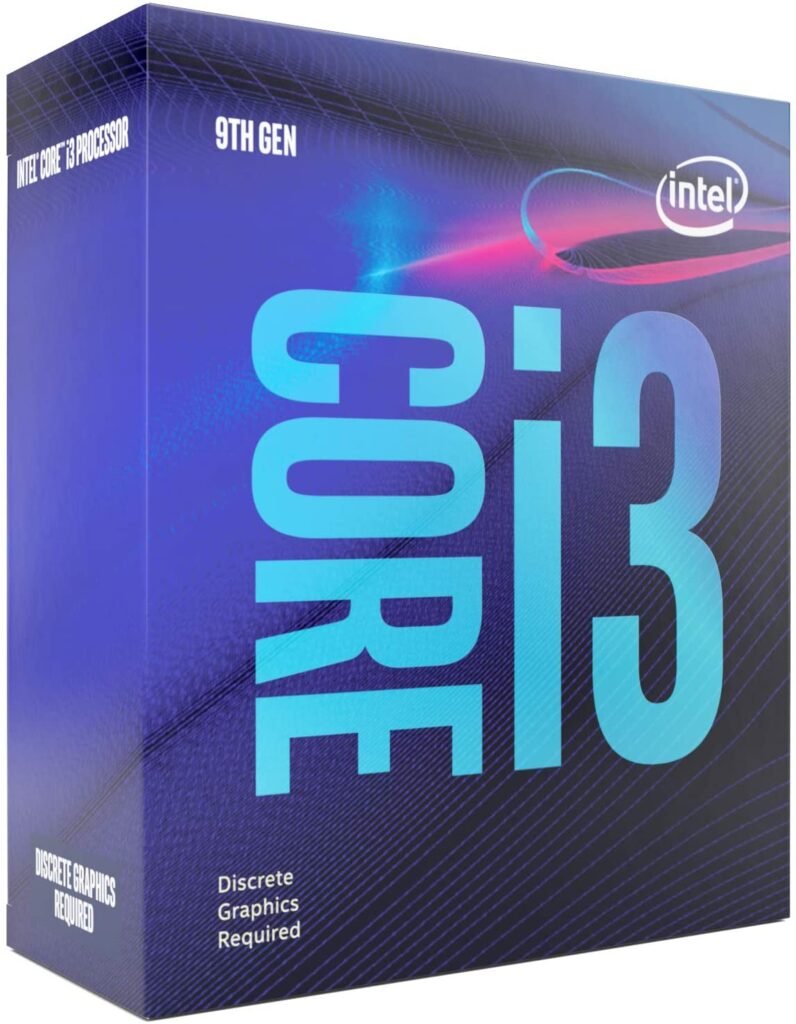
3. Intel Core i3-9100F: The best CPU for entry-level computers
Features and Reviews
The Intel Core i3-9100F is considered a high-end 9th generation processor. Designed for office tasks and light gaming, this processor offers good value for money.
Priced at €174.17, this CPU offers satisfactory performance. Featuring 4 cores and 4 threads, each core has a base clock speed of 3.60 GHz, and thanks to Turbo Boost 3.0 technology, this frequency can reach 4.20 GHz to increase your productivity.
Based on the 14nm Coffee Lake Refresh process, heat dissipation is improved with the included heatsink and a power consumption of 65W. Memory includes 6MB of cache and dual-channel DDR4 RAM running at 2400MHz. Featuring an LGA 1151 socket, this Intel Core i3 processor is compatible with 300 series motherboards.
On the graphics side, you'll need to pair it with a dedicated graphics card to fully enjoy its performance and play games smoothly. As for connectivity, you can connect your devices via PCI-Express 3.0, SATA-3, M.2, USB 3.1, DisplayPort, and HDMI.
4. Intel Core i3-8100: Enjoy the power and responsiveness of this processor
Features and Reviews
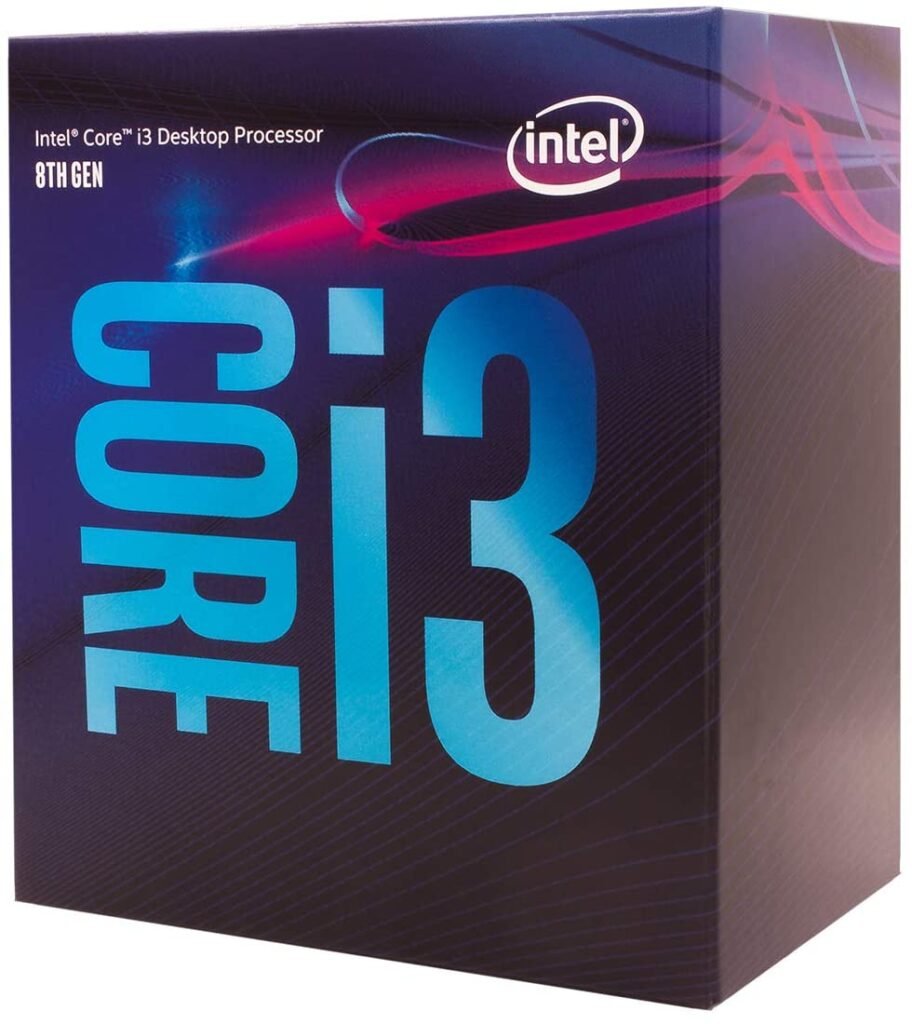
Part of the 8th generation of Intel Core i3 processors, this 8100 is based on the 14nm Coffee Lake architecture and uses the LGA 1151 V2 socket. It's the ideal processor for multimedia and office applications, as well as for gaming. Featuring 4 cores and 4 threads, the processor's maximum frequency is 3.6 GHz.
With a rated power of 65W, a CPU cooler is included to improve heat dissipation, especially during extended use. Supporting up to 64GB of RAM, this processor features two DDR4 memory channels running at 2400MHz. If gaming is your focus, this CPU includes integrated Intel UHD Graphics 630 chipset for an impressive graphics experience.
This processor supports 4K UHD resolution, delivering crisp, clear images. Play the latest games with enhanced detail. For connecting your devices, this processor offers multiple ports including: PCI-Express 3.0, SATA-3, M.2, USB 3.1, DisplayPort, and HDMI.

5. Intel Core i3-7100: Enjoy the performance of the7th generation
Features and Reviews
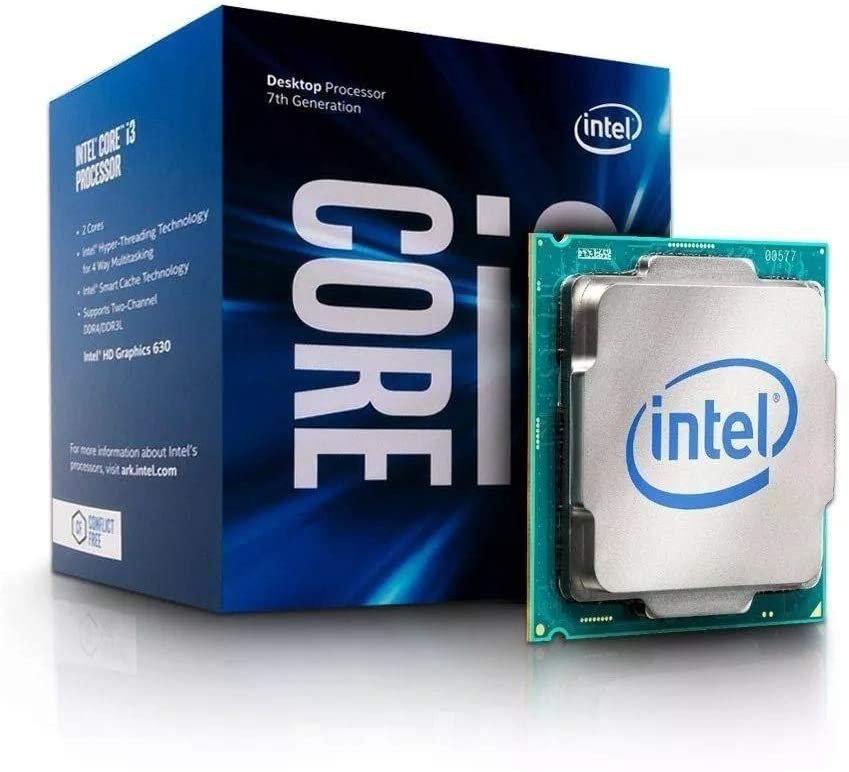
The 7th generation of Intel processors is a versatile and powerful version. Priced at €196.99, this processor features an LGA 1151 socket. This Intel CPU is primarily designed for office and multimedia users. Based on a 14nm manufacturing process, it offers improved heat dissipation and low power consumption.
This processor, also known as Kaby Lake, features dual cores and Hyper-Threading technology, effectively doubling the number of cores. It operates at a clock speed of 3.9 GHz, ensuring optimal performance even under extended use.
Equipped with up to 64GB of DDR4 RAM, it significantly boosts your PC's performance. And to take full advantage of its graphics capabilities, this Intel Core i3-7100 CPU features an Intel HD Graphics 630 chipset. Regarding connectivity, Intel offers a variety of ports to connect your devices and configure your system, including PCI-Express 3.0, SATA-3, M.2, USB 3.1, DisplayPort, and HDMI.
How do I know which i3 processor to buy?
Buying a boxed processor always feels a bit strange. Unless you've always been used to installing your own CPUs, they usually come pre-installed in laptops or desktops. To identify the i3 CPU you're buying, look for a label like Intel i3-10110U. This code provides a lot of information:
- I3 is the processor model
- 10 is the processor generation
- 110 is the processor power
- U is a suffix indicating low TPT power consumption
Why choose your i3 processor carefully?
We should instead define the mistakes to avoid when choosing your Intel i3 processor. That's precisely the subject of this article. In the meantime, we can tell you that analyzing your CPU needs is crucial for making the right choice for your i3.
So, whether it's for office work, video, photo editing, music, or gaming, you'll find a processor that suits your needs. At that point, you'll know whether a Core i3, Core i5, or Core i7 is the better choice.
The Intel i3 processor range, with a few exceptions, has low clock speeds suitable for multitasking in office applications. It would be a shame to have a processor that's too powerful for your needs and budget.
Why choose an Intel i3 processor?
As we just alluded to, Intel i3 CPUs aren't known for their exceptional performance, but rather for their portability and reliability in office tasks. Indeed, their lower clock speeds don't allow them to handle gaming or graphic design, making them better suited to office work. The huge advantage is that they're found in very inexpensive computers while still maximizing performance. This is why they're found in entry-level Ultrabooks.
However, if you want to ensure a decent gaming experience, make sure your CPU frequencies match those of your GPU (graphics card). Also, ensure your processor has Intel HD Graphics (which is usually the case); otherwise, you'll need to buy a dedicated graphics card. Of course, none of these issues apply to those who buy a pre-built PC.
What are the differences between Intel i5, i3 and i7?
For computer novices, these names certainly mean nothing; they simply assume that i7 is better than i5, or better than i3. However, these assumptions aren't entirely accurate. Of course, most people just want a working PC that isn't too expensive and don't care about the processor. That's perfectly true. Nevertheless, we want to shed some light on i3 CPUsso that, in the end, you can spot good deals and know exactly what you're buying.
Intel i3 processor
The Intel i3 processor contains 2 cores (it's called Dual-Core ) in addition to Hyper-Threading technology , which simulates extra cores. So you have 2 physical cores and 2 virtual cores. Your PC doesn't notice the difference; it's as if you had 4 cores!
Intel i5 processor
Here, the Intel i5 processors have four physical cores ( quad-core ). These CPUs are equipped with Turbo Boost . This allows for a temporary increase in the processor core frequency (in GHz). This is a risky technology, as boost mode can cause the computer to overheat. Hyper-Threading is not supported here.
Intel i7 processor
An Intel i7 processor offers the combined power of an i5 and an i3. This means you get Turbo Boost and Hyper-Threading for exceptional performance. An Intel i7 has four physical cores.
Intel i3 Processor Buying Guide
To help you choose from the best Intel i3 processors, we offer this buying guide where all the technical characteristics to consider are described so that you can be sure to make the right CPU choice.
Determine the processor's power
Regardless of the computer component, whether it's the processor or the graphics card, the first thing that comes to mind is the question of power. The performance of your i3 is directly linked to its computing power. Therefore, the higher its power, the more complex tasks your PC can handle. A powerful processor has two main aspects:
- The frequency
- The number of hearts
Let's see what these terms mean for an Intel i3 processor
The frequency of the i3 processor
The best Intel i3 processors have the highest clock speeds; it's as simple as that. Processor clock speed represents the CPU's execution speed, that is, its calculation speed, measured in GHz.
We mentioned it briefly, but Intel i3 processors are equipped with Hyper-Threading. This technology doubles the initial number of physical cores , increasing them from 2 to 4 (2 physical and 2 virtual). Each core has its own frequency. Enabling this technology therefore increases the computing power and clock speed of our CPU.
The frequency of an i3 processor generally ranges from 1.2 GHz to 2 GHz . For office work, the difference between the two isn't huge, but it will allow applications to launch faster and display more on the screen.
The number of cores

The number of cores is just as important as the clock speed. As we mentioned, an Intel i3 processor is dual-core, unlike its quad-core counterparts. But what exactly are these cores? They are the mini-processors inside your CPU. Think of them as the data processing units. The more cores you have, the more tasks these units can share, and the more powerful your PC processor will be.
However, whether it is entry-level, mid-range or high-end, frequency and number of cores are not the only aspects to consider when buying the best Intel i3 processor.
The i3 processor cache memory
To perform all these calculations, your processor and your computer need to store certain information. This short-term memory is represented by RAM (random access memory), as well as the processor's cache memory. Therefore, the more cache memory you have, the faster your i3 processor will perform . Why not use the hard drive directly? Because the hard drive can't store frequently used but ephemeral data and the entire family photo album, which is forever! Each has its purpose; otherwise, everything slows down.
For an Intel i3 processor, we recommend a minimum of 4 MB of RAM. This is what you'll find on most Core i3 processors.
The system bus speed
Even though 95% of the time you won't need to worry about the system bus speed, we prefer to dedicate a few points to it to avoid any unpleasant surprises. Expressed in GigaTransfers (GT/s), this is the transmission speed between the RAM and your i3 processor. The higher this speed, the faster the processor's execution speed will be. Manufacturers generally set it at 5 GT/s, which is sufficient for all functions. If you see less (which is rare), run away!
This system bus speed will allow you to accelerate your office work, as well as gaming with your Intel CPU.
TPT consumption
TPT power consumption is quite low for Core i3 processors. Even if you choose the most powerful Intel i3 processor on the market, it will still consume less energy than an i5 or i7 processor. Indeed, TPT power consumption is the power consumption of your processor. The more powerful your i3, the higher this power consumption will be, and the more efficient your cooling system (fan) will need to be.
Your battery and fan must therefore be in top condition and should not be neglected if you're building the PC yourself. Otherwise, you risk overheating. That's the price you pay for powerful processors.
Our FAQ on Intel i3 processors
We hope our buyer's guide to selecting the best Intel i3 processor has helped you make the right choice. Choosing the right CPU isn't easy, especially for computer novices who have never heard of GHz frequency, number of cores, or cache memory. That's why, for those who have questions, we've answered them below in our FAQ about Intel i3 processors.
How do I install my Intel i3 processor?
You must check the processor socket on your motherboard. This is the slot into which your Core i3 will fit. There are several types, so familiarize yourself with them before rushing to the store.
The most common Intel sockets are LGA, with models like LGA1155, LGA1150, or LGA1151. Once you have the correct socket, installing your Intel i3 processor is a breeze.
How can I tell if my i3 processor is right for me?
So ask yourself what your needs are:
Will I be gaming
Word processing?
Video editing
Graphic design?
Internet browsing?
For all office tasks and light gaming, your i3 processor will be perfect. However, if you want to do more, you'll need to invest in an Intel i7 or i5 processor.
In short:
i3 processors are portable and reliable for top-notch PC use.
The minimum frequency for an Intel Core i3 is 1.2 GHz
. CPUs can be locked. You can have an unlocked processor. This is called overclocking. However, beware of overheating.
The 10th generation i3 Comet Lake-S processors are extremely powerful and can be used for gaming. But that's not the case for the majority of i3 processors.
It's by taking all of this into account that you'll choose the best Intel i3 processor.
Is it expensive to invest in an Intel i3 processor?
I was told there was only one type of i3, is that true?
Furthermore, it's a mistake to assume that an i3 is necessarily inferior to an i5, or inferior to an i7. A quad-core i3 at 2GHz is better than an i5 at 1.2GHz, even with Turbo Boost.
There are indeed different types of Intel Core i3 processors with varying generations, clock speeds, and cache capacities to suit different budgets and individual needs.
That's why we encourage you to choose the best Intel i3 processor for your specific requirements.
What is my current processor?
No problem, you just need to:
Go to a website that will analyze your components. You'll easily find one.
Go to your " Control Panel" and then to "System".
So, which Intel Core i3 processor do you have in your computer?
Which is better: buying a new PC or building it piece by piece?
However, it's this computer knowledge that many of us lack. Building a desktop or laptop from scratch isn't easy, and having the best Intel i3 processor and graphics card won't make a difference if you use a mediocre cooling system or battery.
That's why we advise you to assess your computer skills and decide if it's worth investing in all those components. There's no single best technique, only mistakes to avoid to prevent damaging your components, such as your i3 processor .


