
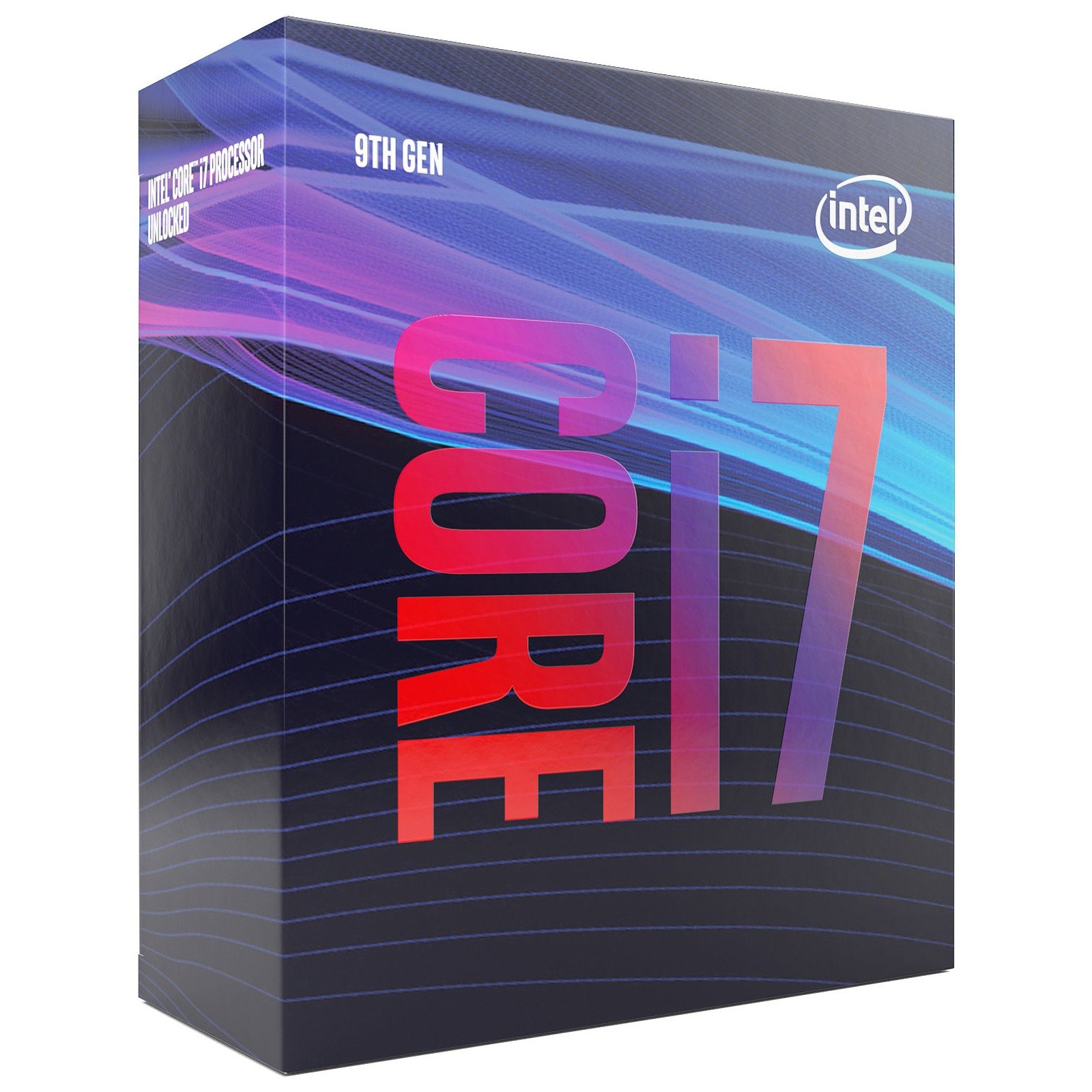
Intel released the Intel Core i7 9700 processor on April 23, 2019. This 9th generation Intel Core processor is designed for desktop PCs. It launched with a suggested retail price (MSRP) of $323. Currently, it is sold online and on Amazon for approximately €340.

Introducing the Intel Core i7 9700 processor
The Intel Core i7 9700 is a 9th generation processor . This processor is based on the Coffee Lake architecture and is called "Intel Core Coffee Lake Refresh." It features 8 cores and 8 threads . Under normal operating conditions, this processor runs at 3 GHz. In boost clock mode, the transistors integrated into the CPU can reach a maximum frequency of 4.7 GHz . The multiplier is locked. It measures 28 x 46 x 1 millimeters and weighs 249 grams. The processor supports a 16-lane PCIe 3.0 interface. It also supports M.2, SATA-3, DisplayPort, HDMI, and many other interfaces. The K version of this processor uses indium solder, suggesting that Intel has better temperature control.
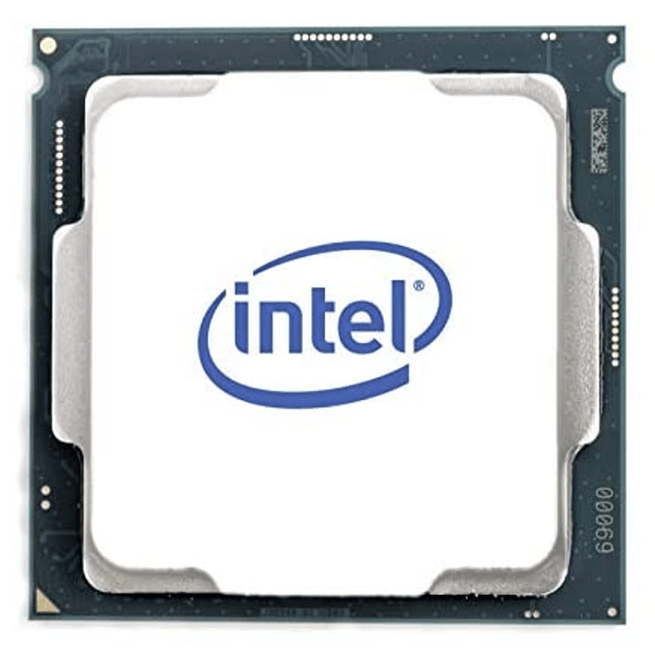
This Intel Core i7 9700 processor integrates an GPU . It has 64 GB of memory and supports the following technologies: Quick Sync, InTru 3D, Clear Video, and Clear Video HD. It supports DirectX 12 and OpenGL 4.5 . The GPU operates at a maximum frequency of 1.2 GHz. This graphics card can drive three monitors with a maximum resolution of 4K. On its eDP and DisplayPort interfaces, the card supports a maximum resolution of 4096 x 2304 at 60 Hz. On the HDMI 1.4 interface, the card delivers 4096 x 2304 at 24 Hz.

Advanced features of the Intel Core i7 9700 processor
14-nanometer process . It connects to the motherboard via the FCLGA1151 socket. This processor has a TDP of 65 watts and supports a maximum case temperature of 72°C . The maximum core temperature is 100°C. It is compatible with DDR4-2666 memory with a maximum capacity of 128 GB across two channels. The maximum memory bandwidth is 41.6 Gbps. Regarding caches, this processor features three L1, L2, and L3 caches. The L1 cache has 64 KB per core, the L2 cache has 256 KB per core, and the L3 cache has a total of 12 MB (across all eight cores). This processor supports 64-bit architecture, allowing for more than 4 GB of memory. 32-bit architecture can only support less than 4 GB. Memory addressing is limited to 32 bits. Thus, the maximum memory is equal to 2 to the power of 32 (2^ 32 ) = 4 GB. With 64-bit architecture, this restriction is lifted, and the system can therefore support up to 16 EB (Exabytes) of memory.
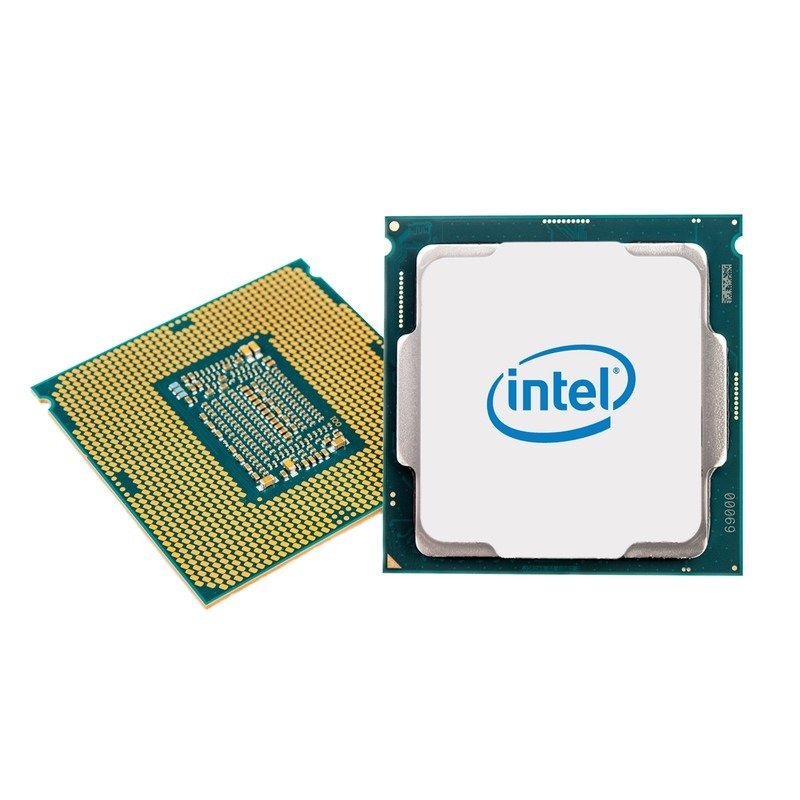
Regarding supported technologies, the Intel Core i7 9700 processor supports: AES-NI, AVX, vPro, Enhanced SpeedStep (EIST), Hyper-Threading, Idle States, TSX, SIPP, Thermal Monitoring, and Turbo Boost 2.0. This processor incorporates security and anti-hacking technologies , including: TXT, Secure Key, EDB, MPX, Identity Protection, OS Guard, and SGX (Yes with Intel® ME). For virtualization , our processor is compatible with AMD-V, VT-x, VT-d, and EPT. These supported virtualization technologies allow the creation of virtual machines and servers. Hardware resources can be partitioned across virtual machines. Virtualization enables the clustering of certain operations and prevents a complete service outage.
Benchmarking of the Intel Core i7 9700 processor
In terms of overall performance, the Intel Core i7 9700 processor scores 15.28% lower than the leading gaming processor, the AMD Ryzen Threadripper PRO 3995WX. This places our processor 259th in our overall processor ranking. In terms of value for money, on a scale of 0 to 100, it scores 0.97. When comparing the Intel Core i7 9700 to 10 competing processors with roughly equivalent performance, it outperforms the Ryzen 3 3300X (99.02%), the Ryzen 5 3500X (98.82%), and the Core i5-10500 (98.49%). However, it performs less well than the Core i9-9900T (102.09%), the Core i7-9700F (101.9%) and the Ryzen 5 PRO 2600 (100.79%).

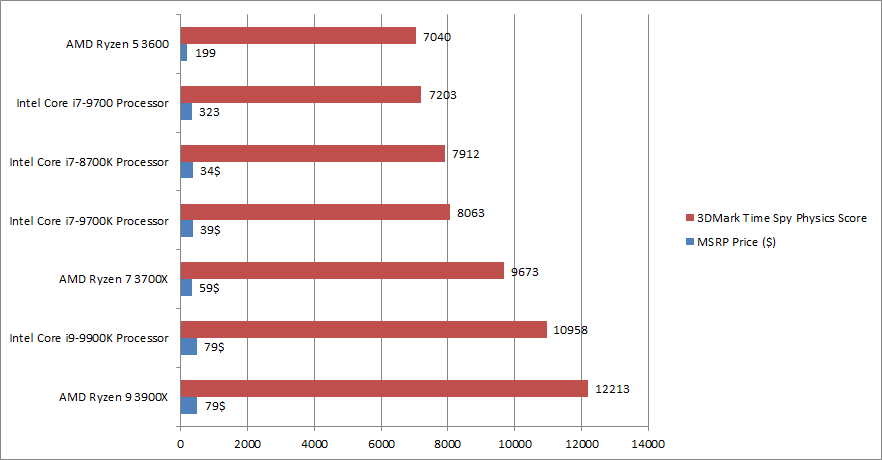
In 3DMark, our Intel Core i7 9700 processor scored 7203. Compared to the most popular processors, it outperforms the AMD Ryzen 5 3600 (3DMark score 7040). However, it is slower than the following processors: AMD Ryzen 9 3900X (3DMark score 12213), Intel Core i9-9900K Processor (3DMark score 10958), AMD Ryzen 7 3700X (3DMark score 9673), Intel Core i7-9700K Processor (3DMark score 8063), and Intel Core i7-8700K Processor (3DMark score 7912).
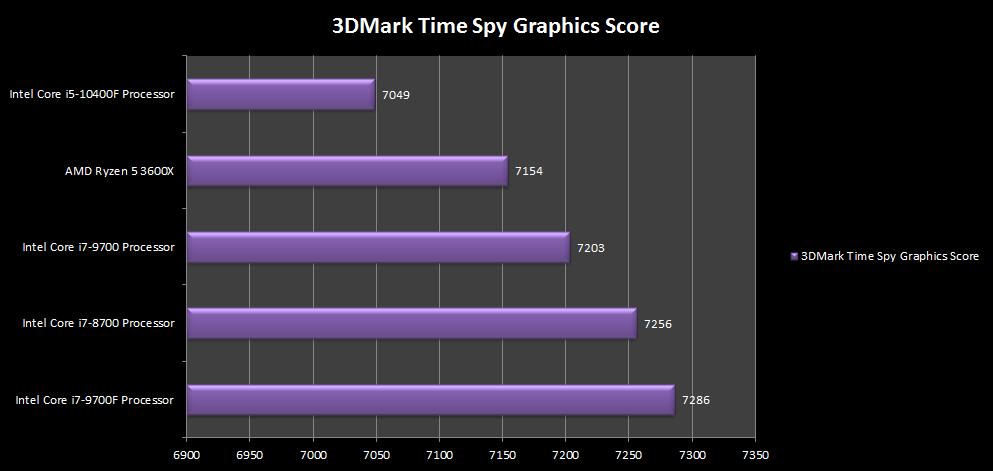
If we now compare our processor with CPUs that have 3DMark , the Intel Core i7-9700 processor outperforms the AMD Ryzen 5 3600X (3DMark score 7154) and the Intel Core i5-10400F processor (3DMark score 7049). However, it is less efficient than the Intel Core i7-9700F processor (3DMark score 7286) and the Intel Core i7-8700 processor (3DMark score 7256).
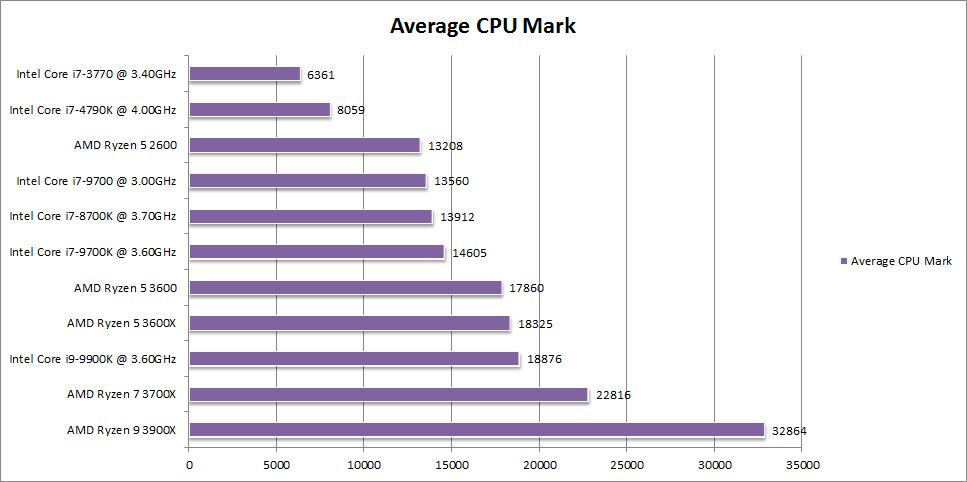
On CPU Mark , the Intel Core i7-9700 processor achieves a score of 13,560. It thus surpasses the following processors: AMD Ryzen 5 2600 (CPU Mark score 13,208), Intel Core i7-4790K @ 4.00GHz (CPU Mark score 8,059), Intel Core i7-3770 @ 3.40GHz (CPU Mark score 6,361). However, it lags behind the following processors which display higher CPU Mark scores: AMD Ryzen 9 3900X (CPU Mark score 32864), AMD Ryzen 7 3700X (CPU Mark score 22816), Intel Core i9-9900K @ 3.60GHz (CPU Mark score 18876), AMD Ryzen 5 3600X (CPU Mark score 18325), AMD Ryzen 5 3600 (CPU Mark score 17860), Intel Core i7-9700K @ 3.60GHz (CPU Mark score 14605), Intel Core i7-8700K @ 3.70GHz (CPU Mark score 13912).
In short, this processor delivers good performance for a mid-range CPU. Its main advantage is its integrated GPU, eliminating the need to purchase a separate graphics card. However, it is less powerful than comparable AMD processors in the same price range. This Intel Core i7 9700 processor, launched with an MSRP of $323, is available online, notably on Amazon, for approximately €340.


