Performing a reboot can sometimes be strongly advised, or even essential.
If your computer is crashing, or slowing down, if you think it has been infected by a virus, or if you want it to be "restored to "like new" condition, for example to resell it, then I invite you to read this article!
To begin, here's a very clear video explaining how to quickly reboot your PC under windows 10!
WHY IS REBOOTING YOUR COMPUTER IMPORTANT?
WHAT DOES "REBOOT" MEAN?
Rebooting is an anglicism that means restarting. In our case, it means resetting your computer to factory settings, meaning that at the end of the process, your computer will be exactly as it was on the day you bought it (with Windows 10 installed)!
In practice, you will be able to choose between:
- Delete everything completely, except for the operating system, which will have its settings reset.
- Format without deleting your files, while resetting your operating system settings (therefore removing all your software).
WHAT ARE THE BENEFITS OF A REBOOT?
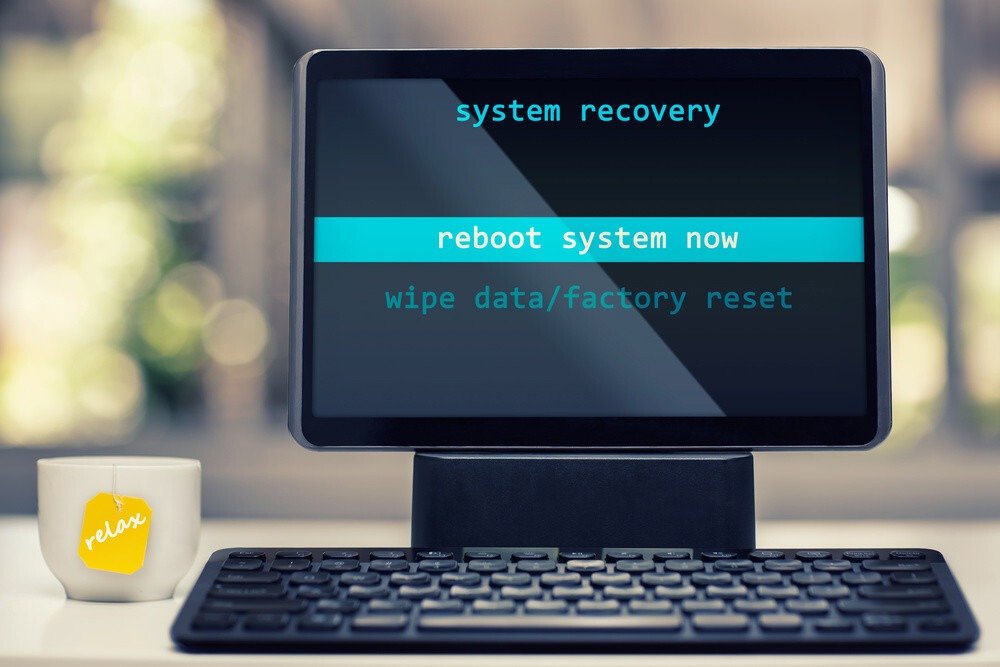
When your reset is complete, your computer is cleaned of anything that might have been cluttering your hard drive.
During an uninstallation, it's quite common for "residual" files to remain on your hard drive and never disappear. Resetting allows you to remove all of this.
This will also allow you to remove any potential viruses that you may have unknowingly, because you weren't paying attention and your antivirus software didn't detect them…
Your computer will also be able to start up much faster; indeed, over time, many unnecessary programs may launch automatically when you start your computer, and resetting it allows you to remove these "unwanted" programs!
This will also improve your computer's performance, as all unnecessary programs running in the background will be removed.
A reboot can also help correct a mistake made in your settings. Sometimes you might configure a Windows feature and then be unable to revert it to its default settings. In this case, formatting without deleting your files might solve the problem.
HOW LONG CAN A REBOOT TAKE?
The duration depends heavily on the power of your equipment and the files your computer needs to remove/uninstall. It can take anywhere from a few dozen minutes to several hours. Don't worry, you don't need to stay at your computer while it's running; once it starts, everything happens automatically!
SOME TIPS
Before resetting, it's still advisable to back up anything you want to keep to a USB drive or the cloud. Most people scatter their files all over their hard drive. Make sure all your important files are backed up somewhere!
If you feel your computer is less powerful than when you first bought it, resetting it won't necessarily solve all your problems! In fact, as time goes on, programs and the Windows system demand more resources with each update. So naturally, if the required processing power increases, resetting your machine won't improve its components!
HOW TO PROCEED?
Rebooting your PC is no longer very complicated today; it is indeed possible on all computers in just a few clicks since Windows 10.
Here are the steps to follow:
- Click on Start (the Windows button in the bottom left corner), then click on "Settings" (the gear icon).
- A window will open. Click on "Update & Security", then on "Recovery" in the tabs on the left.
- The "recovery" page opens, at the very top you will have the option "Reset this PC", that's what we need, click on "Start"!
- The window to reset your PC opens; you have two possible choices:
- Keep my files: This option allows you to remove all software and restore settings, but keep your personal files!
- Remove all: This option removes all items that were not present when you purchased your computer.
In case of slowdowns, crashes, or if you're selling your computer, we recommend the second option. This option takes longer, but at least you'll start fresh with a computer that's like new and an operating system with factory settings. Again, remember to back up your important files elsewhere, as they will be lost!
- Choose the option you want, after a short loading time, a summary of the assets is given to you, click on "next".
- A final window appears, "Ready to reset this PC", it details everything that will happen during the process, take the time to read to be sure of your choice, click on "Reset".
And there you have it! Once it's started, your PC will restart several times. Then, at some point, you'll need to enter some personal information (name, surname, password, etc.). Your computer will have been reset, and you can then configure it again or simply shut it down and let the new owner do so.
CONCLUSION
As you've seen, even though rebooting your computer can take a little time, it's very simple to do and has many positive effects. Many computer repair technicians recommend an annual reboot to maintain your computer's optimal performance.