Overheating can cause your laptop to crash temporarily or permanently. How can you prevent this? In this article, we'll analyze why laptops overheat so easily. We'll also share some useful tips for maintaining a high-performing, cool machine. Besides these best practices, you can also consider purchasing a laptop cooler.
Why does my laptop overheat so easily?
The space used in a laptop is quite limited. Compared to a desktop PC, the components are cramped. Electronic components produce heat, especially the processor and hard drive. And the more confined they are in a small space, the less heat dissipates.

Furthermore, the components used in a laptop are miniaturized, such as the hard drive and memory. As a result, these components are more prone to overheating. Larger components dissipate heat more effectively. In addition, the ventilation systems are smaller than those in a desktop computer: the fans are smaller, the heatsinks are less bulky, the fan blades are shorter, and so on.
This contributes to rapid overheating of the laptop if its maintenance isn't properly maintained. So how can you prevent overheating and avoid damaging your laptop? You can:
- Remove dust regularly,
- Ensure good ventilation,
- Monitor the laptop's temperature,
- Cool down immediately if a temperature alert is triggered
- Work without putting too much strain on your laptop.
In what follows, we will provide more details on each of these elements.
But first, here's a video we recommend you watch too!
Remove the accumulated dust
Dust is often the cause of overheating in electronic devices. Dust is drawn in by fans and accumulates inside the device. This dust then forms a kind of barrier, clogging the ventilation and airflow channels. Furthermore, dust hinders heat dissipation and tends to cause the electronic components to overheat. It can, in fact, form a layer of thermal insulation that prevents proper heat dissipation.

Therefore, you should remember to dust your laptop regularly. You can use a can of compressed air or a hairdryer for this purpose. For greater effectiveness, you can unscrew the back cover of your laptop and dust it with the lid open. You can also use a small, soft-bristled brush to dust everything.
Compressed air can for dusting your laptop

Ensure good ventilation
One of the advantages of a laptop is the ability to work anywhere in the house: at the desk, on the sofa, in the garden, in bed, etc. When carrying it around, especially on the sofa or in bed, we often tend to place our laptop on our lap. This practice should be avoided. Soft surfaces can obstruct the ventilation grilles located on the back of your laptop (under the keyboard).
Therefore, avoid placing your laptop directly on the bed or on a soft surface. Instead, place it on a hard surface such as a table, desk, etc. Note that wood and glass are less effective than metal or aluminum at dissipating heat.

Monitor the laptop's temperature
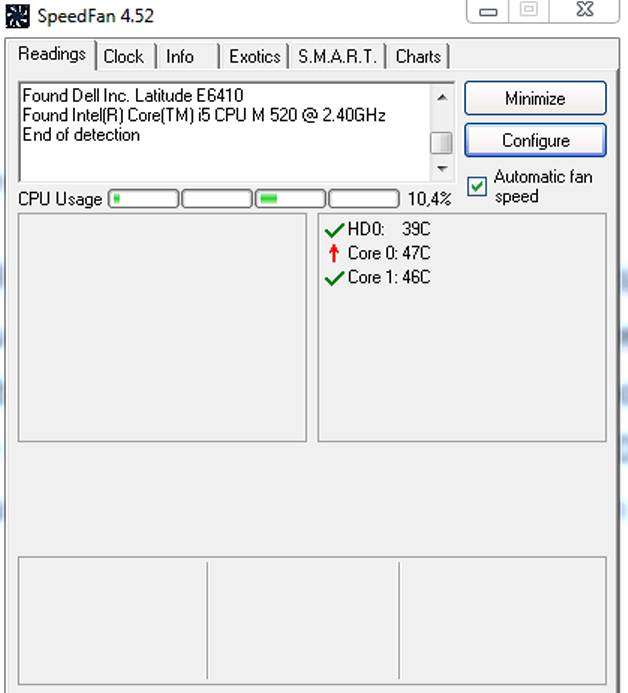
To monitor temperatures effectively, you can use free utilities such as SpeedFan. This will notify you when your laptop's temperature rises. With SpeedFan, to configure notifications, click the Configure button, then Events. You can then select the component to monitor. Next, set the alert threshold (65°C, for example). In the Then list, you can choose the pop-up option, which will notify you on the screen if this alert threshold is reached.
Cool down when there is a temperature alert
In the long run, the processor will be damaged if the temperature remains above 65°C. Therefore, when you receive an alert, close applications that are consuming excessive resources. To do this, you can check the Task Manager and filter by the CPU tab. Avoid applications that heavily utilize your graphics card, such as 3D games. You can force the fan to run at higher speeds to lower the temperature.
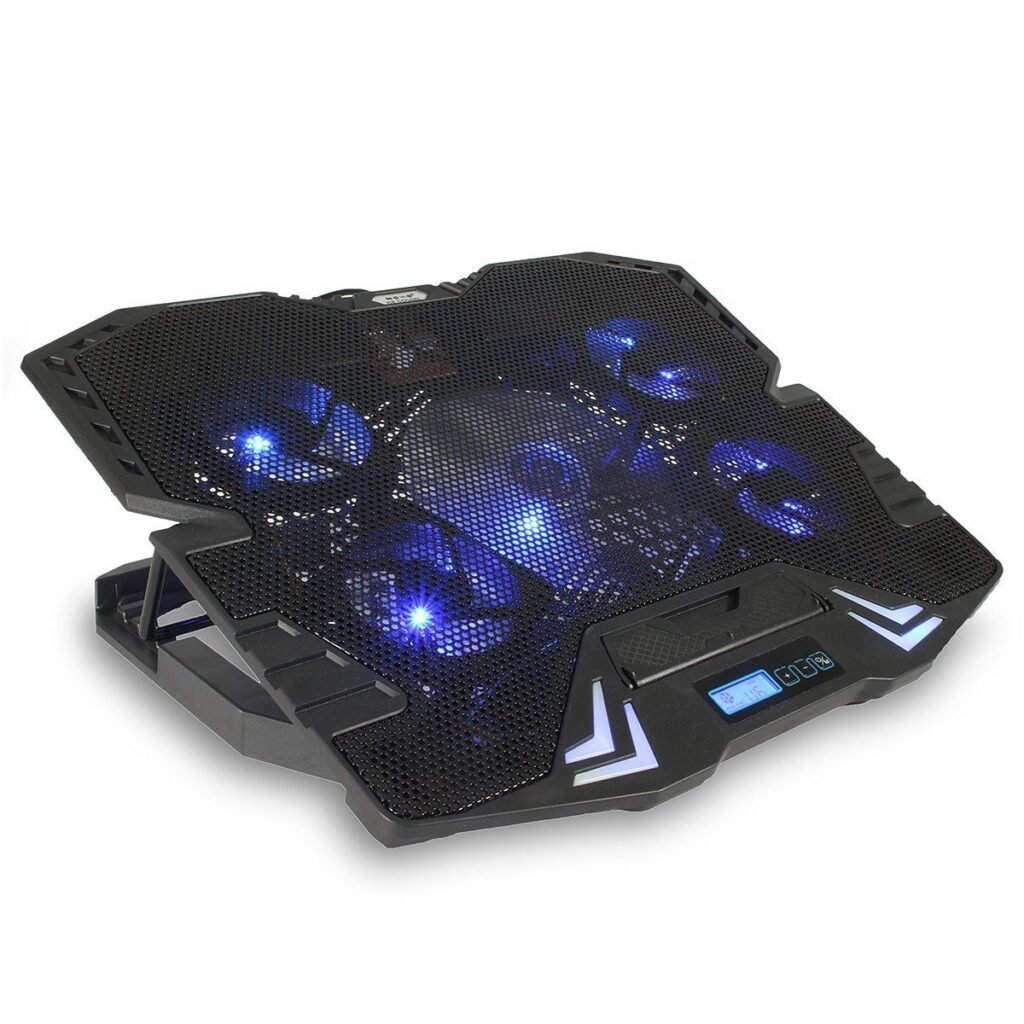
You can use SpeedFan, FanTarget, or other compatible utilities. You can also use a laptop cooler . With these devices, your PC will perform better. Some of these models are equipped with RGB lighting systems, allowing you to have equipment that is both efficient and stylish. With these coolers, you can comfortably place your laptop on your lap, etc.
Here are the best laptop coolers!
Work without putting too much strain on your laptop
We sometimes forget that opening dozens of tabs will cause our computer to overheat. Therefore, close any tabs you're not using. If you need to keep links open because you'll need them later, you can save them in a text document, for example. If you open far too many tabs without being careful with your computer, it will first overheat. It will become increasingly slow and will eventually crash or be damaged.
It's also important to remember to shut down your laptop from time to time and let it rest. We often leave our laptops running overnight because we don't want to close everything. Some open applications will be used the next day. But you can save everything and reopen it when needed. A good habit to adopt is to shut down your laptop at least once every three days.
In short, laptops heat up faster than desktop PCs. To prevent overheating, you should regularly remove dust, ensure good ventilation, monitor the laptop's temperature, cool it down immediately if a temperature alert is triggered, and avoid pushing the PC to its limits.