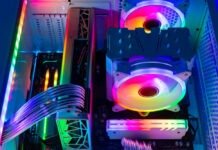
Looking for a powerful and portable PC? A mini-ITX case is for you! Also known as a mini-tower , this computer case format saves floor space while still offering high-performance components. Here's an overview of mini-ITX cases that offer the best possible configuration in a compact size.
The 3 best Mini ITX cases in our ranking!

Things to know before buying a Mini ITX case!
Here are 3 key points to know before choosing your mini-ITX case. They are important to consider, otherwise you risk ending up with an incompatible mini-tower.
- Mini-towers are certainly more compact and therefore more practical for saving space on your desk, but they are also more difficult to build . Because the components are closer together, some experience in PC assembly is recommended. Furthermore, it is generally advisable to install a water cooling system to cool your machine, as airflow cannot be optimal.
- Component compatibility is a crucial factor when choosing your mini-ITX case . While some mini-towers can accommodate graphics cards up to 315 mm in length, most allow for cards up to 210 mm. Also consider the compatibility of your PC's motherboard and power power supply , as this can vary between models.
- Mini-ITX motherboards aren't suitable for everyone . If you're looking for top-tier Ultra HD performance with tons of storage, mini-ITX is probably not for you. However, if you're looking for a compact PC with the power to run modern games, then mini-ITX is the right form factor for you!
Comparison of the best mini-ITX cases
It can be difficult to know where to start when you want to buy a case for your new PC, especially when it's an unusual form factor. That's why our team has prepared a ranking of the best mini-ITX cases! To help you choose, you'll find a buyer's guide and an FAQ at the end of this comparison to answer the questions you probably have.
1. NZXT H210i – Mini-ITX Case with Tempered Glass and Integrated RGB Lighting

Features and Reviews
The NZXT H210i case is our top choice for an ITX mini-tower. Assembling your case is as simple as ever thanks to the manufacturer's patented, ultra-optimized cable management system. Removable fans/radiators and easy-to-use hard drive bays are positioned to simplify assembly. A tempered glass side panel lets you admire your build while enjoying excellent air cooling thanks to two pre-installed fans (rear and top). If that's not enough, you can further enhance your PC case's cooling with an easily installed water cooling system.
The Smart Device V2, meanwhile, has been updated with an even faster processor to control two RGB LEDs and three fans regulated by voltage or PWM. Finally, a front-panel USB Type-C port allows you to connect your smartphone, high-speed external drives, or the latest next-generation peripherals.

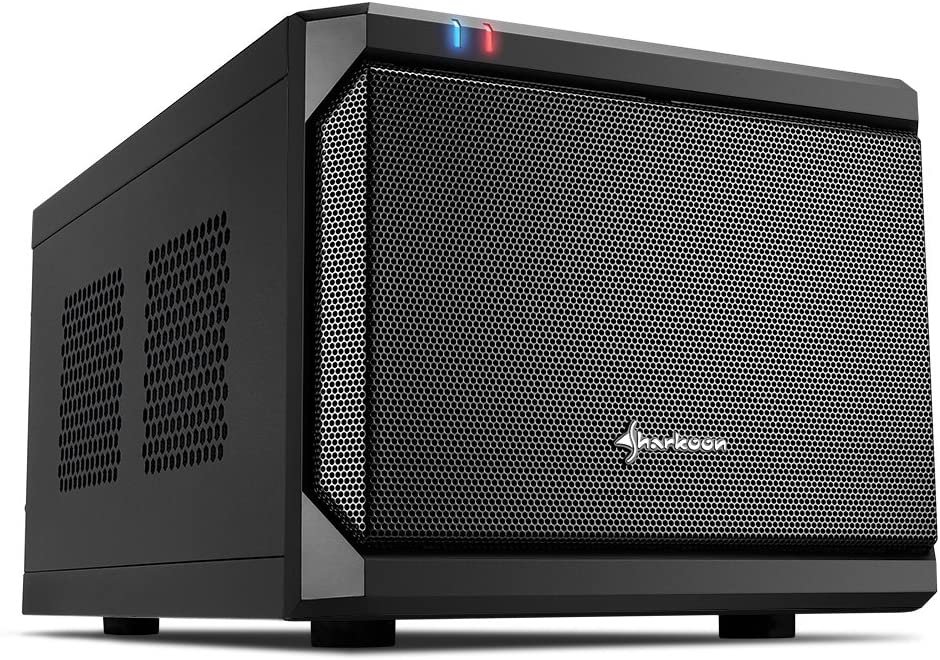
2. Sharkoon Mini ITX Case
Features and Reviews
The Sharkoon QB One is aimed at those looking for a portable, discreet case offering excellent value for money in the mid-range market. Its compact size and the ability to position it horizontally or vertically allow it to fit into the vast majority of setups. However, the QB One doesn't skimp on installable components: it supports dual-slot graphics cards up to 315 mm, an ATX power supply , and either two 3.5" HDDs or two 2.5" SSDs.
Its air cooling system is optimal thanks to an included 120mm fan on the top panel (with the option to install an additional one) and the choice between a water cooling system or a 240mm fan inside. The case also features excellent front connectivity with two USB 3.0 ports and two USB 2.0 ports on the front panel, accessible in both horizontal and vertical configurations.

3. GOLDEN FIELD M3S Mini ITX PC Case

Features and Reviews
The Golden Field M3S is a sleek and discreet aluminum mini-tower case that can accommodate both Mini-ITX and Micro-ATX motherboards. Its tempered glass side panel allows you to admire the installed components and is easily removable thanks to lifting handles. The M3S can accommodate up to 8 fans or radiators, but unfortunately, none are included. A water cooling system up to 130 mm can be integrated into your configuration. Storage capacity is limited to a maximum of two hard drives, while a large 275 mm graphics card can be installed.

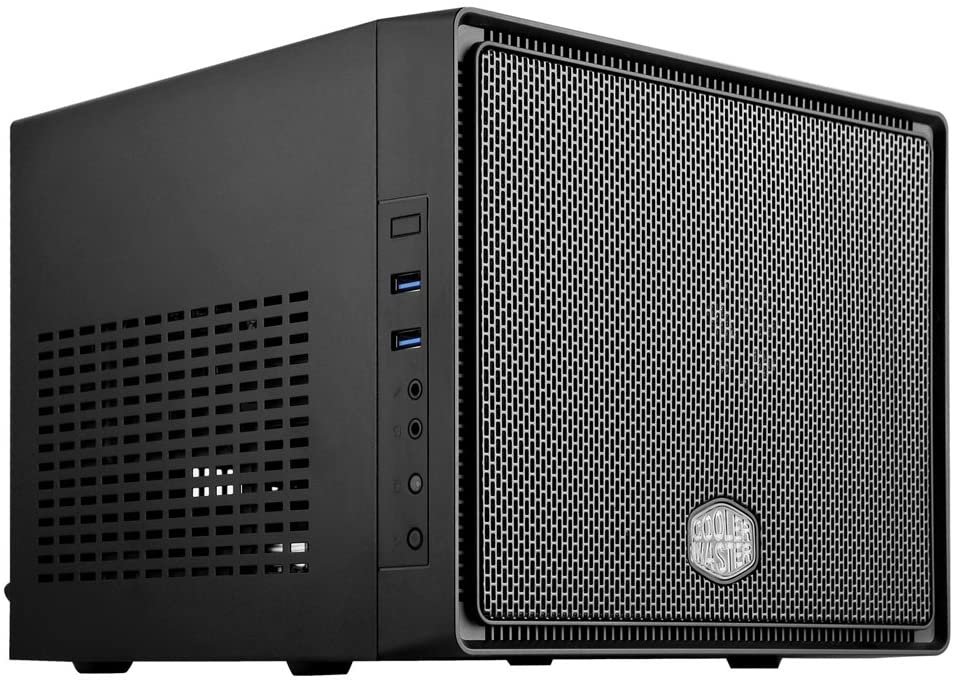
4. Cooler Master – Elite 110
Features and Reviews
The Cooler Master Elite 110 resembles a hi-fi system from the front, but it's actually a mini-ITX case. Its large front mesh, complemented by a 120mm fan (convertible to 140mm), ensures complete airflow throughout the entire case. The unique feature of this case lies in its integration into a desktop setup. As a desktop, the Elite 110 is designed for horizontal mounting, allowing for the placement of a monitor on top.
With its multiple 3.5" HDD / 2.5" SSD configurations (3/0; 2/2; 1/3; 0/4), you can customize your storage to suit your needs. As for air cooling, while basic with a front-to-rear airflow, it can be supplemented with two 80x25mm fans on the left side.
5. Cooler Master MasterBox
Features and Reviews
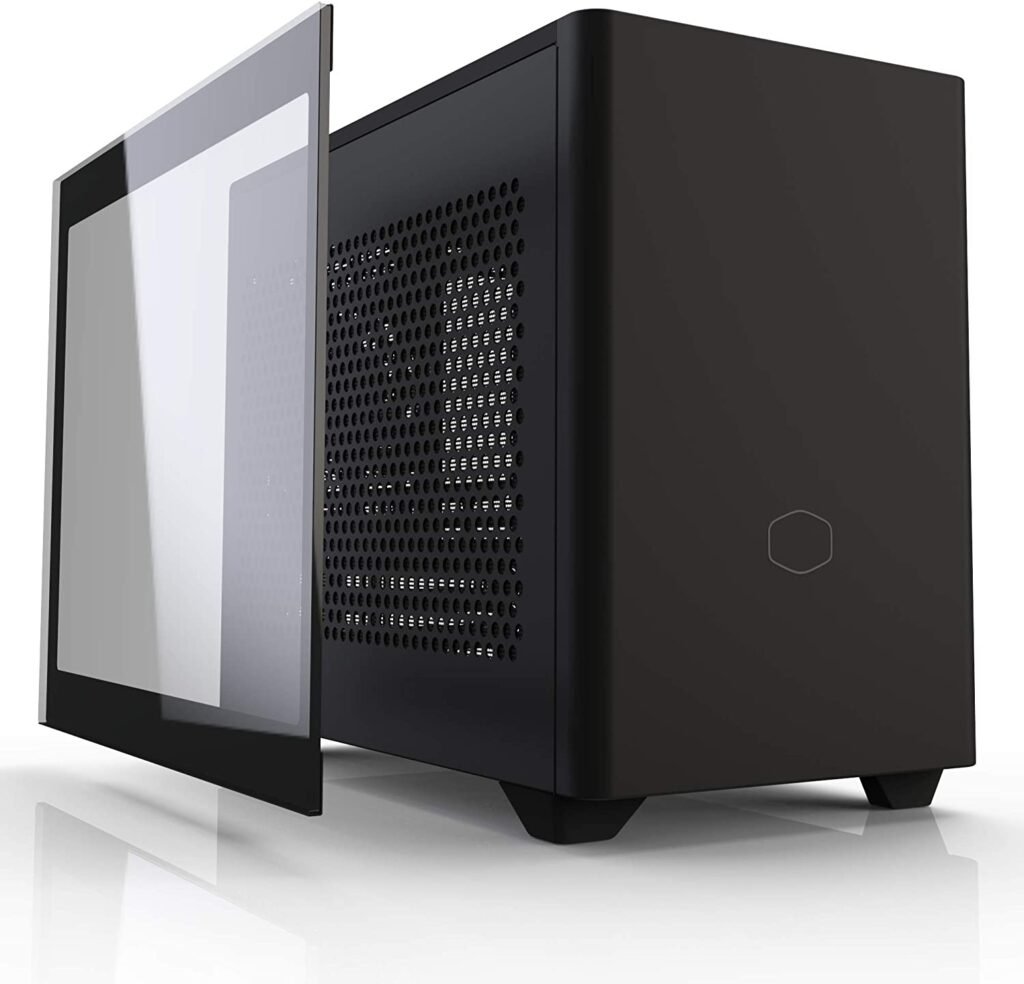
The Cooler Master MasterBox NR200P is a case that will satisfy all your needs. Thanks to its large internal volume (18 liters), optimized layout, improved thermal efficiency, and easy assembly (360° mounting), the NR200P is an excellent choice for a high-end Mini-ITX or Mini-DTX build. A highly ventilated side panel and a tempered glass side panel are included, giving you the option to customize the look of your case.
Regarding your PC's cooling, 7 fans can be installed (including two 120mm top fans) and a water cooling system up to 280x140mm can be integrated, ensuring optimal performance for your system. Finally, thanks to its large size, the NR200P can accommodate graphics cards up to 330mm in both horizontal and vertical mounting.

6. SilverStone Compact Cube Mini ITX PC Case

Features and Reviews
Just like the Cooler Master Elite 110, the SilverStone SST-SG13B initially resembles a hi-fi system thanks to its mesh front panel, but it's actually a Mini-ITX case. This makes it a good choice for a living room PC that will be on display. Its ventilation system only includes a single 120mm fan mount at the front, but air vents are located on both sides, the top, and the rear of the case. You'll also have the option of installing a 140mm all-in-one liquid cooling system instead of the fan.
7. Fractal Design

Features and Reviews
This Mini-ITX case from Fractal Design is a desktop in our selection, but it boasts numerous advantages. Extremely thin for a case (82 mm), it can be positioned horizontally or vertically to suit your setup. Inside, it offers 10.2 liters of available space, accommodating, among other things, a graphics card up to 310 mm long, two SSDs, two 120 mm fans, and an SFX power supply . Strategically placed air filters prevent dust accumulation, while separate chambers for the motherboard and graphics card provide thermal isolation for both components.

8. SilverStone Mini ITX silent!
Features and Reviews
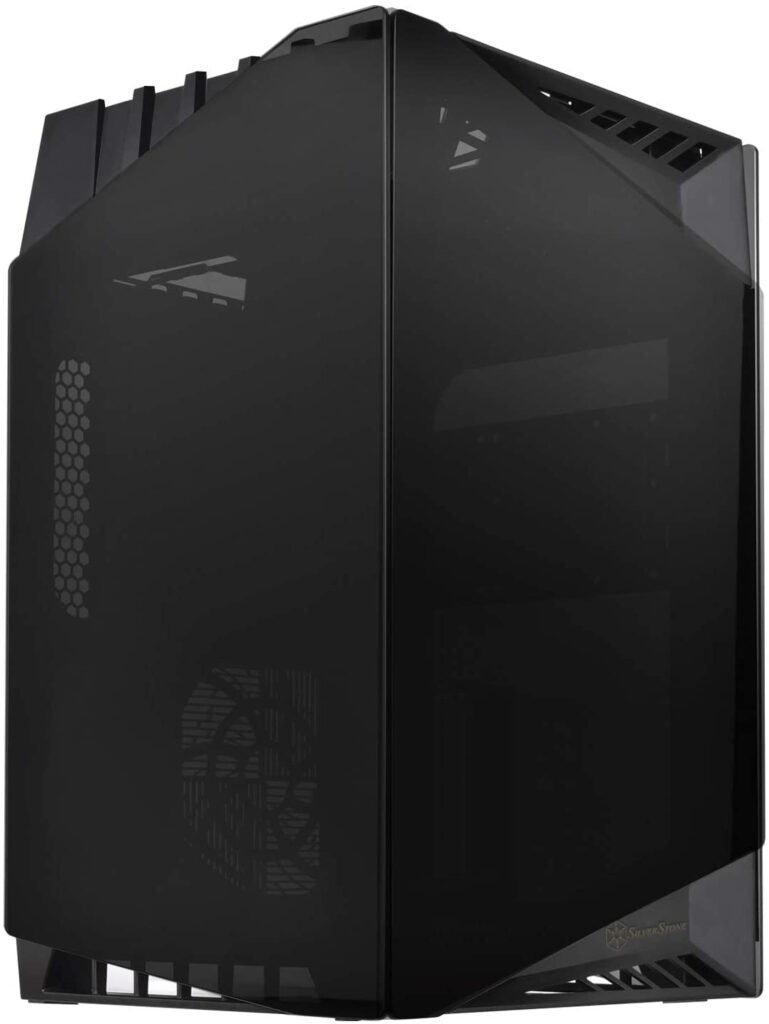
The SilverStone SST-LD03B is a mini-ITX case with two black tinted side panels. Its unique feature is its vertical mounting design, which utilizes natural airflow (cool air at the bottom, hot air at the top) to cool components as efficiently as possible. Those components that tend to generate the most heat (GPU, CPU) should be placed at the top for faster heat dissipation. Two included 120mm fans (one at the bottom and one at the top) help circulate air quickly. With space for two hard drives and the ability to install a graphics card up to 309mm long, the LD03B is perfect for a gaming PC.

9. Thermaltake

Features and Reviews
The Level 20T is Thermaltake's anniversary case, celebrating their 20 years in the PC industry. The side and front panels are made of 4mm thick tempered glass for effective sound insulation while still allowing you to admire your build. Compatible with Micro-ATX/Mini-ITX motherboards and accommodating graphics cards up to 350mm in length, it's an excellent choice for a high-performance PC. A partitioned design separates the GPU/CPU bays from the hard drive/ power supply bays, providing thermal isolation for the components.
For ultra-efficient ventilation, the 20T offers multiple fan configurations: (2x 120/140 mm) OR (1x 200 mm) at the front, (2x 140 + 2x 120 mm) OR (4x 120 mm) at the top, (1x 120 mm) OR (1x 140 mm) at the rear, and finally (2x 120 mm) at the bottom. A liquid cooling system can be installed at the front to further enhance case cooling.

10. MTALLICGAR

Features and Reviews
Finally, the Neo Mini V2 from MetallicGear is a compact and elegant Mini-ITX case with a tempered glass side panel. In addition to its efficient internal layout and easy cable management thanks to Velcro straps, the interior is spacious and illuminated by MSI RGB lighting. Dust filters are installed at the rear and bottom of the case to prevent harmful buildup. The ability to add up to five radiators allows for efficient cooling of the Neo Mini V2. A 120mm fan is included, and a water cooling system up to 240mm can be installed.

The buyer's guide to purchasing your Mini-ITX case!

Check the compatibility of your components
The main (and worst) problem you'll encounter when building your mini-ITX case is ending up with a graphics card or motherboard that's too large and won't fit. That's why it's essential to check the compatibility of these components before buying them.
In most cases, manufacturers specify the maximum size of the GPU and CPU that can be installed in their mini-ITX.
What size graphics card is needed?
For the most part, 310mm graphics cards are compatible, but some will accept larger ones ( up to 350mm in our ranking) or smaller ones.
If, on the other hand, you are looking for a well-optimized configuration to run big games, we suggest you choose an ATX gaming case which will allow you to have a larger graphics card.
What size motherboard is needed?
Regarding the motherboard, the choice is more limited because, as their name indicates, they only accommodate mini-ITX boards , but the largest or best optimized cases can accommodate micro-DTX or even Micro-ATX boards .
What size power supply do I need?
power power supply also depends on the available space, but most Mini-ITX cases only accept SFX , some exceptions may accommodate ATX power supply .
Plan your setup in advance
Since your case will determine the compatible size of all your components, it is essential to think about what your PC will be used for, what components it will contain, and how it will be assembled .
For what purpose?
First, understanding its intended use will allow you to choose a case suited to your needs: a desktop PC for family use and a gaming PC have different requirements. While the former will prioritize design and efficient use of space, the latter will focus on the ability to install high-performance components with a good cooling and ventilation system.
Speaking of cooling, if you have a laptop that gets very hot, we recommend you buy a laptop cooler .
Choose the components to install in your MINI ITX case

Once you've chosen your case, determine which components you want to install based on its capacity. As mentioned earlier, the size will dictate the ideal motherboard, graphics card, and power supply . For the other components, your choice will depend on your needs and preferences.
For a gaming setup, prioritize optimizing your components , especially storage capacity and RAM. These are standardized and the same for everyone, regardless of size. However, their efficiency varies depending on the model. For example, if you need a large amount of storage but your case can only accommodate two hard drives, choose 2TB models instead of 500GB ones.
Evaluate the assembly of your case
Depending on the cases, assembly will take more or less time as it depends on several factors: the number of components to install, the accessibility of the case, cable management and finally your experience.
By preparing the necessary tools and having analyzed your case at the time of purchase with a visualization of its final configuration, you will not find yourself facing all the elements to assemble without knowing where to start.
Determine an action plan and use customer feedback, which generally provides feedback on the assembly process.
Consider a solution to cool your PC

Cooling your PC is a crucial factor to consider when configuring it, especially with a mini-ITX system, as the limited space doesn't allow for optimal airflow . Computer components heat up during use, and three are particularly affected: the graphics card, the motherboard, and the hard drives (HDDs).
To counteract this increase in heat, various solutions exist, grouped into two categories: air cooling and water cooling.
Air cooling
The first method involves using air to cool the components. Fans, radiators, or heatsinks (a combination of the two) should be strategically placed to create airflow within your case, expelling hot air and drawing in cool air . The vast majority of cases have at least one fan mount to create this airflow . The higher the quality of the case, the more fan mounts it will have.
Typically, one fan is installed at the front and another at the rear to create horizontal airflow. In some PC cases, vertical airflow is also possible thanks to fans at the top and bottom
For a mini-ITX case, it's important to create efficient and optimized airflow to cool your components and reduce internal temperatures. Unlike a mid-tower or full-tower case, the internal space isn't large enough to allow for optimal ventilation, so consider installing an efficient air cooling system to compensate for this limitation.
Some cases do not have enough fan slots, however you can install dedicated heatsinks on the components most likely to get hot.
Watercooling (liquid cooling)
The second solution is to implement liquid cooling, which can be oil-based, but current systems primarily use water, known as water cooling. This system is more complex than air cooling because the installation requires consideration of factors that must be taken into account when planning your system configuration.
Indeed, pipes, a pump, a reservoir and sometimes a heatsink are necessary for water cooling.
Despite a more complex and expensive installation, it's a very effective system for targeting specific components for cooling. If cable management and setup are done correctly, water cooling will allow you to have a high-performance configuration with reduced temperatures.
This is also a recommended system for a gaming PC where the motherboard and graphics card are very necessary, provided of course that your case can accommodate one.
Maximize your components

With an ITX case you are limited in space and sometimes even in component models, which is why we advise you to try to optimize your variable components such as RAM or internal storage of your computer.
The choice of RAM
RAM modules are available in 4GB, 8GB, 16GB, and 32GB capacities, sold in pairs that clip into their designated slots. Mini-ITX motherboards typically have two slots, so you'll need to determine the amount of RAM you require. As a guideline, 4GB is sufficient for office applications, 2x4GB for most video games, and 2x8GB for more demanding games or upcoming releases.
If you want a high-performance machine, we recommend choosing 16GB of DDR4 RAM.
Internal storage: HDD or SSD
Perhaps the most interesting area to optimize is your computer's internal storage, especially on some ITX cases where the number of slots is reduced to 2. In this case, we recommend that you first choose a 500GB 2.5" SATA internal SSD Windows operating system and programs that you use regularly.
For storing data or other heavier programs, a 1TB or 2TB HDD will offer the best quantity/price ratio, to be estimated according to your needs.
By maximizing your PC's capabilities in this way, you can enjoy the best possible configuration, but be careful not to exceed your budget!
Integrate USB Wi-Fi into your motherboard
To use the internet on your computer, you'll need a Wi-Fi device in your setup, which can be either a USB or a PCI adapter. Each has its advantages, depending on your needs. For a mini-ITX system, a USB adapter is recommended because it's easy to install , takes up minimal space, and is sufficient most of the time. Even though they're small, they're efficient and provide excellent speeds.
If you are looking for maximum potential, choosing a PCI wifi card will be more efficient than USB but it is more complicated to install and is not necessarily recommended or useful for an ITX case.
Think about cable management!
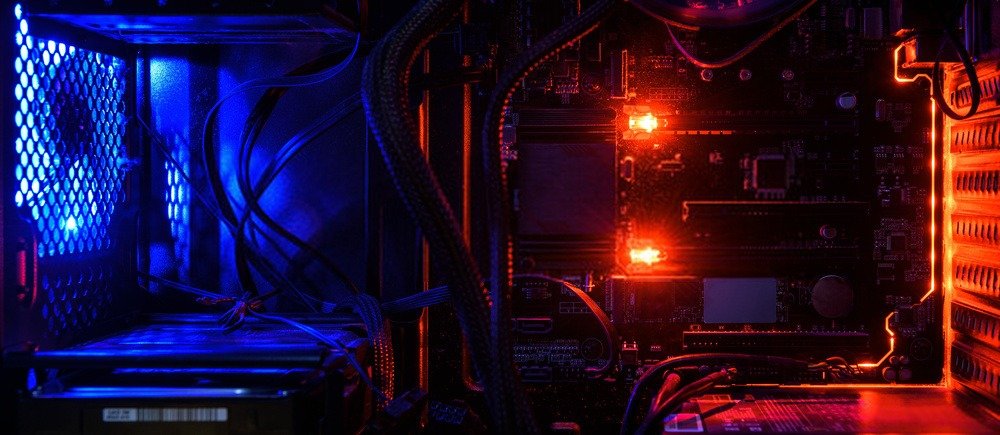
Cable management is the organization of cables within your case to meet three principles: organization, ventilation, and aesthetics . In the case of a mini-ITX PC, the first two are the priority because they must be optimized to compensate for the small size of the case.
Organize your cables
Organization is key to the thought process you need to put into your PC configuration. It's highly recommended that you spend some time considering how to design your system efficiently, intelligently, and, if possible, easily. This will give you a clearer understanding during the assembly process .
Help to ventilate your case properly
Ventilation is also essential because, as mentioned earlier in the section on PC cooling, it's important that the components are cooled. Cables obstructing airflow will disrupt the exhaust of hot air or the intake of cool air, which could damage your components . Furthermore, good ventilation with well-managed cables will contribute to a quieter computer.
Consider the aesthetics if you have a tempered glass case
Finally, aesthetics are more suited to cases with tempered glass side panels or to those who are meticulous. Admiring a well-organized setup is satisfying, especially when it's visible. Remember to group cables together and keep them close to the sides without blocking ventilation or obstructing airflow.
Take extra care when connecting your motherboard, the central component of your system. Opt for SATA connections with connectors on the front and USB ports on the right to avoid cables passing through the motherboard.
FAQ—Discover all the details about the Mini ITX case!
What are the advantages and disadvantages of a mini-ITX case?
Choosing a mini-ITX case for its portability and advantages also means making compromises. We've compiled the pros and cons of building your PC with a mini-ITX case.
| BENEFITS | DISADVANTAGES |
| Most have a versatile design, are compact and take up little space… More easily transportable than a mid-tower or full-tower PC, suitable for living room PCs, and less expensive (on average) | Generally limited compatibility… but can overheat if poorly cooled. Not suitable for a high-end gaming rig. More difficult to install than larger form factors |
For what uses?
➡️ Office Automation
If you plan to use your PC for word processing, checking emails, browsing the internet, watching movies, and other activities that don't require a lot of power, a mini-ITX case is perfect for you. In addition to being compact and usually sleek and stylish, this type of case is well-suited for everyday use. Furthermore, you'll save money on both the case and the components. You'll also gain portability, making it easier to move, and save space for your setup.
➡️ Assembly
If you plan to use it for video or photo editing, the mini-ITX format might also be suitable. However, you will need to carefully choose three components:
- The processor : a minimum of 4 cores such as an Intel i5 or AMD Ryzen 5, but 8 cores are preferable such as an Intel i7 or AMD Ryzen 7
- RAM : A minimum of 8 GB is highly recommended for Full HD, and even essential, as you may experience lag when viewing your video in the timeline. We recommend 16 GB for 4K or 32 GB for a comfortable experience. With 64 GB, you'll have no problems; it will be more than enough to handle editing and some multitasking simultaneously.
- The graphics card : no need for a high-end one, a good graphics card with at least 2 GB of memory for Full HD and 4 GB for UHD editing will suffice.
➡️ Gaming
When it comes to gaming, it all depends on the video games you want to play and the desired graphics settings. The limitation of mini-ITX cases lies in the maximum size of the graphics cards that can be installed, which typically do not exceed 310 mm and a maximum of 350 mm.
Mini-ITX motherboards can also limit configurations due to a lack of power to synchronize all PC components. Nevertheless, it's still possible to run video games , including some in HD, without any problems using a mini-ITX case. Remember to choose a good graphics card and motherboard while optimizing your RAM. Furthermore, with their compact and lightweight design, mini-towers are perfect for taking to LAN parties with friends.
What are the differences between a mini-ITX and micro-ATX case?
Motherboards come in standardized sizes regardless of the manufacturer. There are four main motherboard form factors used today: ATX (Advanced Technology eXtended), ITX (Information Technology eXtended), BTX (Balanced Technology eXtended), and DTX. Only mini-ITX and micro-ATX form factors are compatible with mini-tower cases.
Their differences lie in size and connectivity . The first measures 170 x 170 mm with a single PCI port, while the second has several ports and measures 244 x 244 mm.
Furthermore, mini-ITX by design is quieter than micro-ATX while offering comparable performance to similar architectures with lower power consumption.
If you are absolutely looking for a model that makes no noise, we invite you to read our comparison of the best silent PC cases .
Should you build your own PC with a mini-ITX case or buy a pre-built mini-PC?
It's always satisfying to build your own PC and admire the finished product, giving you a sense of pride. However, building your own PC can sometimes be a lengthy and complicated process, or even impossible for beginners, especially with less accessible cases like mini-PCs.
That's why pre-built mini-ITX PCs exist, allowing you to enjoy your setup immediately. To learn more, discover the best mini PCs in our comparison.
The obvious advantage is avoiding the hassle of assembling it yourself, either to save time or because you don't know how. Experts will have assembled a good configuration for you, and you won't have to worry about compatibility issues.
Buying a pre-built mini-ITX PC will cost you more than building it yourself (around €80 extra). It's also possible that the available PCs won't suit your needs due to the case or the components included.