When designing an enterprise resource planning (ERP) system, it is crucial to avoid certain common mistakes to maximize efficiency and return on investment. This article presents five frequent errors in ERP design and how to avoid them to ensure a profitable investment.
1. Underestimating preparation and planning
Importance of preparation
The first major mistake is underestimating the preparation and planning phase in ERP design . Careful planning is essential for defining objectives, business needs, and project expectations. Neglecting this step can lead to delays, cost overruns, and a lack of alignment with strategic goals.
The consequences

Without adequate preparation, companies risk ending up with an ERP system that does not fully meet their needs, which can reduce operational efficiency and compromise the profitability of the investment.
2. Ignoring the needs of end users
Understanding the users
Another common mistake is ignoring the needs and expectations of end users. It is crucial to involve these users from the outset of the project to ensure that the ERP system meets their daily needs and that they are ready to use it effectively.
The negative impacts
If end users are not taken into account, the system may be poorly received, leading to low adoption and reduced expected benefits. Adequate training and ongoing communication are essential to ensure a smooth transition.
3. Neglecting personalization and flexibility
The importance of personalization
An ERP system must be flexible enough to adapt to the company's specific processes. Neglecting this aspect can limit the ERP's ability to evolve with the company and meet its changing needs.
The risks
An overly rigid ERP system can lead to inefficiencies and friction, reducing productivity and user satisfaction. It is essential to choose a system that offers customization options and can be adjusted to meet future requirements.
4. Failing proper integration
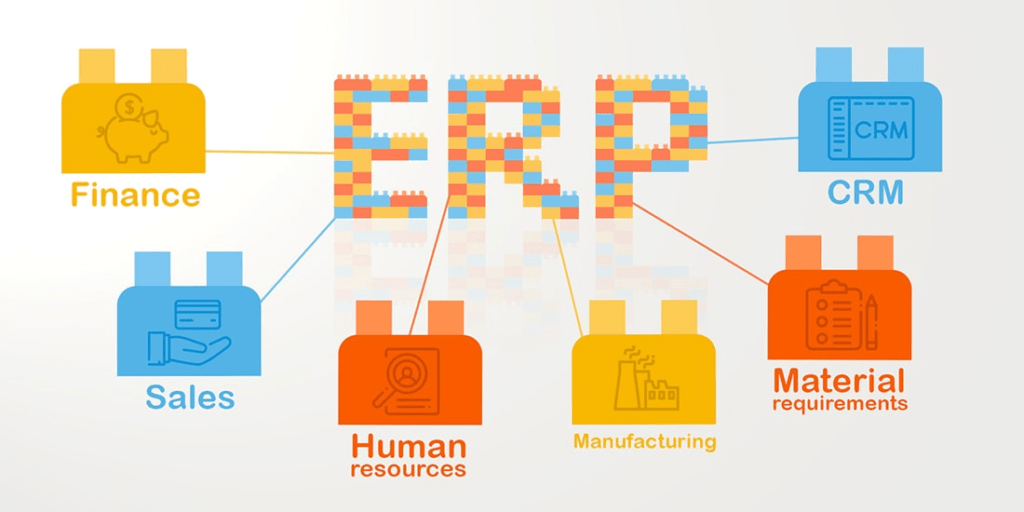
Integration with other systems
An ERP's ability to integrate with other existing systems is crucial. Inadequate integration can lead to data silos and inefficient processes.
The consequences for operations
Without proper integration, information can be duplicated or missing, hindering decision-making and operational efficiency. Therefore, it is important to carefully plan and test integrations with other systems and applications within the company.
5. Underestimating support and maintenance
Importance of continuous support
After the initial deployment, it is crucial not to underestimate the importance of ongoing support and maintenance. An ERP system requires regular updates, rapid problem resolution, and adaptation to new requirements.
Consequences of inadequate support
Without adequate support, problems can accumulate, leading to decreased efficiency and user satisfaction. Investing in robust technical support and a dedicated maintenance team is essential to ensuring the longevity and profitability of the ERP system.
Conclusion
Avoiding these five mistakes in ERP design is essential to maximizing efficiency and ensuring a return on investment. Careful preparation, an understanding of end-user needs, proper customization, seamless integration, and ongoing support are the keys to successfully implementing a profitable ERP . By taking these precautions, businesses can ensure their ERP is a powerful tool for improving operations and supporting growth.
This article might also interest you: What type of CRM does a company use?