SK Hynix has just finalized a sale agreement with Intel to divest its NAND memory manufacturing business. Is this agreement beneficial for both companies? We will examine in detail the reasons behind this sale below.
Why this acquisition?
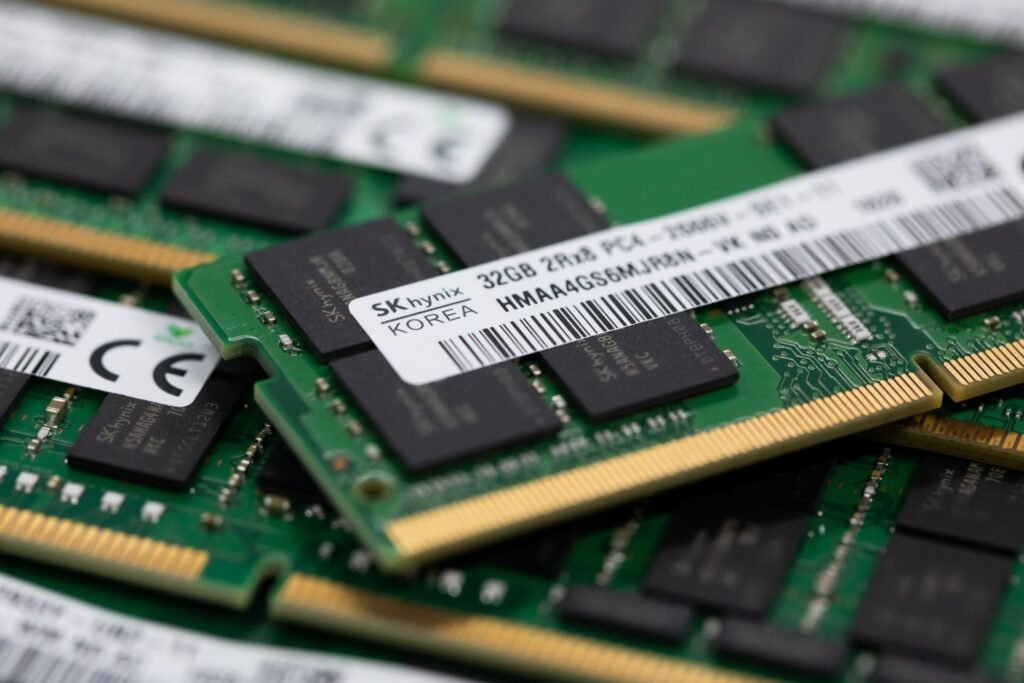
To increase its market share, the South Korean company SK Hynix is poised to acquire Intel's NAND flash memory business for $9 billion . SK Hynix currently holds the fifth position in NAND memory sales with a 12% market share, while Intel is sixth, also with 12%. With the acquisition of Intel's NAND memory business, SK Hynix aims to enhance its competitiveness in the NAND memory and SSD storage sectors. It will be able to challenge the giant Samsung, which currently holds the top spot in this sector in terms of revenue with a 31% market share. Samsung is followed by Kioxia with 17%. WD is in third place with 16%, and then Micron with 13.7%.
Who benefits from this sale?
Intel agreed to sell this part of the business because it was generating little profit and too little return on investment, according to George Davis, the Group's Chief Financial Officer. Indeed, the business generated only $600 million in operating profit on sales of $2.8 billion. Intel therefore decided to sell this NAND memory business to focus more on areas such as Artificial Intelligence and 5G. Intel CEO Bob Swan confirmed that this sale allows Intel to concentrate more on its core areas where it can offer its customers, partners, and shareholders greater returns. The sale will thus be beneficial to both Intel and SK Hynix. Seok-Hee Lee, CEO of SK Hynix, stated that by combining the best of both companies in this field, his company will be able to effectively meet customer needs and replicate its success with DRAM memory.
How will the sale proceed?
The sale is currently under the supervision of competition authorities. This is standard procedure for an acquisition of this type. An initial payment of $7 billion will be made to acquire the SSD NAND , including human resources, intellectual property, and the Dalian factory. The agreement will be finalized in 2025 with the payment of the remaining $2 billion to acquire the remaining assets, such as the NAND flash wafer design, related intellectual property, and the Research and Development division of the Dalian factory.
Intel will be able to continue producing NAND flash memory until the final payment due at the end of the agreement. It should be noted that the production of 3D XPoint memory is not part of this transaction, as it is manufactured by Micron.
In short, everyone wins in this transaction except for Intel's competitors and SK Hynix.