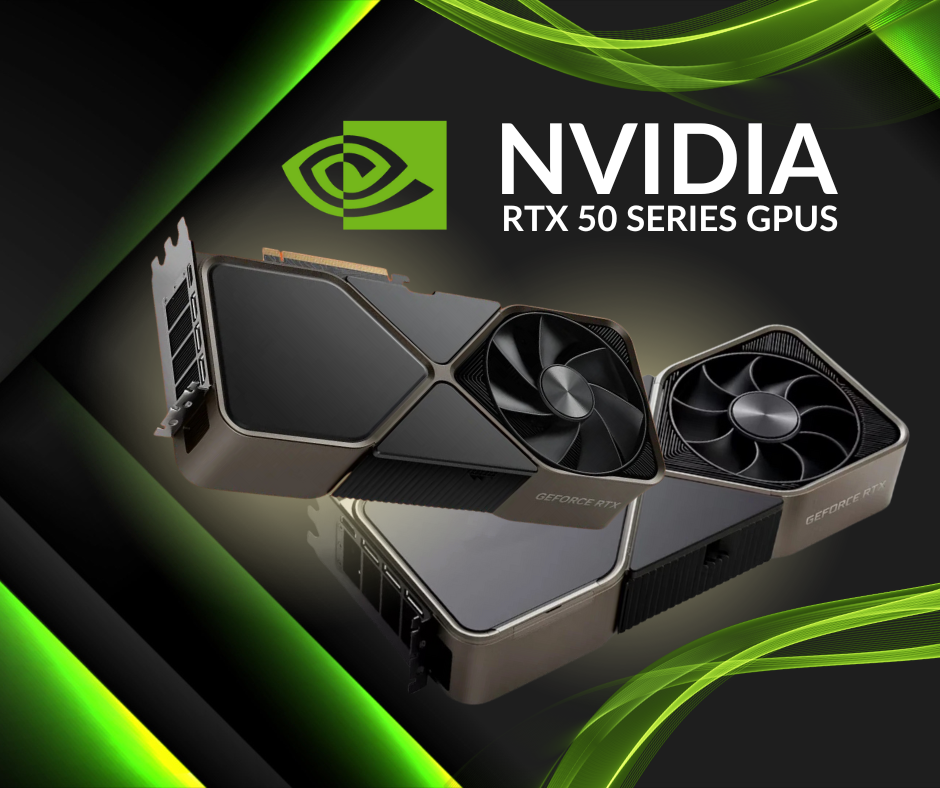
Nvidia has just unveiled its latest generation of graphics cards, the GeForce RTX 50 series, which enhances the visual experience for gamers and content creators. It offers a groundbreaking artificial intelligence experience designed to improve performance in games, creative applications, productivity, and development projects.
Thanks to the integration of dedicated AI processors, these graphics cards offer advanced AI technology directly accessible on WindowsPCs. Furthermore, the NVIDIA Studio ecosystem unlocks the full creative potential.
Performance and capabilities of the GeForce RTX 50 series
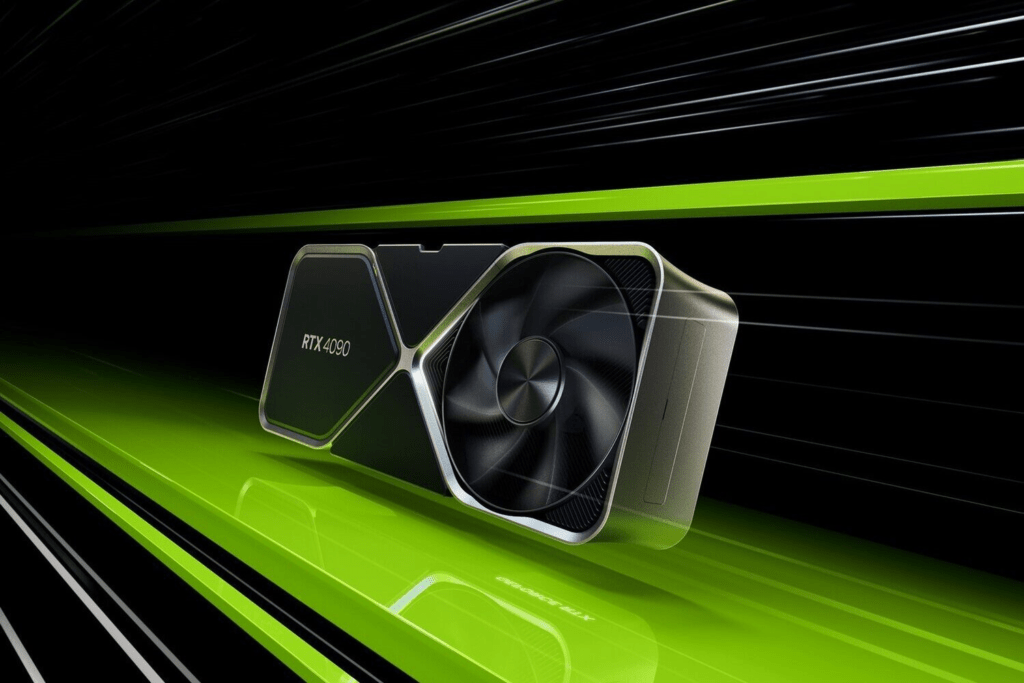
Today, more than 700 popular games and applications leverage RTX technology to deliver ultra-realistic graphics, powerful performance, and AI-based innovations like DLSS and multi-frame generation.
A solid spec sheet, but promises to be verified
Among the key new features announced are:
- DLSS 4, a new iteration of the AI supersampling system, is supposed to offer a considerable gain in fluidity.
- Reflex 2 technology, with the Frame Warp function, promises even lower latency for e-sports competition enthusiasts.
- Improved ray tracing management, with the Ray Reconstruction function, for a more realistic rendering of light and shadows.
Thanks to the power of the GeForce RTX 50 series, it is possible to enjoy smooth and detailed graphics, whether for light games like the 3D slot machines described on https://www.slotozilla.com/fr/slot-types/3d , fast action titles like competitive FPS, massive role-playing games with immersive open worlds or realistic simulations.
In theory, these advancements position the RTX 50 as a card of choice for all uses, from AAA video games to video editing or 3D modeling software. However, as is often the case, actual performance will depend on software optimizations and the ability of developers to fully leverage these technologies.
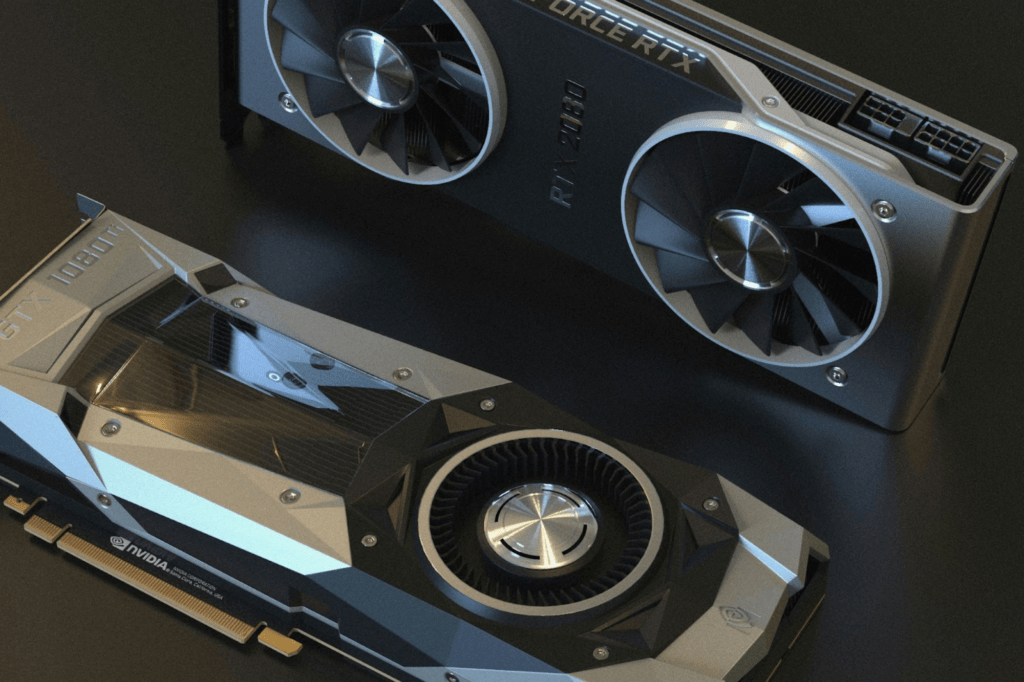
GeForce RTX 50 series: a graphics card powered by artificial intelligence
DLSS features neural network rendering technology powered by AI. Specifically, this allows it to:
- Increase the number of frames per second
- Reduce latency
- Improve graphic quality
Comparison with the RTX 40 series
| Features | GeForce RTX 40 Series | GeForce RTX 50 Series |
| Architecture | Ada Lovelace | NVIDIA Blackwell |
| AI Power | High-performance, with 4th generation Tensor cores | Even more impressive, 5th generation Tensor cores |
| DLSS Technology | DLSS 3 | DLSS 4 with multi-image generation |
| Graphic fidelity | Very high | Exceptional, with Ray Reconstruction |
| Image generation speed | High | Unprecedented acceleration |
| Responsiveness (NVIDIA Reflex) | Optimized | Enhanced with Frame Warp |
| Availability / Stock | More stable | Possible shortage |

A possible strain on stocks in the future?
For several generations, the availability of NVIDIA graphics cards has remained a sensitive issue, as explained at https://www.clubic.com/actualite-563634-geforce-rtx-serie-50-super-deja-les-premieres-infos-vers-une-augmentation-de-la-vram.html . While the GeForce RTX 50 series had a difficult launch with limited stock for the high-end models, the situation seemed to be improving for mid-range versions like the RTX 5070.
However, a rumor suggests that NVIDIA may soon reduce production of chips dedicated to gaming graphics cards. This decision would be linked to a prioritization of chip manufacturing for the more lucrative artificial intelligence market, at the expense of the gaming segment.
If this hypothesis is confirmed, it could cause a new shortage, affecting the availability and prices of GeForce RTX (see article https://www.lesnumeriques.com/carte-graphique/le-prix-des-geforce-rtx-serie-50-de-nvidia-vont-etre-fou-surtout-pour-la-geforce-rtx-5090-n227519.html ) in the coming months.