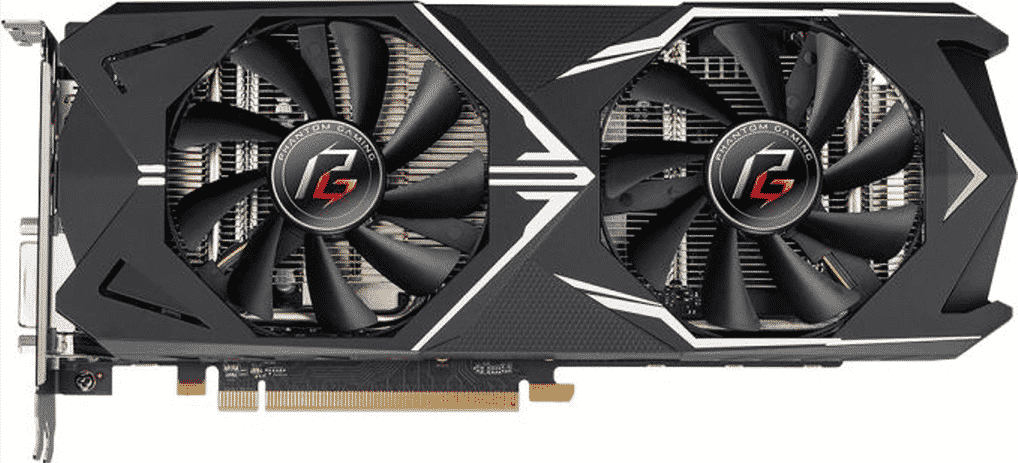
According to a patent recently published by AMD, the company is designing multi-block, multi-core graphics cards. This generation of GPUs will eliminate monolithic graphics cards and allow AMD to outpace competitors like Nvidia.
MCM project for graphics cards
AMD appears to be on the verge of changing the design of its graphics cards. According to a recently published patent, AMD is working on a project that will allow different graphics GPUs to work together. This is a multi-chip module (MCM) project, similar to what it did for its processors. It involves producing models that can function using components previously manufactured separately. This is the case, for example, with its Ryzen consumer processors and EPYC servers. AMD thus produces a chip composed of different separable blocks (memory controllers, cores, etc.). The number of cores can be increased at will using a fairly advanced design and production technique. The different blocks are interconnected via very high-speed buses. These types of products are gaining traction in the market; they are also economical and high-performing. The production of MCM processors has allowed AMD to outpace its competitor Intel in several areas. It will therefore try to replicate this success to beat its direct competitors (Nvidia, etc.)
The end of monolithic chips?
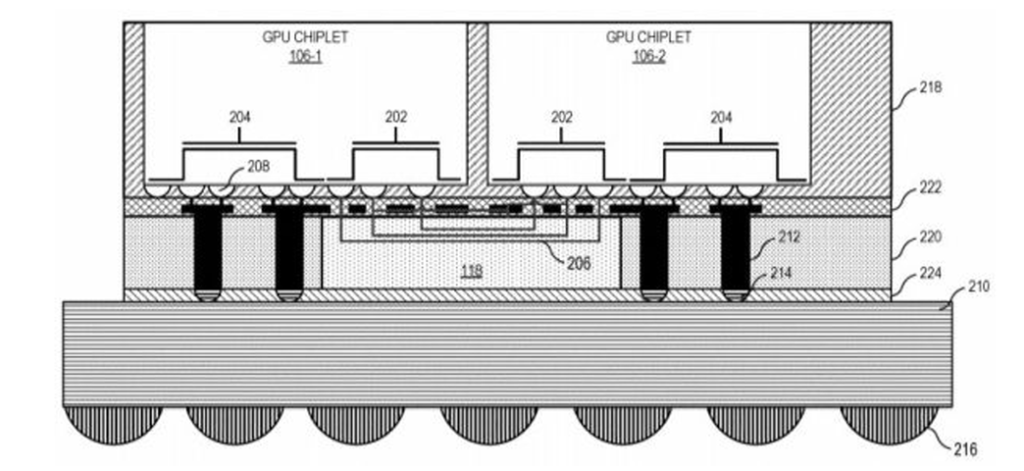
This could be the end of the era of monolithic chips. The two graphics card giants (AMD and Nvidia) have been aiming to design MCM graphics cards for quite some time. We'll see which of the two manages to produce one first. In any case, this recent AMD patent confirms its significant progress in the field. The patent is titled "GPU Chiplets Using High-Bandwidth Crosslinks." The company, led by Lisa Su, provides in the documentation the reasons why AMD hadn't yet begun to implement this project. Some of these reasons included the existence of communication latency between the different blocks and the difficulty of achieving parallelism. These problems have been overcome by AMD engineers. To do so, they implemented an internal high-bandwidth communication network called "high bandwidth passive crosslink." This network allows each block to communicate with the others, as well as with the CPU. Furthermore, each GPU would have its own cache memory and all the necessary components to operate autonomously. Each block would be manageable directly at the operating system level.
The design of these new graphics cards differs somewhat from that of processors. Indeed, the cores of a processor are housed in a block with a single input/output device. The GPUs of the graphics card will be small, able to connect to each other, and work together. This new solution is rumored to become a reality after the RDNA3 generation, which will be produced this year and next. We could therefore see the first cards with this new architecture around 2023.
In short, the recently published patent suggests that AMD is committed to this project of producing graphics cards with various interconnectable blocks. The cores will be able to work together, communicate with each other and with the CPU. These blocks will be directly manageable at the operating system level. This project appears to be underway and will be implemented after the current RDNA3 generation.