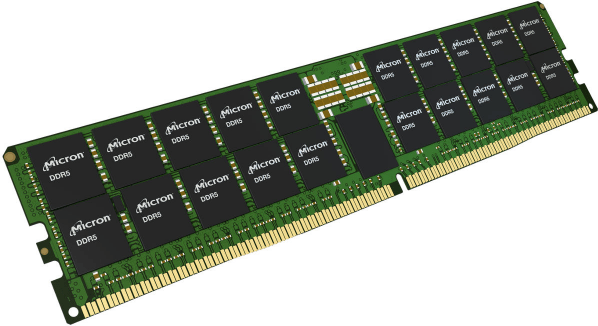
ADATA has just signed a partnership agreement with MSI and Gigabyte. This partnership involves developing DDR5 memory to be compatible with their motherboards. ADATA is among the memory manufacturers, such as TEAMGROUP, that will be launching their DDR5 memory by the end of this year. This memory allows for significantly higher communication bandwidth to better serve processors with an increasing number of cores.
ADATA has announced its ability to eventually produce DDR5 memory modules with a bandwidth of up to 8400 MT per second and a capacity of 64 GB. These modules will feature ECC modules that automatically correct memory errors. This is good news for users and programmers like Linus Torvalds , who had complained about the lack of ECC modules on Intel memory components. These modules require apower supply to operate. ADATA has signed a long-term contract with MSI and Gigabyte. According to ADATA's press release, the company will primarily optimize Intel platforms. AMD will also be included, although it wasn't mentioned because, technically speaking, there would be no incompatibility. This is simply a marketing expense and a response to the strong criticism Intel has recently received. ADATA will also ensure that its memory modules can be overclocked by users.
AMD and Intel have not yet officially announced their support for the new DDR5 memory. However, we know that it will be supported by Intel, for example, with its high-performance hybrid processors such as Alder Lake in the desktop PC market. As for AMD, this memory will likely be included in the latest generation of Ryzen processors based on the Zen 4 architecture, such as those found in the 4th generation EPYC servers. This memory will also be supported in the mobile sector. All of this is not expected to be fully implemented until 2022.