
Have you ever wondered how to master your keyboard's filter keys? Filter keys can indeed cause problems when they're accidentally turned on or off. We'll address common filter key issues and provide simple solutions to enable and disable them as needed. This will give you greater control over your keyboard and optimize your computing experience. Follow these step-by-step instructions and discover how to effectively manage these essential settings.
What are filter keys?
Filter keys are Windows operating system . They help prevent typing errors by ignoring unintentional key presses. This feature is especially useful for people with motor difficulties, but it can also be beneficial for those who want to improve their typing accuracy.
Method 1: Via Windows settings
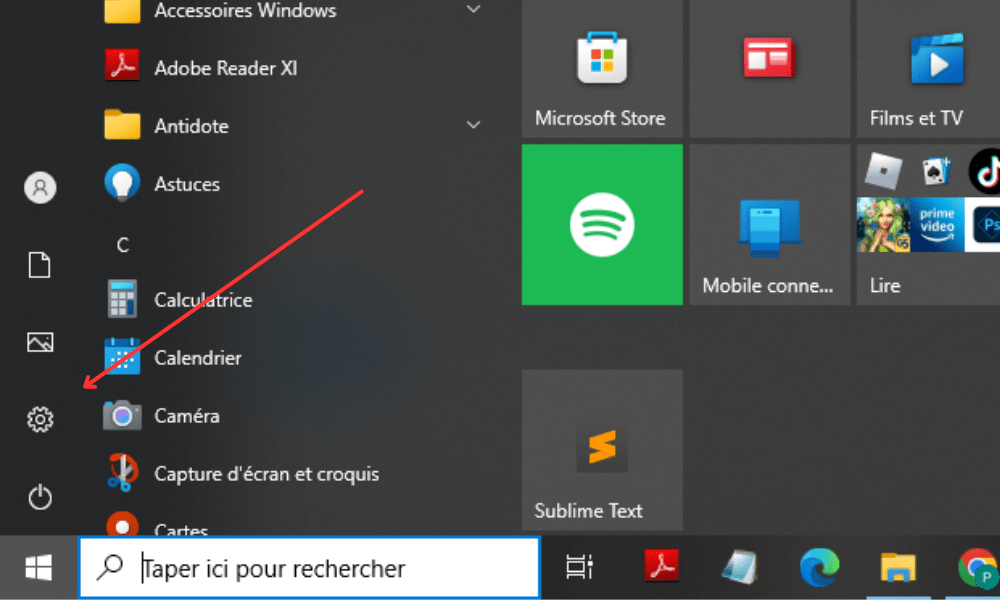
Step 1: Press the Windows and select the gear icon to open settings.
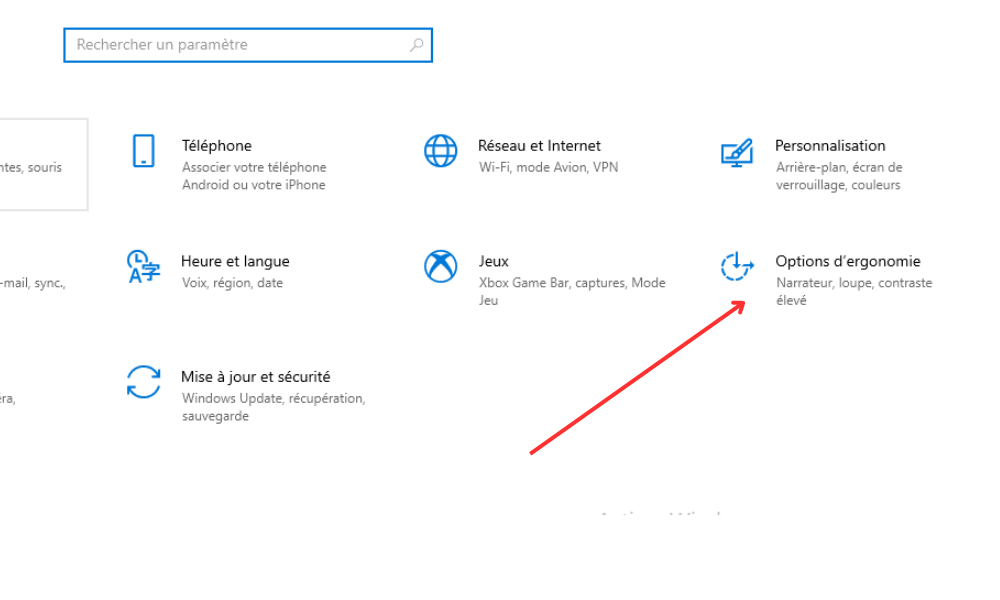
Step 2: In the Settings window, click on the "Accessibility" or "Ease of Access" option in the list of options. This depends on your version of Windows .
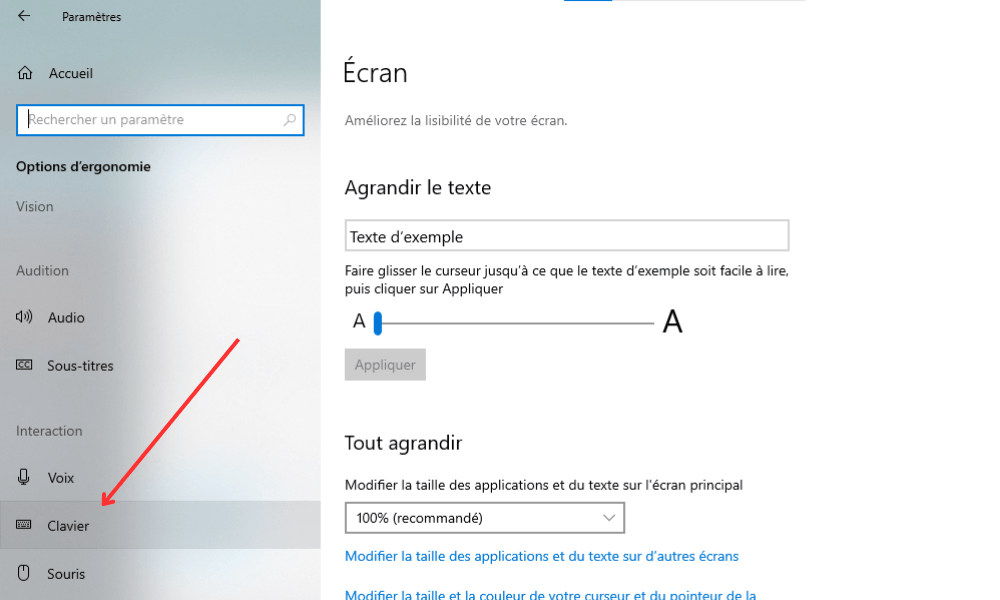
Step 3: Locate the "Keyboard" option in the menu bar that appears on the left side, and then click on it.
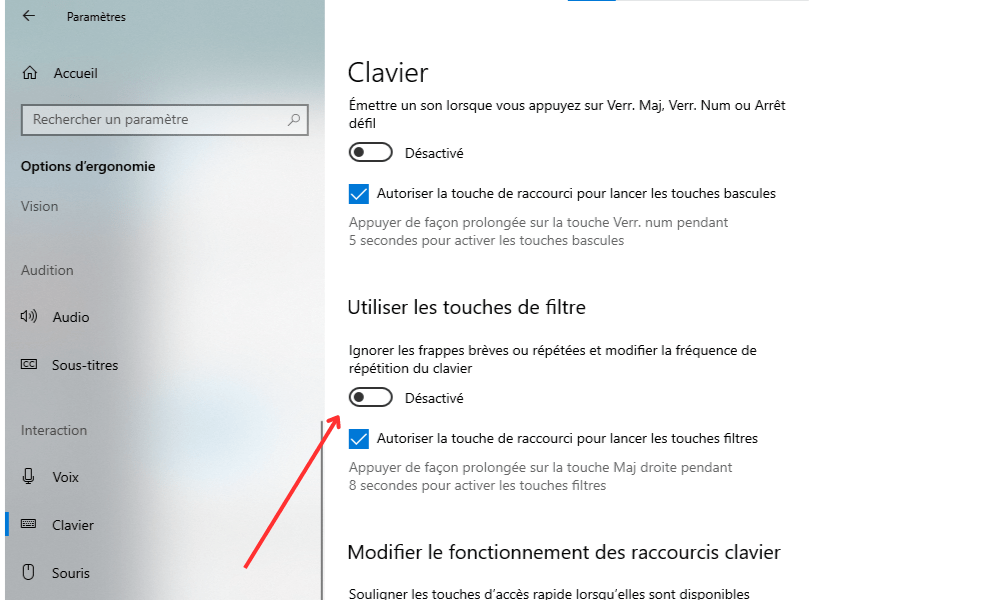
Step 4: Scroll down, then enable or disable filter keys by toggling the button next to "Use filter keys".
Method 2: Using the Control Panel
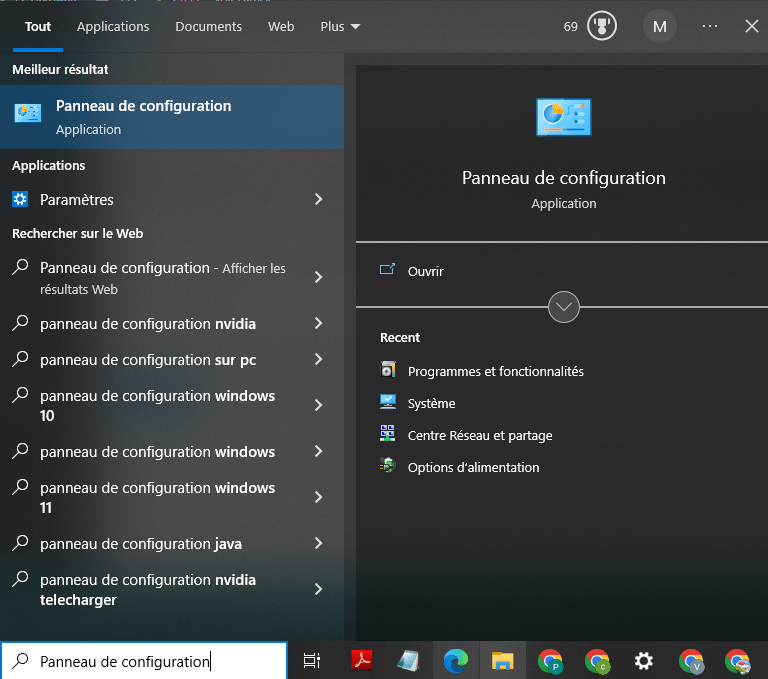
Step 1: Press the Windows , type "Control Panel" and press Enter.
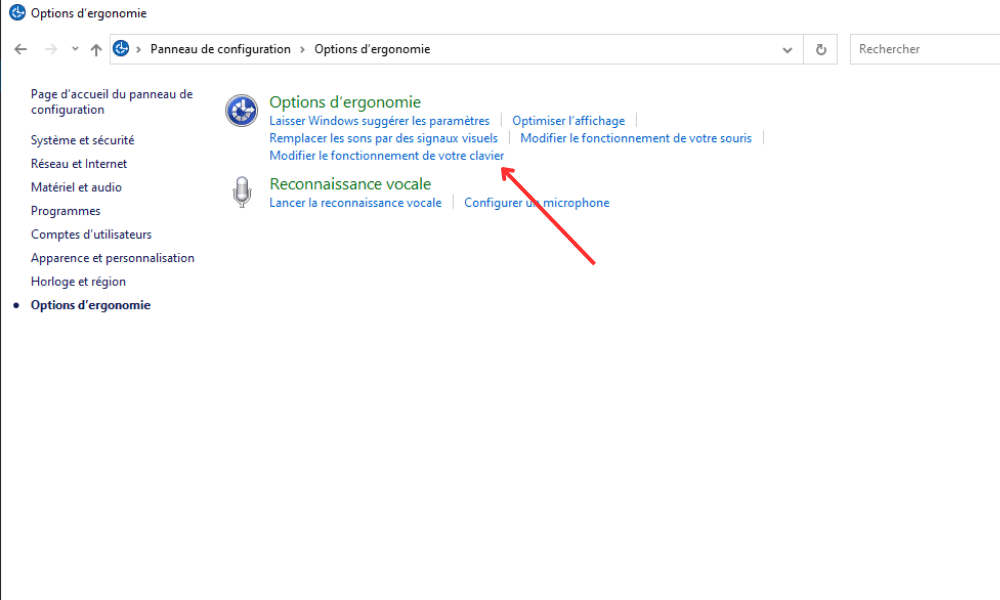
Step 2: Click on "Ease of Access" and then on "Change how your keyboard works".
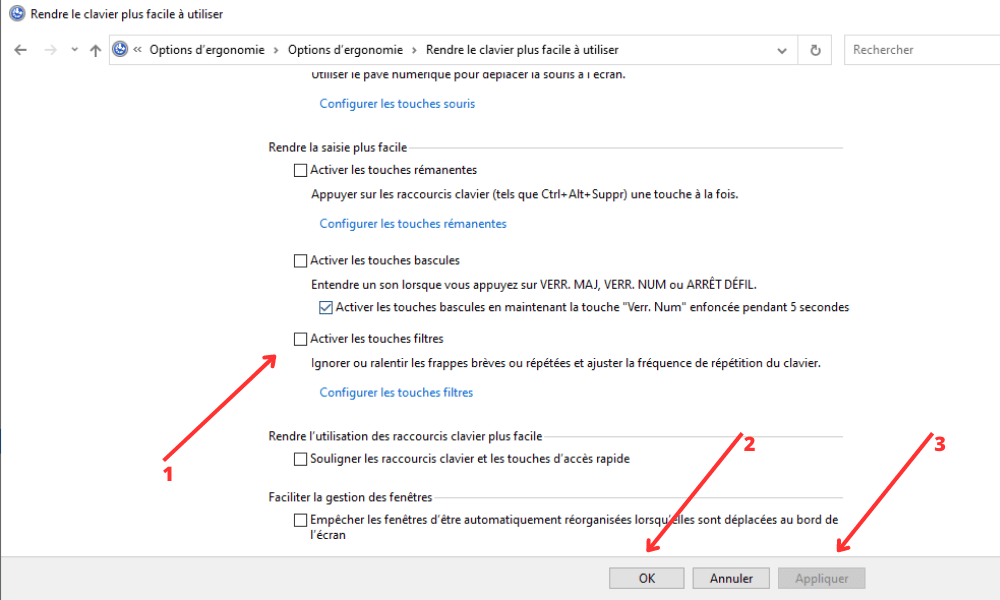
Step 3: Select "Make typing easier".
Step 4: Check or uncheck the "Enable filter keys" box according to your preference and click "Apply" then "OK".
Method 3: Via keyboard shortcut
Step 1: First, make sure you are on your Windows .
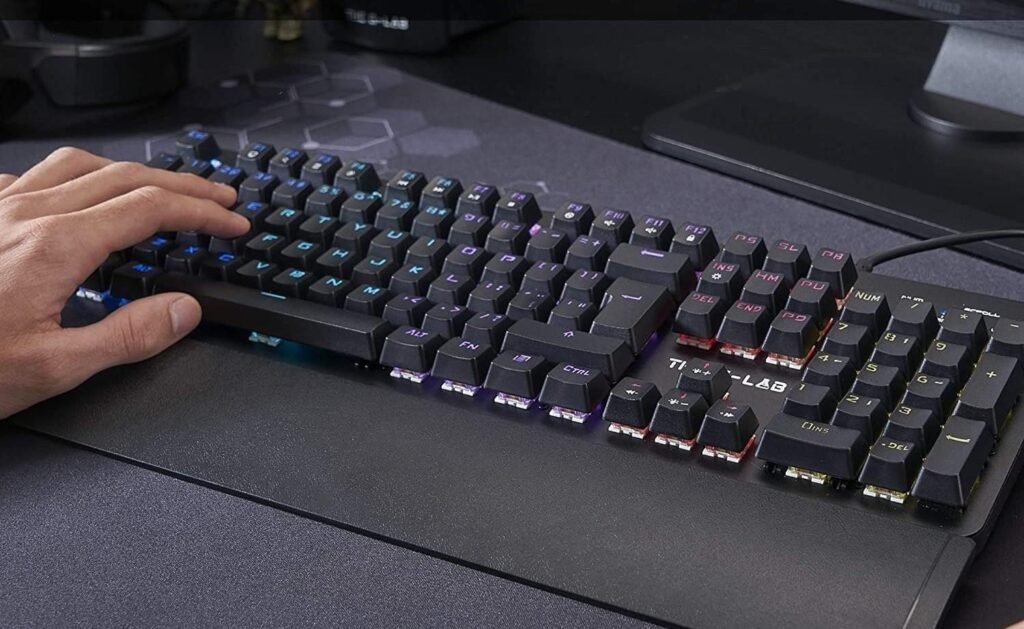
Step 2: Press and hold the right and left "Shift" keys simultaneously for approximately 8 seconds.
Step 3: A window will appear asking if you want to enable or disable the filter keys. If you want to enable the filter keys, click "Yes". If you want to disable them, click "No".
Method 4: Via the registry editor
Step 1: Press the Windows , type "regedit" and press Enter.
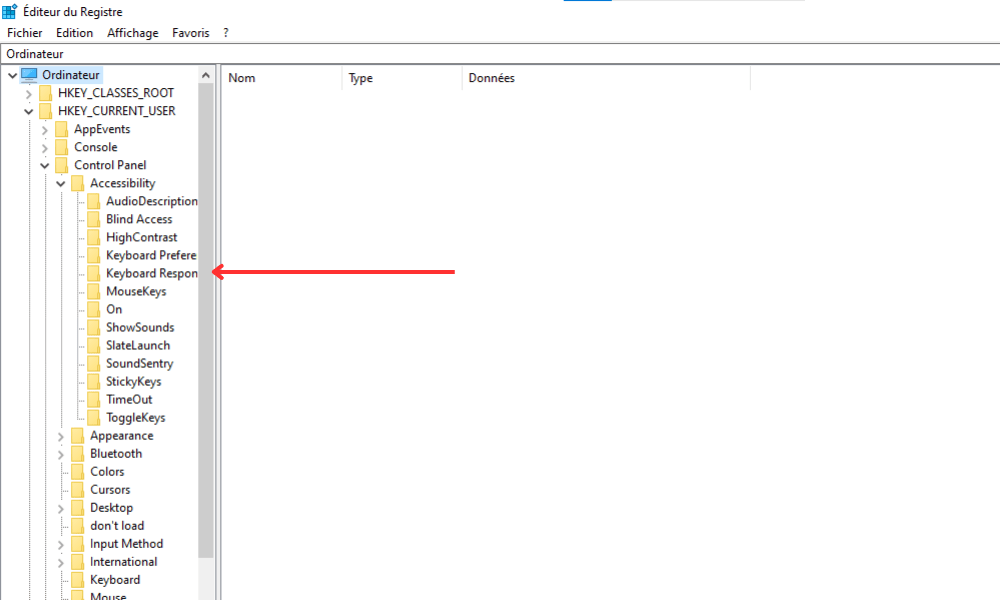
Step 2: Navigate to the following key: HKEY_CURRENT_USER\Control Panel\Accessibility\Keyboard Response
Step 3: Double-click on "Flags" and change the DWORD value to enable (2) or disable (0) the filter keys.
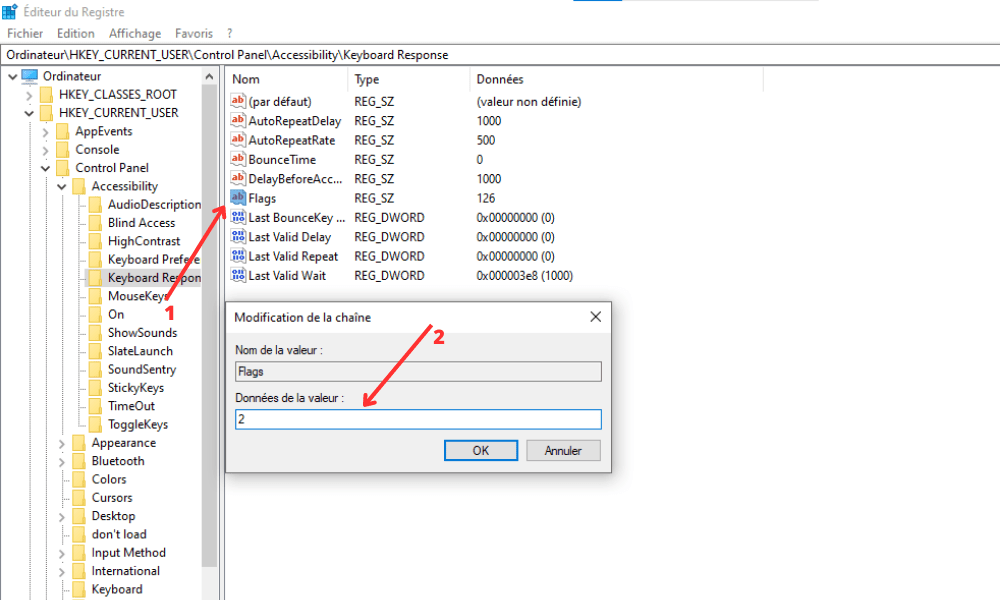
Step 4: After modifying the DWORD value, click "OK" and close the registry editor.
Step 5: Restart your computer for the changes to take effect.
Method 5: Using the command prompt
Step 1: Press the Windows , type "cmd" and right-click on "Command Prompt", then select "Run as administrator".
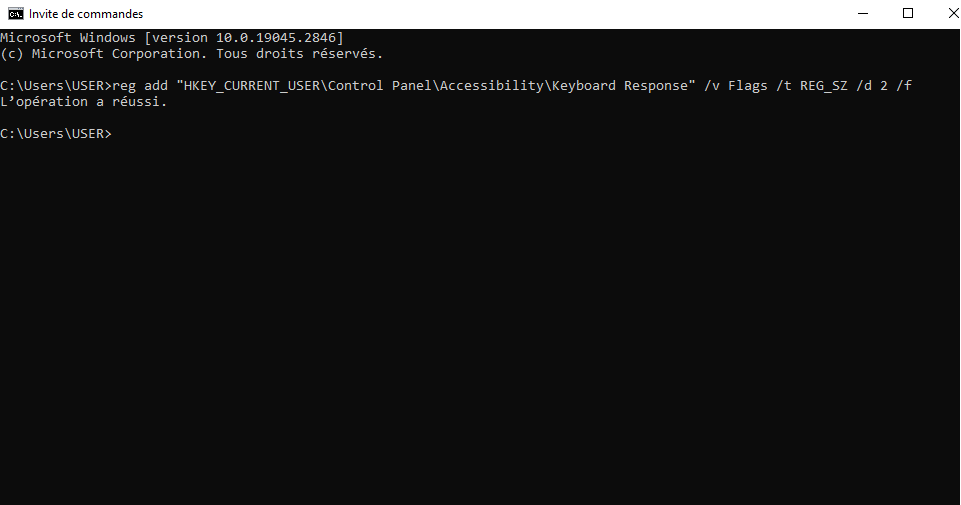
Step 2: To enable filter keys, type the following command and press Enter: reg add "HKEY_CURRENT_USER\Control Panel\Accessibility\Keyboard Response" /v Flags /t REG_SZ /d 2 /f
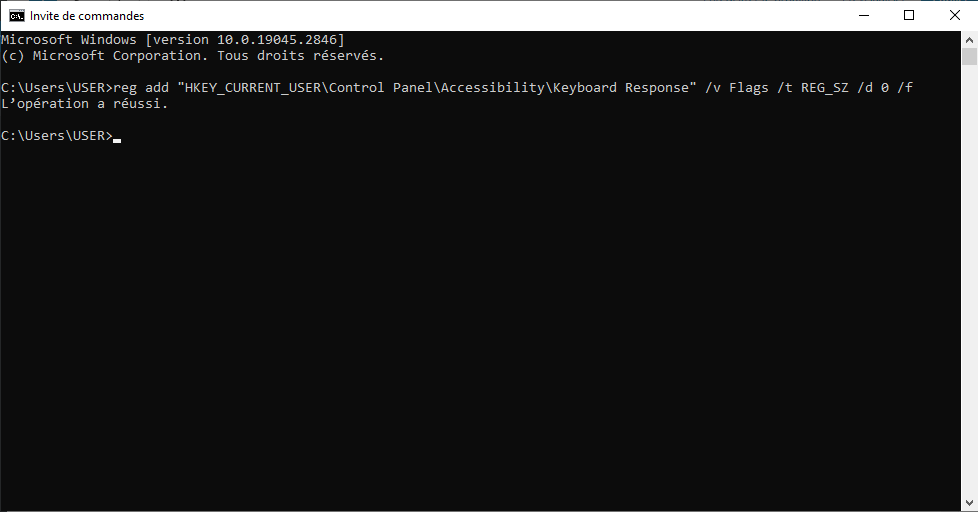
Step 3: To disable filter keys, type the following command and press Enter: reg add "HKEY_CURRENT_USER\Control Panel\Accessibility\Keyboard Response" /v Flags /t REG_SZ /d 0 /f
Restart your computer for the changes to take effect.
Comparative table of methods
| Method | Benefits | Disadvantages |
|---|---|---|
| Windows settings | Easy to use, graphical interface | None |
| Control Panel | Graphical interface, additional options | Several steps required |
| Keyboard shortcut | Fast, without a graphical interface | May be accidentally activated |
| Registry editor | Precise control, direct modification of the register | Risk of changing other settings, requires a restart |
| Command Prompt | Quick modification, precise control | Requires administrator privileges, requires a restart |
In short, key filters are a useful feature for improving the typing experience on Windows . With these five methods, you now have all the tools you need to enable or disable this feature as needed. Feel free to choose the method that works best for you and share it with your friends and family to help them optimize their keyboard usage.
Important : You may also be encountering error 0xc000007b? Here's an article that shows you how to fix it!
FAQ
What are filter keys and how do they work?
Filter keys are an accessibility feature built into the Windows . They help reduce typing errors by ignoring unintentional or repeated key . This feature is especially useful for people with motor difficulties or those who want to improve their typing accuracy.
The operation of the filter keys relies on two main mechanisms:
- Key press acknowledgment delay: This is the amount of time a key must be pressed before the system recognizes it as a valid input. This helps prevent typos caused by unintentional or brief key presses.
- Key repeat: This function controls the rate at which a key repeats when held down. By adjusting this rate, filter keys can help prevent typos caused by unintentional repeated presses.
How can I tell if the filter keys are enabled or disabled on my computer?

To check the status of the filter keys on your computer, follow these steps:
- Press the Windows key and select the gear icon to open settings.
- Click on "Ease of Access" and then on "Keyboard" in the left-hand menu.
- The button next to "Use filter keys" will indicate whether the function is enabled (in the "On" position) or disabled (in the "Off" position).
If you prefer to use the control panel, follow these steps:
- Press the Windowskey, type "Control Panel" and press Enter.
- Click on "Ease of Access" and then on "Change how your keyboard works".
- Select "Make the keyboard easier to use".
- The "Enable filter keys" box will be checked if the function is enabled and unchecked if it is disabled.
Can filter keys help prevent carpal tunnel syndrome or other typing-related health problems?
They can help reduce typing errors and improve accuracy. While not specifically designed to prevent health problems like carpal tunnel syndrome, they can contribute to a more comfortable typing experience by limiting involuntary and repetitive key presses.
It is important to note that to prevent carpal tunnel syndrome and other typing-related health problems, it is essential to adopt good ergonomic practices. This includes using an ergonomic keyboard, maintaining correct posture, and taking regular breaks to avoid fatigue and muscle tension.
Are the filter keys compatible with all types of keyboards (mechanical, membrane, etc.)?
Filter keys are compatible with most keyboards, whether mechanical, membrane, or otherwise. The feature is integrated into the Windows operating system and works regardless of the keyboard type. However, some specific or custom keyboards may require additional settings to function correctly with key filters.
Are there any alternatives to filter keys to improve typing accuracy?
Yes, there are several alternatives to improve typing accuracy. Some of them include:
- Text prediction software: these programs analyze your typing in real time and suggest complete words or corrections based on context and your typing history.
- Ergonomic keyboards: These keyboards are designed to offer optimal comfort and reduce typing errors by adapting the key layout to the natural shape of your hands and fingers.
- Typing training: improving your typing technique through exercises and training programs can also help reduce typing errors and increase your typing speed.
How can I customize the filter key settings to suit my specific needs?
To customize the filter key settings, follow these steps:
- Press the Windows key and select the gear icon to open settings.
- Click on "Ease of Access" and then on "Keyboard" in the left-hand menu.
- Activate the filter keys by toggling the switch next to "Use key filters" to "On".
- Click on "Filter Key Settings" to access customization options.
You can adjust the key acceptance delay, repeat speed, and other settings to your liking. Don't forget to click "Apply" to save your changes.
Can filter keys cause performance or compatibility issues with certain applications?
In general, filter keys shouldn't cause performance or compatibility issues with most applications. However, in rare cases, certain specific applications or video games may be affected by their use. If you experience problems, you can try temporarily disabling them to see if that resolves the issue.
Can they be enabled or disabled on other operating systems, such as macOS or Linux?
Yes, features similar to filter keys are available on other operating systems like macOS and Linux. On macOS, this feature is called “Sticky Keys” and can be found in System Preferences under “Accessibility” and then “Keyboard.” On Linux, the functionality varies depending on the distribution and desktop environment used, but it is generally accessible through accessibility settings or keyboard preferences.
Are filter keys useful for people who use an alternative input device, such as a virtual keyboard or pointing device?
They can be helpful for some people who use an alternative input device, especially if they have motor difficulties that may cause involuntary or repetitive key presses. However, their effectiveness will vary depending on the input device used and the nature of the user's motor difficulties. In some cases, other accessibility features or specialized input devices may be more suitable.
Are there any keyboard shortcuts to quickly enable or disable filter keys without going through the settings?
Yes, you can quickly enable or disable them using the following keyboard shortcut: hold down the Shift and Alt keys , then press the Print Screen (or PrtScn) key . A dialog box will appear, asking if you want to enable or disable the filter keys. Press Enter to confirm your choice.
Conclusion
Filter keys are a useful accessibility feature that can improve typing accuracy and assist people with motor difficulties. By understanding how they work and how to customize them, you can make the most of this feature to enhance your typing experience. Feel free to explore other accessibility features and adapt your workspace to meet your specific needs.