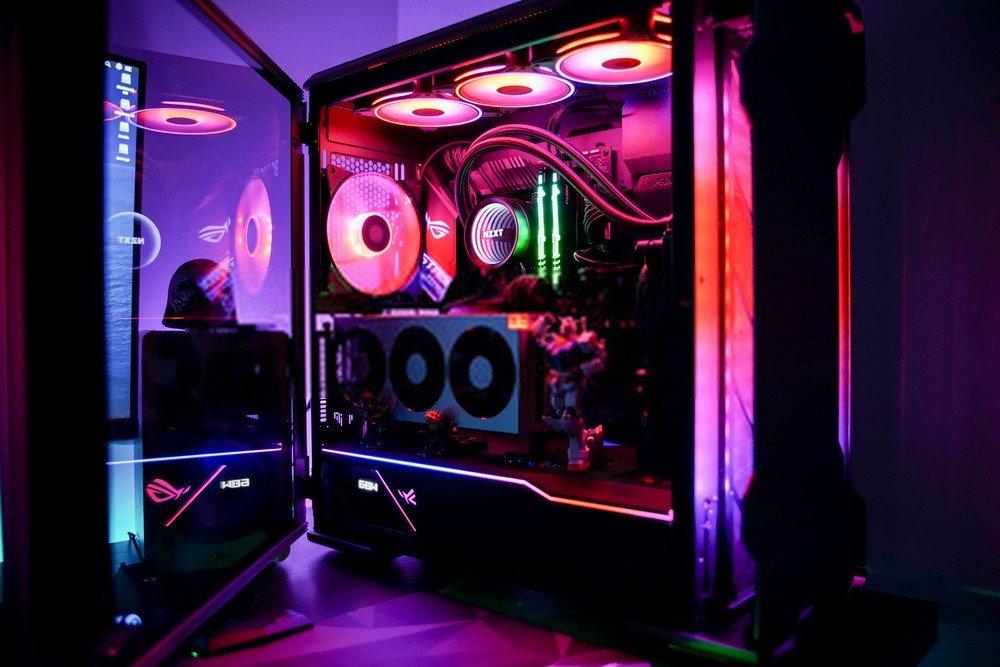
Video games are becoming increasingly realistic, their software is becoming ever more demanding, graphics cards are becoming ever more powerful to handle ever higher screen resolutions, and they require increasingly powerful computers to function properly.
What do PC gamers look for? They need the best quality, powerful, high-performance, fast hardware with large storage capacities.
Depending on individual needs, the criteria for choosing a PC case can vary greatly from one gamer to another: the available space in the case, the quality of the materials, the design, the components…
Here are this year's best-selling PC cases
string(249) "[403] Client error: `POST https://webservices.amazon.fr/paapi5/getitems` resulted in a `403 Forbidden` response: {"__type":"com.amazon.paapi5#AssociateEligibilityException","Errors":[{"Code":"AssociateNotEligible","Message":"Your acc (truncated...) "
However, the cooling system is an essential component for all of them. It must be efficient enough to protect the case from any damage caused by an uncontrolled temperature increase
you may ?
Let's look at the advantages and disadvantages of each option according to 4 important points:
- The effectiveness of ventilation for temperature regulation,
- The issue of noise
- Maintenance of the case, fans and components
- The risk of an accident
1. The effectiveness of ventilation for temperature regulation
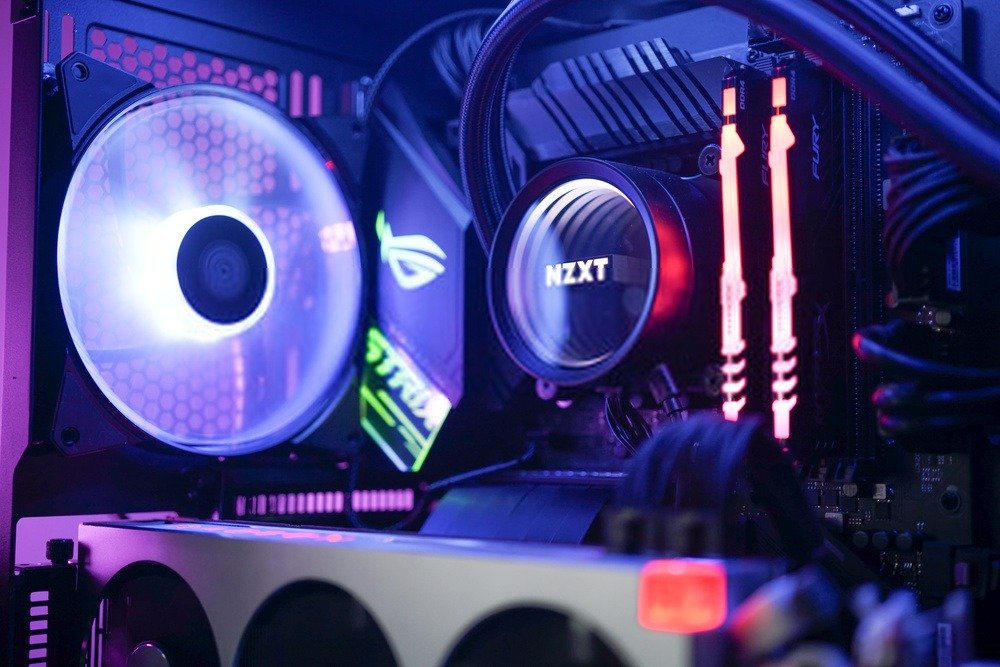
For some gamers, an open case will have the advantage of offering greater airflow and better ventilation, thus helping to lower the temperature.
For others, on the contrary, an open case does not help to regulate the internal temperature, by "breaking the airflow".
One can imagine that the temperature could be higher in closed cases, but this actually depends on the cases and their characteristics.
If you want an open or closed PC tower, we recommend a case with tempered glass for easy assembly and disassembly in case of a problem!
Modern closed cases are designed to optimize airflow management through:
- Regarding the location and size of the fans
- Regarding the positioning of air inlets and outlets . Since hot air is lighter than fresh air, the air inlet should be at the front, on the lower part, and the outlet that recovers the hot air will be more efficient positioned on the upper part at the rear.
- The arrangement of the components and, more generally, the internal structure of the case, can either promote an air circulation channel allowing for its extraction or, conversely, increase the risk of overheating sensitive components.
- The quality of the finishes and assembly are also very important elements; they remain essential for optimizing airflow.
In summary, closed cases are designed to promote good ventilation of the system and components , with varying degrees of efficiency depending on their power. Some users find that their case temperature rises so much that they prefer to open it to help lower the temperature. However, a well-designed case should be fully effective when closed.

2. The issue of noise
There are many elements that can generate noise in a PC case and noise can become a real problem… It can be caused by the fans , they are the ones we immediately think of when the problem arises (the bigger the fans, the less noise they make).
But there are also other sources of noise such as air circulation between components and cables, optical drives, rotary drives, component vibration …
An open case is generally noisier.
If noise is a concern for you, a closed PC case offers several advantages. You can even opt for soundproofed cases. Indeed, if you're looking for a quiet PC case , there are ranges equipped with noise reduction features such as acoustic insulation panels for improved soundproofing, vibration dampeners, or the use of quiet fans.
We recommend the Be quiet brand if you want a completely soundproof PC case!
3. Maintenance of the case, fans, and components

Regarding the maintenance of your PC, there are 2 points to consider when deciding between an open or closed case:
- The issue of accessibility
- The issue of exposure to dust, animal hair and other ventilation debris.
In an open case, components such as fans are more exposed
To dust and other debris. However, an open case also allows for better accessibility, which for some users is an undeniable advantage by allowing for more regular maintenance of the fans and components.
Depending on the construction and the quality of the materials, a closed case makes maintenance more difficult, as the internal structure is less accessible. Therefore, consider the ideal size for your PC tower; there are ATX cases , but also more compact and smaller models called Mini-ITX .
But a sealed enclosure also better protects the components from debris , as the incoming air is still somewhat "filtered." However, maintenance remains important because the air intake still allows dust to pass through. Accessibility can therefore be a significant factor.
This point certainly needs to be considered in light of each individual's situation. The question is not the same in a house with pets as in a house without, for example.
4. The question of the risk of accidents:
Who hasn't had their coffee (or even their meal) in front of their computer? Unless you have your computer locked up tight, it is most often accessible to other residents of your home, with all the risks that this entails.
An open case clearly increases the risk of accidents . Whether it's the presence of a child or pet curious about the inside of the case, the risk of a foreign object hitting the PC tower, or spilling liquid, the walls of a closed case provide additional physical protection that can save your computer from a common everyday accident.
In conclusion
The power required to support increasingly demanding games makes the cooling system and airflow management of your PC crucial. The choice between an open or closed case depends on many factors, and opinions vary on the subject.
What should you choose to protect your computer from the main danger it faces: the risk of overheating?
In certain situations, when the case temperature tends to rise too high, an open case can help. However, it's certain that a well-designed case, with ventilation suited to the PC's power and well-managed airflow, will be most effective in a closed case.