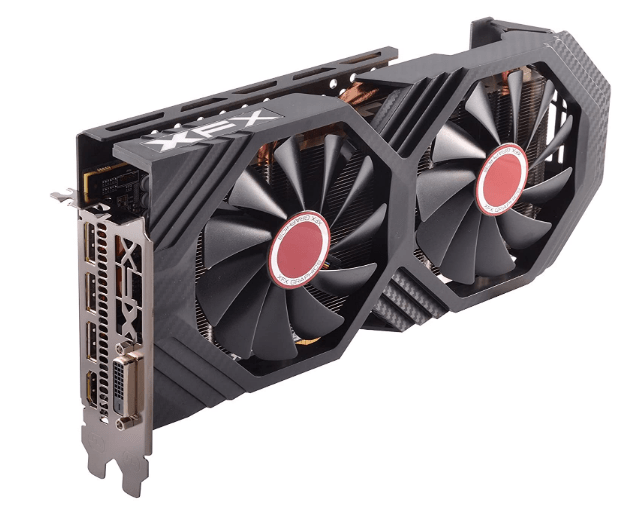
The Radeon RX 580 graphics card was first launched by AMD on April 18, 2017. AMD's partner manufacturer, PINE Technology, through its XFX division, released its Radeon RX R80 series, competing with cards produced by other partners. The RX 580 is available online for approximately €200.

Radeon RX 580 graphics card specifications
Radeon RX 580 's GPU features 36 compute units , 32 ROPs , 2304 stream processors , and 144 texture units . The 5.7 billion transistors integrated onto the 232 mm² chip operate at a base clock speed of 1.257 GHz. In boost clock mode, the GPU reaches 1.37 GHz (slightly higher than the OEM's 1.35 GHz). The GPU transfers up to 192.96 GT/s for a maximum performance of 6.2 TFLOPS.

This card is built on the Polaris architecture with 4th generation CGN graphics cores. The GPU is manufactured using a 14-nanometer FinFET process by GlobalFoundries. The manufacturing process is more refined than the previous generation, resulting in optimizations that allow for a higher operating frequency.
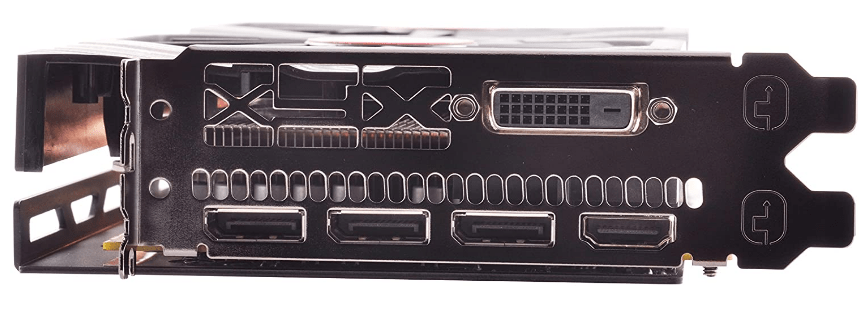
In terms of memory, the RX 580 card features 8GB of GDDR5 . It transfers data at 8 Gbps on its 256-bit , which corresponds to a bandwidth of 256 GB/s . The card supports three DisplayPort connectors: one DVI and one HDMI. The XFX Radeon RX 580 measures 27 x 4 x 12.4 centimeters (L x W x H). Regarding power consumption, the card draws 185 watts power supply is recommended . The XFX Radeon RX 580 features a dual-fan heatsink cooling system and boasts a compact and robust design.
The RX 580 supports a whole host of features such as AMD Radeon VR Ready Premium, Radeon ReLive, AMD LiquidVR, AMD Frame Rate Target Control (FRTC), AMD App Acceleration, Unified Video Decoder (UVD), Vulkan API, DirectX 12, AMD Radeon Software, AMD CrossFire, AMD PowerTune, Radeon Chill, Radeon FreeSync technology, AMD Eyefinity technology, TrueAudio Next, AMD Virtual Super Resolution (VSR)..
Radeon RX 580 graphics card performance
The RX 580 is an improved version of the RX 480. Both generally share the same specifications, except for the operating frequency, which has been improved thanks to the more refined 14-nanometer manufacturing process. The card performs quite well in Full HD. It's not really designed for 4K. However, the lower power consumption and hardware limitations are compensated for by the various software features included with the RX 580.
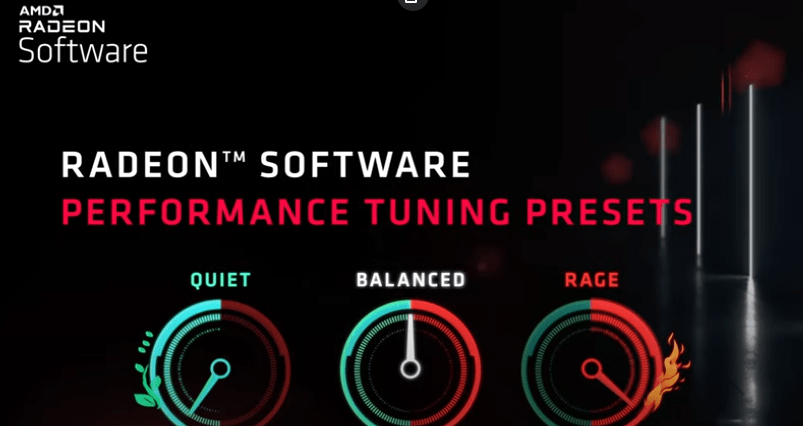
The RX 580 supports AMD Radeon Software Adrenalin, which allows you to customize and fine-tune your gaming settings. This application lets you choose a configuration with a single click by selecting from three modes: Quiet, Balanced, and Race.
AMD LiquidVR lets you play VR games with stunning image quality. Combined with AMD Radeon VR Ready Premium , you'll enjoy an immersive gaming experience with interactive and intuitive virtual reality.
The AMD App Accelerator enables fast graphics processing because different computing tasks are efficiently shared between the CPU and GPU. Furthermore, with DirectX 12 support, the machine's multiple CPU cores can process graphics tasks in parallel. This significantly reduces processing time and eliminates latency.
Radeon FreeSync technology also helps reduce latency to provide smooth images, without breaks or stuttering.
Efficient and user-friendly energy management!
AMD PowerTune lets you customize the power consumption of your RX 580 graphics card. This allows you to limit the TDP for better energy management, and also to access more power when you need higher performance.
Radeon Chill also allows for moderate processing power when the image doesn't require a high frame rate, thus enabling efficient energy management. However, when you need more power, such as during intense action, this function automatically adjusts the frame rate.
The RX 580 is user-friendly. With AMD Eyefinity technology , you can easily manage a multi-screen environment. Your games can be displayed on more than three screens simultaneously in your gaming room. You can also share your gaming highlights with your entire community via Radeon ReLive .

Radeon RX 580 benchmarking
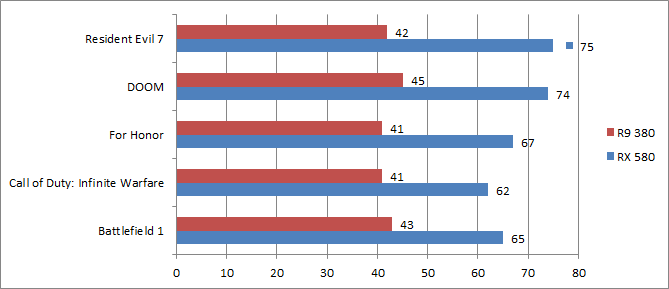
Compared to the R9 380 , we observe a clear increase in frame rates on the various titles tested on the RX 580 card.
In Fortnite, the RX 580 achieves a frame rate of 210 FPS at 720p resolution. At high settings (1080p), we get 85 FPS, and at QHD, the frame rate drops to 14 FPS.

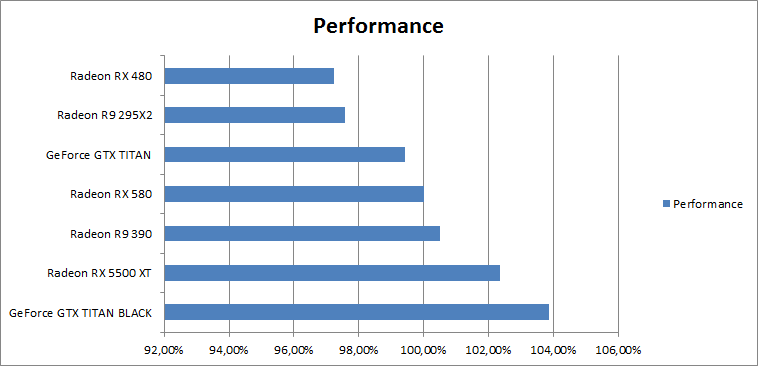
Compared to other cards in its category, the RX 580 sits between the GeForce GTX Titan and the Radeon R9 390. In terms of performance, the GeForce GTX Titan is 0.6% behind the RX 580, while the RX 580 is 0.5% faster.
According to tests performed on G3DMark, the RX 580 obtained a score of 8745. It is above the Radeon RX 470 , which scored 7927. For reference, the Radeon RX 5700 XT scored 16,721 while the GeForce RTX 2070 SUPER scored 18,115.

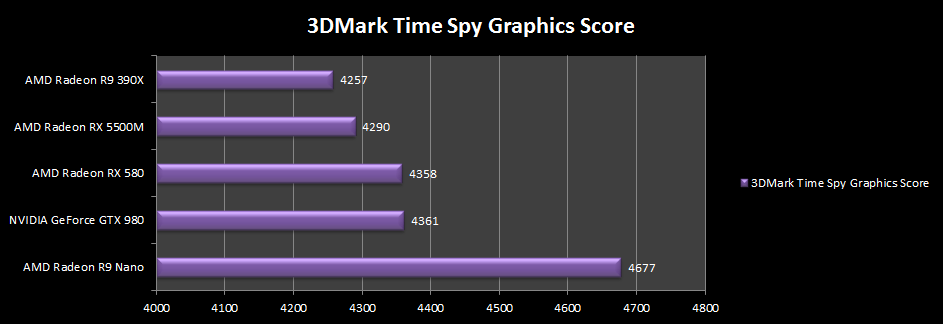
In 3DMark, the Radeon RX 580 scores 4,358. It is neck and neck with the GeForce GTX 980, which scores 4,361.
In short, the Radeon RX 580 is an entry-level graphics card that allows you to play games in Full HD. It differs from the previous generation RX 480 by operating at a higher clock speed. However, the hardware limitations are compensated for by a whole host of software features. In conclusion, it's worth its price. The RX 580 is available online for around €200.