Are you looking for a new graphics card to boost your PC's performance, but you don't want to spend a fortune? Are you wondering which are the best graphics cards under €300 ?
You're in the right place! In this article, we'll present the features, advantages, and disadvantages of the best graphics cards under €300 available on the market.
Graphics card comparisons under €300
Now that you know the advantages and disadvantages of a graphics card under €300, you are probably wondering which are the best graphics cards under €300 in 2023.
To help you make your choice, we have selected 7 graphics card models under €300 that stand out for their performance, features and user reviews.
1. The best graphics card for small budgets: ZOTAC GeForce GTX 1660
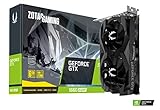
The ZOTAC GeForce GTX 1660 is a graphics card that offers excellent value for money if you're on a budget . It's based on Nvidia's Turing architecture , but without ray tracing or DLSS. It features 6GB GDDR5 memory , a base clock speed of 1530 MHz , and a boost clock speed of 1785 MHz .

| ZOTAC GeForce GTX 1660 | |
|---|---|
| Architecture | Nvidia's Turing |
| Ray tracing | No |
| DLSS | No |
| Memory | 6 GB of GDDR5 |
| Base frequency | 1530 MHz |
| Boosted frequency | 1785 MHz |
| Consumption | 120 W |
| power supply connector | 8 pins |
| Ports | 3 DisplayPort 1.4, 1 HDMI 2.0b |
| Dimensions | 173 x 111 x 35 mm |
| Weight | 525 g |
| Full HD performance | Very good |
| FPS or IPS | Between 75 and 144 depending on the games |
| Temperature | Max. 67°C |
| Price | Approximately €250 |
The verdict: for whom and for what is the ZOTAC GeForce GTX 1660 suitable?
The ZOTAC GeForce GTX 1660 is an ideal graphics card for casual or moderate gamers on a budget who want to play in Full HD with good detail and smooth gameplay. It's also suitable for users with a compact PC or mini PC who are looking for a powerful yet discreet graphics card.
It is not suitable for users who want to play in very high resolution, take advantage of ray tracing or VR.
2. Our second choice for an affordable GPU: XFX Radeon RX 6500 XT

The XFX Radeon RX 6500 XT is a graphics card that offers a good alternative to the ZOTAC GeForce GTX 1660 if you prefer AMD cards. It is based on AMD's RDNA 2 architecture , which supports ray tracing and FidelityFX Super Resolution (FSR), AMD's answer to Nvidia's DLSS.
It features 4GB of GDDR6 memory , a base clock speed of 1717 MHz , and a boost clock speed of 2285 MHz . It consumes 110W 6 -pin power supply connector . It has three DisplayPort 1.4 ports and one HDMI 2.1 port. It measures 210 x 120 x 40 mm and weighs 650g.

| XFX Radeon RX 6500 XT | |
|---|---|
| Architecture | AMD's RDNA 2 |
| Ray tracing | Yes |
| FSR | Yes |
| Memory | 4 GB of GDDR6 |
| Base frequency | 1717 MHz |
| Boosted frequency | 2285 MHz |
| Consumption | 110 W |
| power supply connector | 6 pins |
| Ports | 3 DisplayPort 1.4, 1 HDMI 2.1 |
| Dimensions | 210 x 120 x 40 mm |
| Weight | 650 g |
| Full HD performance | Good |
| FPS or IPS | Between 60 and 120 depending on the games |
| Temperature | Max. 69°C |
| Price | Approximately €250 |
The verdict: for whom and for what is the XFX Radeon RX 6500 XT suitable?
The XFX Radeon RX 6500 XT is an ideal graphics card or moderate gamers who prefer AMD cards and want to take advantage of ray tracing and FSR in compatible games. It's also suitable for users with a FreeSync monitor who are looking for a graphics card compatible with this technology.
It is not suitable for users who want to play in very high resolution, have a lot of memory, or easily find this graphics card on the market.
3. Excellent price/performance ratio: XFX Speedster SWFT105 Radeon RX 6400
The XFX Speedster SWFT105 Radeon RX 6400 is a graphics card that offers excellent value for money if you're looking for a newer and more powerful AMD card than the XFX Radeon RX 6500 XT . It's based on AMD's RDNA 2 architecture , which supports ray tracing and FSR .
It features 8GB of GDDR6 memory , a base clock speed of 1825 MHz , and a boost clock speed of 2400 MHz . It consumes 150W 8 -pin power supply connector . It has three DisplayPort 1.4 ports and one HDMI 2.1 port. It measures 240 x 130 x 50 mm and weighs 800g.

| XFX Speedster SWFT105 Radeon RX 6400 | |
|---|---|
| Architecture | AMD's RDNA 2 |
| Ray tracing | Yes |
| FSR | Yes |
| Memory | 8 GB of GDDR6 |
| Base frequency | 1825 MHz |
| Boosted frequency | 2400 MHz |
| Consumption | 150 W |
| power supply connector | 8 pins |
| Ports | 3 DisplayPort 1.4, 1 HDMI 2.1 |
| Dimensions | 240 x 130 x 50 mm |
| Weight | 800 g |
| QHD performance | Very good |
| FPS or IPS | Between 60 and 120 depending on the games |
| Temperature | Max. 75°C |
| Price | Approximately €300 |
The verdict: for whom and for what is the XFX Speedster SWFT105 Radeon RX 6400 suitable?
The XFX Speedster SWFT105 Radeon RX 6400 is an ideal graphics card for moderate to demanding gamers looking for a newer and more powerful AMD card than the XFX Radeon RX 6500 XT. It is also suitable for users who want to play in QHD , take advantage of ray tracing and FSR , or have a FreeSync monitor .
It is not suitable for users who want to play in very high resolution, have low power consumption or easily find this graphics card on the market.
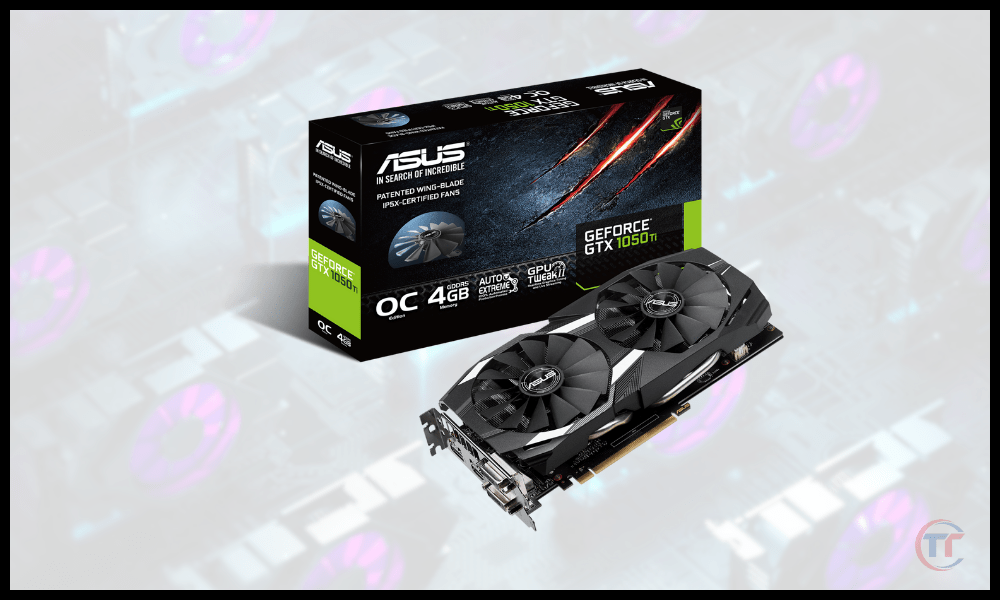
4. The best GPU under €200: ASUS GeForce GTX 1050 Ti
The ASUS GeForce GTX 1050 Ti is a graphics card that offers the best value for money if you're looking for an Nvidia card under €200 . It's based on Nvidia's Pascal architecture , which is older than the Turing architecture, but still offers good performance .
It features 4GB of GDDR5 memory , a base clock speed of 1290 MHz , and a boost clock speed of 1392 MHz . It consumes 75W and does not require an power supply . It has one DVI-D port, one HDMI 2.0 port, and one DisplayPort 1.4 port. It measures 211 x 115 x 38 mm and weighs 445 g.
| ASUS GeForce GTX 1050 Ti | |
|---|---|
| Architecture | Pascal from Nvidia |
| Ray tracing | No |
| DLSS | Yes |
| Memory | 4 GB of GDDR5 |
| Base frequency | 1290 MHz |
| Boosted frequency | 1392 MHz |
| Consumption | 75 W |
| power supply connector | None |
| Ports | 1 DVI-D, 1 HDMI 2.0, 1 DisplayPort 1.4 |
| Dimensions | 211 x 115 x 38 mm |
| Weight | 445 g |
| Full HD performance | Modest |
| FPS or IPS | Between 47 and 81 depending on the games |
| Temperature | Max. 65°C |
| Price | Approximately €180 |
The verdict: for whom and for what is the ASUS GeForce GTX 1050 Ti suitable?
The ASUS GeForce GTX 1050 Ti is an ideal graphics card for casual or moderate gamers looking for an Nvidia card under €200 . It's also suitable for users with a low-powered or energy-efficient PC who want a graphics card that's easy to install and power.
It is not suitable for users who want to play in very high resolution, take advantage of ray tracing or VR.
5. The cheapest GeForce RTX: Nvidia GeForce RTX 3050
The Nvidia GeForce RTX 3050 is a graphics card that lets you enjoy Nvidia's latest and most powerful RTX series at an affordable price . It's based on Nvidia's Ampere architecture , which supports ray tracing , DLSS , and other advanced technologies.
It features 4GB of GDDR6 memory , a base clock speed of 1500MHz , and a boost clock speed of 1740MHz . It consumes 100W 6 -pin power supply connector . It has one HDMI 2.1 port and three DisplayPort 1.4a ports. It measures 241 x 112 x 39 mm and weighs 669g.

| Nvidia GeForce RTX 3050 | |
|---|---|
| Architecture | Nvidia's Ampere |
| Ray tracing | Yes |
| DLSS | Yes |
| Memory | 4 GB of GDDR6 |
| Base frequency | 1500 MHz |
| Boosted frequency | 1740 MHz |
| Consumption | 100 W |
| power supply connector | 6 pins |
| Ports | 1 HDMI 2.1, 3 DisplayPort 1.4a |
| Dimensions | 241 x 112 x 39 mm |
| Weight | 669 g |
| Full HD performance | Modest |
| FPS or IPS | Between 49 and 88 depending on the games |
| Temperature | Max. 70°C |
| Price | Approximately €250 |
The verdict: for whom and for what is the Nvidia GeForce RTX 3050 suitable?
The Nvidia GeForce RTX 3050 is an ideal graphics card for casual or moderate gamers looking for an Nvidia card under €300 who want to take advantage of ray tracing and DLSS in compatible games. It's also suitable for users who want to benefit from Nvidia technologies and are looking for an affordable RTX graphics card .
It is not suitable for users who want to play in very high resolution, have a lot of memory, or easily find this graphics card on the market.
6. The top pick around €220: AMD Radeon RX 6600
The AMD Radeon RX 6600 is a graphics card that offers top performance for around €220. It's based on AMD's RDNA 2 architecture , which supports ray tracing and FSR . It features 8GB of GDDR6 memory , a base clock speed of 1968 MHz , and a boost clock speed of 2491 MHz .
It consumes 132 W 8 -pin power supply connector . It has one HDMI 2.1 port and three DisplayPort 1.4a ports. It measures 240 x 120 x 40 mm and weighs 700 g.

| AMD Radeon RX 6600 | |
|---|---|
| Architecture | AMD's RDNA 2 |
| Ray tracing | Yes |
| FSR | Yes |
| Memory | 8 GB of GDDR6 |
| Base frequency | 1968 MHz |
| Boosted frequency | 2491 MHz |
| Consumption | 132 W |
| power supply connector | 8 pins |
| Ports | 1 HDMI 2.1, 3 DisplayPort 1.4a |
| Dimensions | 240 x 120 x 40 mm |
| Weight | 700 g |
| QHD performance | Very good |
| FPS or IPS | Between 65 and 140 depending on the games |
| Temperature | Max. 72°C |
| Price | Approximately €220 |
The verdict: for whom and for what is the AMD Radeon RX 6600 suitable?
The AMD Radeon RX 6600 is an ideal graphics card for demanding gamers looking for a high-performance and affordable AMD card. It's also suitable for users who want to play in QHD, take advantage of ray tracing and FSR , or have a FreeSync monitor.
It is not suitable for users who want to play in very high resolution, have low power consumption or easily find this graphics card on the market.
7. The latest graphics card under €300: Nvidia GeForce RTX 4060
The Nvidia GeForce RTX 4060 is a graphics card that lets you enjoy Nvidia's RTX range, the most powerful and latest on the market , for around €300. It's based on Nvidia's Ampere architecture , which supports ray tracing, DLSS , and other advanced technologies.
It features 6GB of GDDR6 memory , a base clock speed of 1620MHz , and a boost clock speed of 1845MHz . It consumes 120W 8 -pin power supply connector . It has one HDMI 2.1 port and three DisplayPort 1.4a ports. It measures 241 x 112 x 39 mm and weighs 669g.

| Nvidia GeForce RTX 4060 | |
|---|---|
| Architecture | Nvidia's Ampere |
| Ray tracing | Yes |
| DLSS | Yes |
| Memory | 6 GB of GDDR6 |
| Base frequency | 1620 MHz |
| Boosted frequency | 1845 MHz |
| Consumption | 120 W |
| power supply connector | 8 pins |
| Ports | 1 HDMI 2.1, 3 DisplayPort 1.4a |
| Dimensions | 241 x 112 x 39 mm |
| Weight | 669 g |
| Full HD performance | Correct |
| FPS or IPS | Between 55 and 95 depending on the games |
| Temperature | Max. 74°C |
| Price | Approximately €300 |
The verdict: for whom and for what is the Nvidia GeForce RTX 4060 suitable?
The Nvidia GeForce RTX 4060 is an ideal graphics card for casual or moderate gamers looking for an Nvidia card under €300 who want to take advantage of ray tracing and DLSS in compatible games. It's also suitable for users who want to benefit from Nvidia technologies and are looking for a recent and affordable RTX graphics card .
It is not suitable for users who want to play in very high resolution, have a lot of memory, or easily find this graphics card on the market.
What criteria should be taken into account?
To choose a graphics card that suits your needs and budget, you need to consider several criteria, such as:
- Performance is measured in terms of frequency, memory, bandwidth, number of cores or CUDA cores (for Nvidia cards) or Stream Processors (for AMD cards). The higher these values, the faster and more efficiently the graphics card can process graphics data.
- Compatibility : This depends on the type of PCI Express port available on your motherboard, the type of power supply required for your graphics card, the type of screen you are using (resolution, refresh rate, connectivity) and the type of case you have (size, ventilation).
- Power consumption : This is measured in watts (W) and indicates the amount of energy your graphics card consumes. The higher the W value, the more your graphics card heats up and the more powerful power supply
- Cooling : This is done either by air (with one or more fans) or by water (with a water cooling system). It allows you to dissipate the heat produced by your graphics card and prevent overheating or throttling (a drop in performance to limit the temperature).
- Noise : This is related to cooling and is measured in decibels (dB). The lower the noise level, the quieter your graphics card.
- The price : it varies depending on the brand, model, performance, and features of your graphics card. You need to find the best value for money according to your needs and budget.
Why choose a graphics card under €300?
You might be wondering why choose a graphics card under €300 when there are more powerful and newer models on the market. What are the advantages and disadvantages of this price range? What types of users would benefit from a graphics card under €300?
Here are some possible answers.
The advantages of a graphics card under €300
- The price-to-performance ratio : a graphics card under €300 will give you satisfactory performance at a reasonable price . You'll be able to enjoy good image quality , smooth gameplay , and immersion in most games and applications, without breaking the bank.
- Versatility : A graphics card under €300 will allow you to handle various uses, whether for gaming , watching videos , video editing , or 3D modeling . You can also use GPUs to improve video capture and processing , resulting in increased quality and speed. You can adjust the graphics settings to suit your needs and preferences without significantly sacrificing quality or performance.
- Upgradability : A graphics card under €300 will allow you to benefit from the latest technologies and driver and software updates. This will enable you to take advantage of improvements made by manufacturers and developers, and extend the lifespan of your graphics card.
The disadvantages of a graphics card under €300
- Resolution limitations : a graphics card under €300 won't allow you to play at very high resolutions , such as 4K or 8K. You'll have to settle for a more modest resolution , like Full HD or QHD, or even compromise on graphics quality to maintain a good refresh rate.
- The limitations in terms of ray tracing : A graphics card under €300 will not allow you to fully enjoy ray tracing, unless you have an Nvidia card compatible with DLSS (Deep Learning Super Sampling), which is an optimization technique that uses artificial intelligence to improve image quality without too much impact on performance.
- Limitations in terms of VR : A graphics card under €300 will not allow you to fully enjoy VR, unless you have a headset compatible with Oculus Link, which is a feature that allows you to connect your Oculus Quest headset to your PC via a USB-C cable and thus enjoy PC VR games.
This article might interest you : Gaming PC: SSD or eGPU for better performance?
FAQ
What is the difference between Nvidia and AMD?
Nvidia and AMD are the two main manufacturers of graphics cards and graphics processors . They are distinguished by their technologies, performance, and prices.

- Nvidia is renowned for its high-end graphics cards , which offer advanced features such as ray tracing or DLSS , but are also more expensive and more energy-intensive.
- AMD is known for its more affordable graphics cards , which offer good value for money , but are also less powerful and less compatible with some games or applications.
What is VR and which headsets are compatible with graphics cards under €300?
Reality ( VR) is a technology that allows users to immerse themselves in a virtual environment using a headset and controllers . It offers a fun and immersive experience, but it also requires significant graphics processing power .

Among the headsets compatible with graphics cards under €300, we can mention the Oculus Quest 2 , which is a standalone headset that can connect to your PC via a USB-C cable and thus enjoy PC VR games, or the HTC Vive Cosmos , which is a wired headset that requires a base station to work.