Want to build your own laptop? Excellent idea! This initiative will undoubtedly help you create a device that reflects your style and delivers satisfying results. However, to achieve this feat, you'll need high-quality components that combine durability and performance.
Besides choosing a processor, case or motherboard, the person concerned will also have to choose a high-performance graphics card, especially if they want to carry out large-scale work or view high-definition content.
Choosing a graphics card isn't something to be taken lightly. In addition to being compatible with your computer's operating system, it must also meet your specific needs. We invite you to discover the AMD Radeon R7 graphics card . How good is it really? Here's our complete and unbiased review.
The AMD Radeon R7 graphics card in brief
The AMD Radeon 7 is a graphics card designed to compete with Nvidia's offering. The latter stands out as the very first graphics card equipped with a GPU. Released 18 months after the Radeon RX Vega 64, this graphics card has plenty to offer. AMD can boast of having developed a high-end graphics card capable of high-bandwidth WQHD (1440p) gaming.
Built on a 7nm process, it's known for its glossy finish and high power consumption. While it offers very good performance, the Radeon R7 won't be able to compete with Nvidia's GeForce RTX 2070 in every aspect. For the design of its Radeon R7 graphics card, AMD states that it revised the architecture. The improvements made to the Vega GPU generation will help maintain a very high clock speed. Let's look at the main features of this graphics card in more detail.
AMD Radeon 7: Price and availability
Because it features a GPY, AMD has increased the price of its Radeon 7 compared to its predecessor, the Radeon Vega 64. Specifically, it starts at €679. However, this card's price is approaching that of its competitor, the Nvidia GeForce RTX 2080, which starts at €699. The company has announced that the product will be in limited stock. But as of now, you can still find this product in most online stores, such as Amazon. According to the latest reports we've seen, the Radeon 7 graphics card has been widely available since its release.
Features of AMD's Radeon 7
For those who don't already know, Radeon was among the first graphics cards designed with a 7nm architecture. Its 7nm process allowed AMD to produce a GPU with performance improvements of up to 25% compared to the previous year's model, without requiring more processing power. This GPU also offers users more video memory than the previous model, which had 16GB of HBM2 VRAM.
Currently, the only known graphics card offering more video memory is the Nvidia Titan RTX, priced at $2499. This amount of video memory is more than enough for video games, since HD games typically only require 8 GB of memory. Users of creative software like Adobe Lightroom or Sony Vegas will appreciate the features of this software.
The Radeon VII integrates 3840 Core Next GCN graphics cores. The card also features a power supply clock speed of 1800 MHz, 300 MHz higher than the Vega 64. While the Radeon VII lacks dedicated ray tracing cores, it still manages ray tracing significantly better than Nvidia's RTX 20 series cards.
3rd RYen cards can support a PCIe 4.0 connector, which will double the throughput of connected devices.
Performance
In terms of performance, if we had to choose between the Radeon 7 and the Nvidia RTX 2080, we would lean towards the former. Its performance is impressive. It far surpasses the Nvidia RTX 2080, but only in certain aspects. However, the Radeon 7 disappointed many users in DirectX 12 game modes.
We sincerely hope that AMD will improve its product by releasing driver updates in the future to optimize DirectX 12 performance. This will further reassure game developers. While several improvements are still being made to the Radeon 7, the graphics card represents a significant generational leap compared to the Vega 64.
During our various tests, we observed that this product delivered acceptable scores with games fluctuating between 5 and 15 frames per second, which wasn't the case with the Nvidia GTX 1080 or GTX 2080. We were also pleased to learn that 16GB of VRAM allowed for smooth gameplay in cutting-edge titles like Battlefield V at 4K resolution, while maintaining high-quality performance with up to 14GB of VRAM.
Readon 7: How good is it for games?
In our test of the operating frequency of this test sample, we were satisfied. We ran the Radeon VII graphics card for 30 minutes in a closed case with a game at 4K resolution, and the frequency varied between 1611 MHz and 1785 MHz. This is higher than the Vega 64's 1380 MHz frequency, observed under the same conditions. We also noted that the average frequency can be high in a number of games.
In terms of gaming, the Radeon 7 graphics card has been touted as one of the main competitors to the GeForce RTX 2080; a claim that explains the card's high price. While we find the Radeon 7 to be more on par with the GeForce RTX 2070, it presents itself as a better compromise for gaming. The card promises a starting frame rate of 50 fps in several games, but its frame rate may fall below this in others.
The good news is that you can lower your graphics card's resolution. By doing so, it will deliver over 60 fps in almost all games. This puts the card 30% ahead of the Vega 64 and 10% ahead of the entry-level RTX 2070.
Furthermore, it is also worth noting that the graphics card will feel comfortable on a Full HD resolution regardless of the graphics settings you have made.
Editor's Note
Through our testing of the AMD Radeon 7, we were satisfied, but not 100%. AMD, it must be said, was the very first manufacturer to design a GPU-based graphics card. Its 7n chip makes it an exceptional graphics card that will delight many fans of the brand. However, this feature alone won't allow the brand to reach the top against Nvidia, even though AMD claims to have reduced the overall performance of the Vega architecture.
However, in terms of performance, we were very satisfied. Overall, it's adequate, allowing for WQHD gaming without having to compromise on graphics settings. The Radeon 7 represents a significant improvement over the previous model, but its performance isn't quite enough to outperform the GeForce RTX 2080.
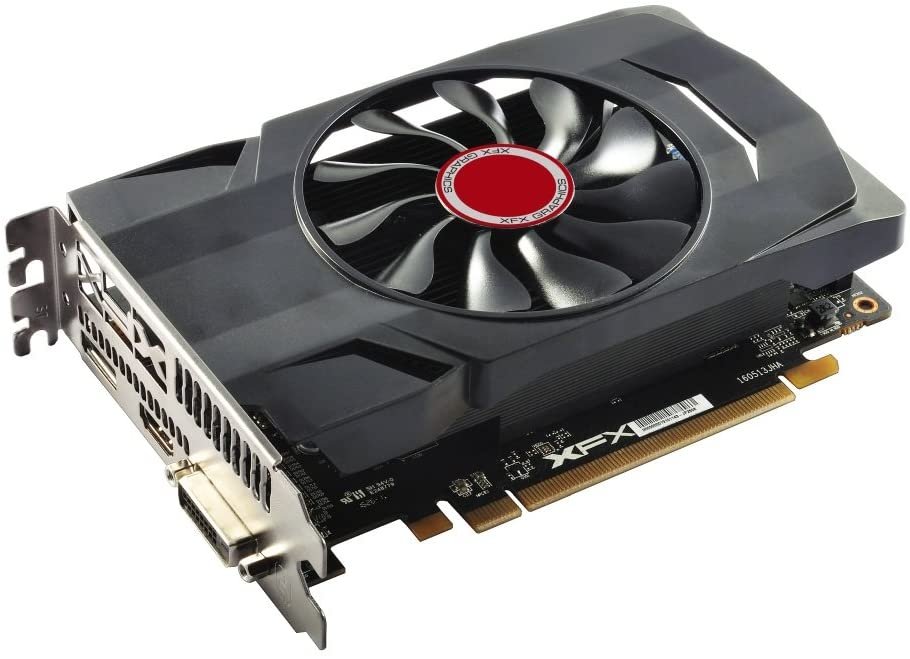
However, overall, the graphics card is built with high-quality materials. Its metal finish is flawless. It incorporates 14 power supply phases distributed around the chip, which houses the GPU and four HBM2 memory modules.
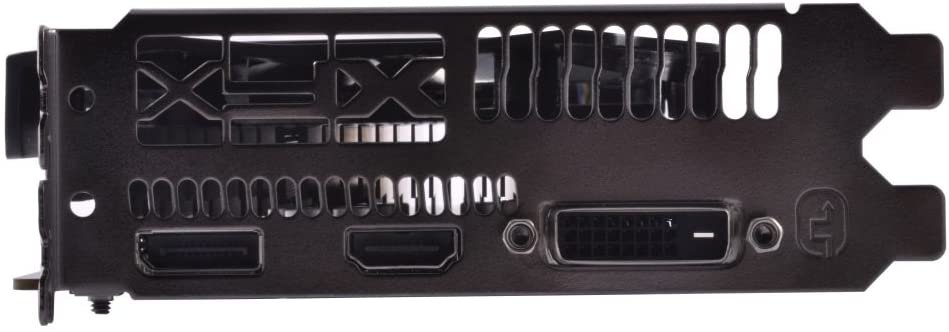
In addition, there are two PCI power supply cables that will be needed to power the entire system. As for connectivity, there are three DisplayPort 1.4 inputs and one HDMI 2.0b input. Regarding software, AMD's latest graphics cards have seen significant improvements over previous models. Thanks to the Overlay system, you can control the graphics card's performance. Furthermore, there are game options that allow you to capture video as you see fit.
Ultimately, the Radeon VII wasn't the graphics card that put AMD back on top, but it was certainly the beginning of its rise and powerful enough to put Nvidia on notice. While it didn't feature new RT or AI cores, this graphics card packed a ton of video memory, allowing it to play even the most modern games.