PC Gaming 2026: The end of an era and the advent of "Next-Gen" architectures.

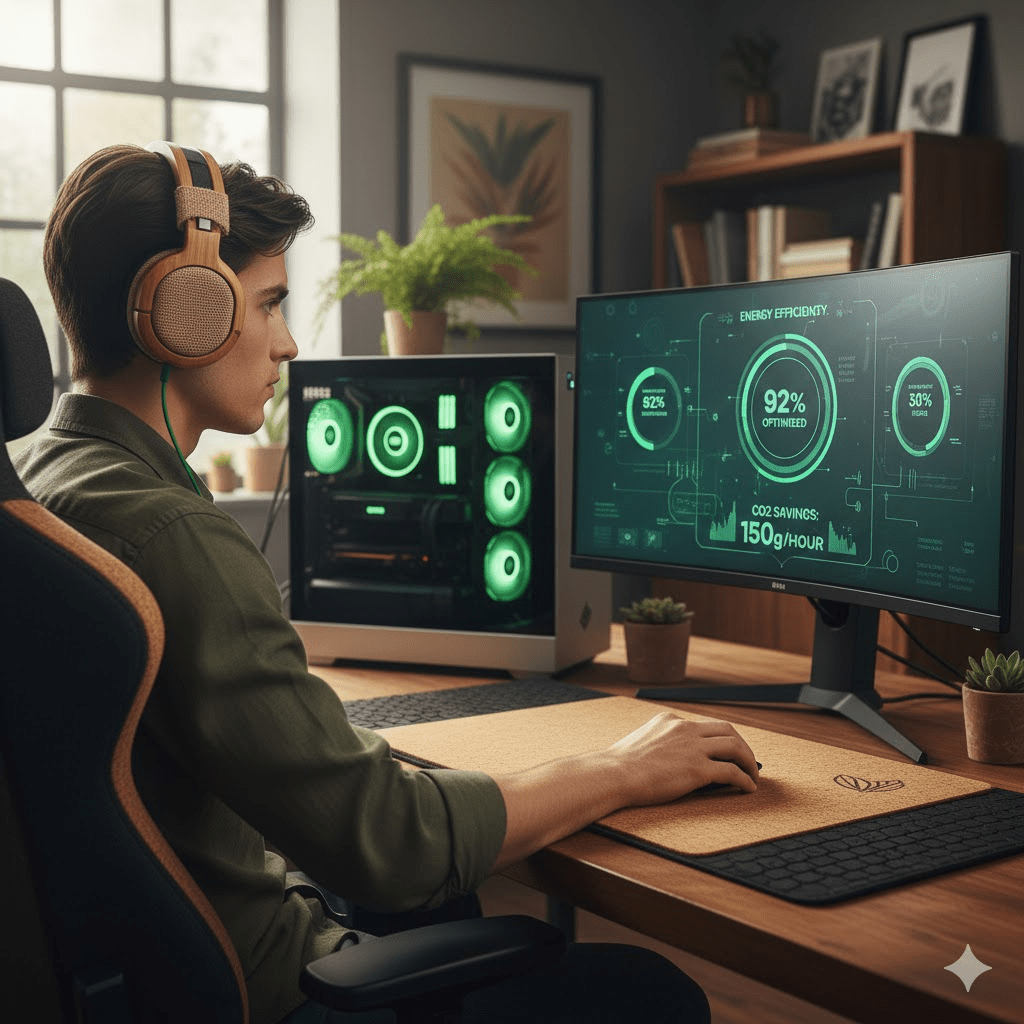
    gaming keyboard and mouse on a desk

    Every year, manufacturers promise us the moon. But there are few times when we truly need to rethink how we build a PC. 2026 is one of those structural turning points. No more cosmetic changes; it's time for a profound transformation.

    Why 2026 marks a real hardware turning point for PC gaming

    Each year brings its share of gaming hardware announcements. But few truly force gamers to rethink how they build or upgrade a PC. The coming period promises to be one of those pivotal moments where changes are structural rather than cosmetic. Instead of simple frequency increases or minor efficiency gains, the next generation of processors, graphics cards, and memory standards marks a profound shift in the design of gaming systems.

    What distinguishes this transition is not a single isolated advancement, but the simultaneous arrival of several technologies. New CPU architectures are designed around AI acceleration and energy efficiency. GPUs are evolving toward chiplet designs and unified platforms. Memory standards are progressing primarily in bandwidth rather than incremental speed. Even cooling and case design are being rethought to accommodate denser, more energy-efficient configurations.

    For gamers, this evolution goes far beyond traditional PC games. Competitive esports, large-scale multiplayer games, virtual reality, simulation platforms, and betting sites all rely on low latency and stable performance.

    This is especially true for sports betting , where bets are placed while matches are in progress. It also applies to features like Bet Builder, which combine multiple markets within a single match, such as goalscorer, final result, or number of cards. The hardware upgrades of 2026 will not be limited to increasing frame rates.

    Processors in 2026

    Processor

    The CPU market will be marked by two very different approaches to performance. AMD and Intel are both developing new architectures, but are tackling distinct problems.

    AMD Zen 6

    AMD's Zen 6 processors are expected towards the end of 2026 and will succeed the Zen 5 range. Unlike previous transitions, which were mainly focused on raw performance, Zen 6 seems to prioritize efficiency, with performance naturally resulting from it.

    By leveraging TSMC's 3nm and even 2nm manufacturing processes, AMD aims to reduce power consumption while increasing transistor density. This is crucial for gaming, as sustained performance is now more important than short bursts of peak usage. Modern games stress processors over extended periods, and improved efficiency directly translates into more stable frame times and reduced thermal throttling.

    The Zen 6 desktop processors are expected to launch under the Ryzen 10000 series, with the internal codename "Medusa." On the server side, the EPYC processors, codenamed "Venice," will use the same architecture. This demonstrates AMD's commitment to consistency across its platforms.

    DDR6 memory support and enhanced AI acceleration are also expected. While AI-related features may seem abstract, they increasingly influence background tasks such as asset streaming, shader compilation, and system optimizations, thereby reducing in-game stuttering.

    Intel Nova Lake

    Intel's Nova Lake architecture takes a more direct approach. Nova Lake processors could reach up to 52 cores. A number that would have seemed excessive for gaming just a few years ago.

    The logic is simple. Modern gaming systems are no longer solely for playing games. Streaming, recording, background applications, and AI-assisted tools all compete for resources. Nova Lake's high core count allows for more efficient separation of workloads, reducing interference with dedicated game threads.

    Nova Lake is also expected to support DDR5-8000 memory and offer up to 32 PCIe lanes. High memory bandwidth and extensive connectivity are central to Intel's strategy, especially for configurations based on fast storage and high-end GPUs.

    While the number of cores alone doesn't guarantee a performance boost in games, it does create a significant headroom. For users who engage in intensive multitasking, Nova Lake could offer smoother overall system performance, even if the FPS gains remain modest.

    Graphics cards in 2026

    Graphics card fan

    It's on the GPU side that 2026 could have the biggest impact on gamers. Both Nvidia and AMD are moving away from the traditional designs that have dominated for over a decade.

    Nvidia Rubin

    Nvidia's Rubin architecture represents a major structural shift. Expected to hit the market in early 2026, Rubin adopts a chiplet design rather than a monolithic die. This approach allows Nvidia to scale performance more flexibly while improving manufacturing yields.

    Manufactured using TSMC's 3nm process, the Rubin cards are expected to use HBM4 memory, offering extremely high bandwidth. Previously associated primarily with professional hardware, the arrival of HBM in gaming-oriented architectures suggests that Nvidia is preparing for workloads far more demanding than those of current games.

    For gaming, Rubin is expected to improve ray tracing efficiency, enable higher frame rates at very high resolutions, and support advanced AI-based rendering techniques. The architecture clearly aims to blur the lines between gaming and AI computing, rather than treating them as separate domains.

    AMD UDNA

    AMD's upcoming UDNA architecture, also known as RDNA 5, represents a strategic shift rather than a simple evolution. UDNA aims to merge the RDNA gaming architecture and the CDNA data center platform into a unified design.

    The advantage lies in consistency. By developing a single architecture for both gaming and computing, AMD can streamline driver optimization and development. UDNA-based GPUs are expected to enter mass production in the second quarter of 2026 and power upcoming Radeon cards.

    Strong indications also suggest that UDNA could be used in future consoles. This would offer an indirect advantage to PC gamers. A shared architecture between platforms often results in better optimizations for PC games ported from consoles.

    Memory in 2026

    RAM PC 1

    Memory developments will focus less on raw frequencies and more on bandwidth and latency.

    GDDR7

    GDDR7 memory is expected to exceed 32 Gbps, providing the bandwidth needed for next-generation GPUs. As games increase texture resolution and rely more heavily on real-time lighting, memory throughput becomes a limiting factor.

    For gamers, this translates to fewer high-resolution bottlenecks and more consistent performance in demanding scenes.

    DDR6

    DDR6 memory is expected to appear in a limited number of gaming systems starting in mid-2026. While its widespread adoption will take time, DDR6 offers roughly double the bandwidth of DDR5.

    The first DDR6 platforms will primarily target enthusiasts, but this standard sets the expectations for the rest of the decade. Faster system memory improves asset loading, reduces CPU latency, and contributes to a smoother gaming experience.

    AI-enhanced laptops and APUs

    laptop turns on

    Gaming laptops are moving away from purely aggressive cooling towards intelligent power management. Integrated AI chips will handle thermal control, load balancing, and visual upscaling.

    AMD and Intel's new gaming APUs will combine CPU and GPU cores on a single chip, aiming to deliver solid performance for mid-range systems. These designs appeal to gamers who prioritize portability and efficiency over maximum performance.

    Motherboards, cooling systems, and screens keep pace

    PCIe 5.0 is expected to become the standard on gaming motherboards, allowing users to fully utilize fast GPUs and NVMe SSDs. Support for DDR6, improved VRMs, and smarter BIOS will simplify the management of high-performance systems.

    Cooling solutions are also evolving. Water cooling systems are becoming quieter and smarter. Meanwhile, PC cases are being designed around optimizing airflow rather than aesthetics alone.

    On the display front, monitors with 360Hz or higher refresh rates, combined with Mini-LED and OLED panels, will allow users to fully utilize next-generation GPUs. Adaptive synchronization technologies remain essential for a smooth gaming experience.

    Previous Article : Esports Ergonomics: Create the Gaming Station That Maximizes Your Reflexes
    Next article: The first VR slot machines that are captivating players' interest
    Hello me, it's François :) Editor in my spare time who loves sharing his passion: TT High tech! 😍 Whether it's hardware, software, video games, social media and many other areas on the site. I share with you my analyses, my tests, tutorials and my favorites on various media. I am a knowledgeable and demanding technophile, who does not just follow fashion, but who seeks to guide you towards the best solutions. So stay tuned!